By Kimberly French
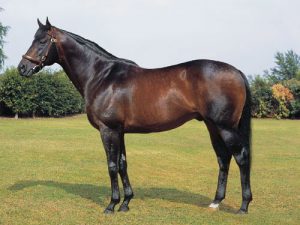
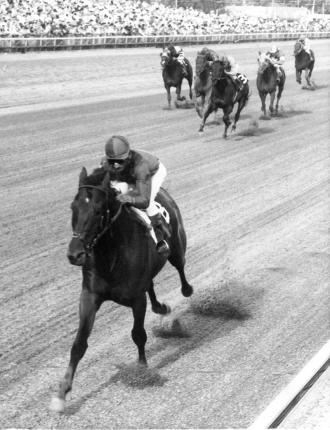 1968 was the year that a horse called Dr Fager accomplished a feat no other equine ever had before or likely ever will again.
According to his Hall of Fame jockey Braulio Baeza and his just as illustrious conditioner John Nerud, the son of 1951 Santa Anita Derby victor Rough’n Tumble could “run a hole in the wind” and was the “fastest horse to ever live.” The record he established for a mile on August 24, 1968 at Arlington Park while toting 134 pounds has never been surpassed. That same year he was anointed as the sport’s champion Sprinter, champion Turf Horse, Horse of the Year and Handicap Horse of the Year. He was Dr. Fager and he left us far too soon, after succumbing to complications from colic at the age of 12.
Owned and bred by W.L. McKnight’s Tartan Farms and remembered for his rivalry with fellow champions Damascus, Buckpasser and his numerous track records, the highlight of Dr. Fager’s career for many continues to be the Washington Park Handicap at Arlington Park. Dr Fager hit the wire 10 lengths in front of his competitors while being geared down in an astonishing 1:32 1/5. It was a display of sheer brilliance and one of those occasions when humans can witness true perfection. Although the video quality may not be as high tech as we have grown accustomed to, Dr. Fager’s trip around the Chicago oval that day still sends chills up the spine and brings a tear to the eye.
It can be viewed here https://www.youtube.com/watch?v=6wVBNbmcaAE.
Called by Phil Georgeff, the “voice of Chicago,” who is also enshrined in the Guinness Book of World Records for the most races ever announced, (96,131), this engagement was contested after a week of extremely hot weather and the track was classified as “bone dry.” Dr. Fager was coming into the event off an eight length romp in the Whitney Stakes where he set a record in 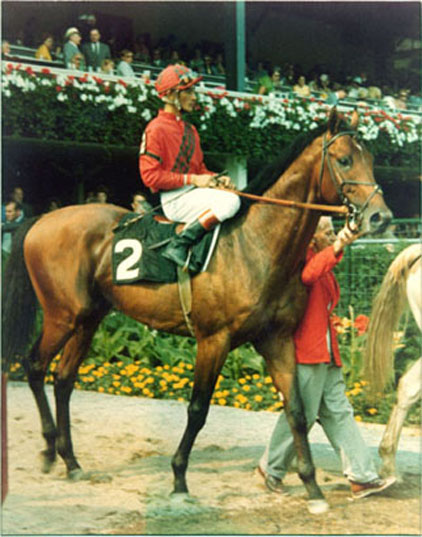 New York State by going to the gate as the overwhelming 1-20 public selection. No horse had ever been bet down that low and this was despite giving away 18 pounds to his rivals.
The great Nerud, the Doctor’s trainer and co-owner, said the way the horse came into the paddock that day he knew he was going to run in spectacular fashion and many people felt the horse could actually have run two full seconds faster if he had been asked. His pilot on that historic day, Baeza, confirms that assessment.
“I was easing him up at the quarter pole,” he recalled. “I looked back and no one was coming. If I knew he was setting the world record, all I had to do was chirp to him and he would’ve lowered the record even more. His speed was deceiving because he had such a long, smooth stride, he ate up so much ground.”
More than two decades after the race was in the history books, for venerated turf scribe Neil Milbert it was still fresh in his mind.
“They ran at Dr. Fager in sizzling relays. First Hedevar, then Angelico and Kentucky Sherry, next R. Thomas and finally Racing Room,” he wrote in a 1989 article in the Chicago Tribune. “It was to no avail. Dr. Fager was sixth at the quarter-mile call and second at the half, a head behind R. Thomas. Moving with a rush while still being held under restraint by jockey Braulio Baeza, he took command leaving the backstretch and rocketed away from his adversaries. Based on the Daily Racing Form’s chart of the race, he won “with something left.” The fractions were :22 4/5 by Angelico for the quarter, :44 by R. Thomas for the half and 1:07 3/5 by Dr. Fager for three-quarters.”
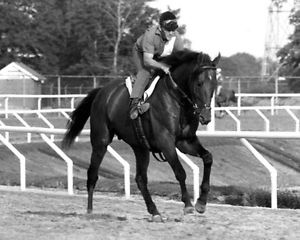 Award winning journalist Steve Haskin of the Blood Horse, who also wrote a book on the horse, describes his personal impression of the race in a blogpost from 2013.
“It is safe to say that in his victory in the 1968 Washington Park Handicap, setting a world record mile of 1:32 1/5 under 134 pounds and winning by 10 lengths, no horse has ever run that fast, that easily and won by that far, as jockey Braulio Baeza never moved a muscle on him the entire length of the stretch,” he wrote. “The sight of Baeza sitting motionless, with Dr. Fager’s long mane blowing in his face, truly was a sight to behold. Many horsemen watching the race firmly believed that had Baeza even asked him slightly, Dr. Fager would have easily run the mile in 1:31 and change, maybe even faster; that’s how easily he won. And he did it giving the runner-up, the classy Racing Room, 18 pounds. In that race, in which he went the half in :44 flat and six furlongs in 1:07 3/5, he ran his second quarter in an unheard of :20 3/5, which was believed to be the fastest quarter-mile fraction ever run in a non-sprint race and the fastest quarter within the body of a race at any distance.”
Although he accomplished phenomenal things in his career with an astonishing amount of weight on his back, Dr. Fager, who’s younger sister Ta Wee is also enshrined in the Hall of Fame and was named champion Sprinter in 1969 and 1970, closed his time out on the racetrack in style. Saddled with a 139 impost and performing over a surface that was deep and cuppy from it being winterized, Dr. Fager captured his second edition of the seven furlong Vosburgh Handicap in a blistering 1:20 1/5. It demolished Rose Net’s track record by a full second and was just 1/5 of a second off the world record.
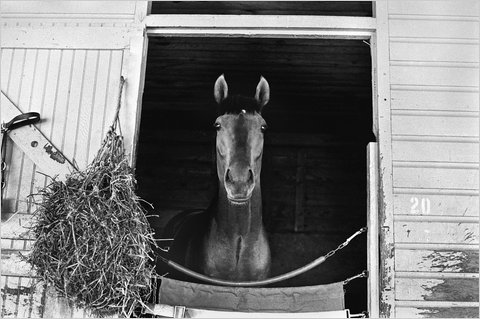 “The last time he ran, he carried 139 pounds and he ran the 7 furlongs in 1:20,” Baeza said. “I knew it was his last race, so I didn’t want to abuse him. No one was coming so I relaxed on him. I had the brakes on from the quarter.”
Nerud, who also played a role in Dr. Fager’s breeding, certainly knew what quality horseflesh consisted of and never pulled any punches when asked about this great champion.
“Dr. Fager was the fastest horse I ever saw,” he said. “There was never a horse in the world who could run with him and win. He just kept that long stride going, he just kept laying on you, and could go the first three-quarters in [1:07]. He didn’t want to be hit or abused. He just wanted to be left alone to do his own thing. And he’d do the best he could.”
It appears Dr. Fager would have been just as prolific in the breeding shed as he was on the racetrack. After retiring with a record of 22-18-2-1 and with earnings of just over $1 million, the horse was only defeated by three other rivals. Two of them, Damascus and Buckpasser are in the Hall of Fame, and they competed against him with “rabbits” that were sent out to soften Dr Fager up.
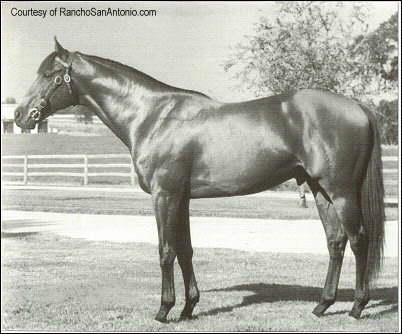 As a stallion, Dr. Fager proved just as spectacular. He led the national sire list in North America the year after his death and sired 1975 Juvenile Champion filly Dearly Precious, 1978 co-champion Sprinter Dr. Patches, Tree of Knowledge and L’Alezane. He also became known as an outstanding broodmare sire. Although his life was cut short, Dr. Fager, ranked sixth in the Blood-Horse’s top 100 Thoroughbreds of the 20th Century, is felt by many historians to have been the best horse ever to race in North America. His memory remains vibrant today.
“Tartan Farm is long gone, but there is one section of hallowed ground that has remained untouched,” Haskin wrote. “Atop a hill, overlooking the serenity of Lake Ta Wee, named after the Doctor’s sister, is the farm’s old cemetery. There, behind a cedar tree and shaded by two oak trees are the headstones of the horses that helped build the Tartan empire. Among them is the grave of Dr. Fager, whose spirit still touches all those who were privileged to witness his greatness.
 “As I concluded in my book, perhaps the late racing writer, David Alexander, described Dr. Fager best when he wrote: ‘The memory of him is the memory of the wind. I shall remember the brilliant Dr. Fager like a sudden shaft of sunlight on a darkening day.’”
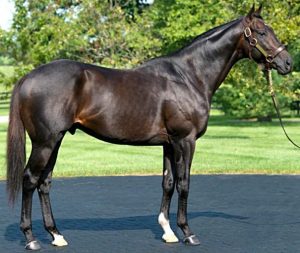 Revolutionary’s two-year old daughter Maiden Beauty lived up to her name on Sunday, July 15, when, in her debut start, she won the Lynnbrook S. for New York-breds at Belmont by 3 ¼ lengths. A $15,000 weanling at Fasig Tipton November and a $40,000 two-year old buy back at OBS April (though she worked 10 3/5), she defeated the favorite, Tossup, a $230,000 Keeneland September yearling by star sire Pioneer of the Nile. Maiden Beauty is out of the Eddington mare Alpha Charlie.
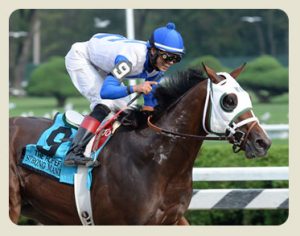 Freshman sire Strong Mandate was bound to throw precocity. He himself won the Hopeful S.-G1 at two, and finished third in the Breeders’ Cup Juvenile-G1. Though he underachieved at three, his pedigree is chock full of quality black type on his dams’ side, and sons of Tiznow continue to be well represented as sires. So it’s no surprise that Strong Mandate’s first starter was also his first winner on June 17. The colt, named Strong Will, was already designated as a star, as he sold for $775,000 at the Ocala Breeders’ Sale March, after a stunning 9 2/5 second breeze. Strong Will demonstrated his dominance at Arlington in a maiden special weight by winning by 2 ¼ lengths and looking professional while doing so.
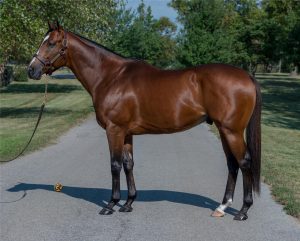 Kudos to Spendthrift Farm for a stellar weekend. Its freshman sire Goldencents, twice winner of the Breeders’ Cup Dirt Mile-G1, looks more and more to be a chip off the old block, another Into Mischief in the making. His Bano Solo, a two-year old colt out of the Unbridled’s Song mare Royal Paradise, easily won the fifth race, a maiden special weight, at Churchill Downs on June 23. Bano Solo was the most expensive Goldencents two-year old at $400,000, but is now looking like a smart bargain for his esteemed buyers, Winchell Thoroughbreds and Willis Horton. Leading the way by as many as five lengths, the colt was slowed down the stretch, and ended up winning by three lengths. Trained by Steve Asmussen, Bano Solo became the third winner for Goldencents, who is currently fourth on the leading freshman sires list and stands for $12,500.
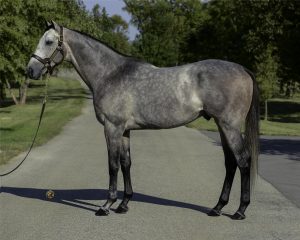 and trained by Sturges Ducoing, this precocious two-year old moved her sire up to number seven on that same freshman sires list. Whitney Invitational H.-G1 winner Cross Traffic stands for $7500.
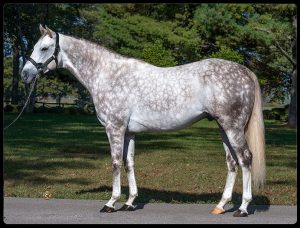 Flashback stood his first season at Hill ‘n’ Dale Farms, just outside of Lexington, Kentucky, and his book filled fast. I know, because I wanted to breed my Stormy Atlantic mare to him, but I was too late. The word was out that this was an exceptionally good-looking son of Tapit, and breeders were offered incentives to breed to him. Though his biggest win was the Grade 2 Robert B. Lewis S., another three-year-old sensation, Goldencents, barely beat Flashback in a thrilling Grade 1 Santa Anita Derby.
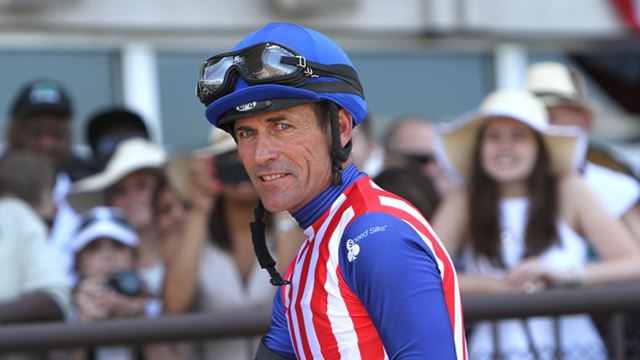
 After starting out as a jockey’s agent in 1973, Ron Anderson soon became one of the industry’s most successful and respected agents. World class riders including Gary Stevens, Jerry Bailey, Garrett Gomez and Joel Rosario have all utilized and benefited from Ron’s services. Ron talked to Thoroughbred People about his career.
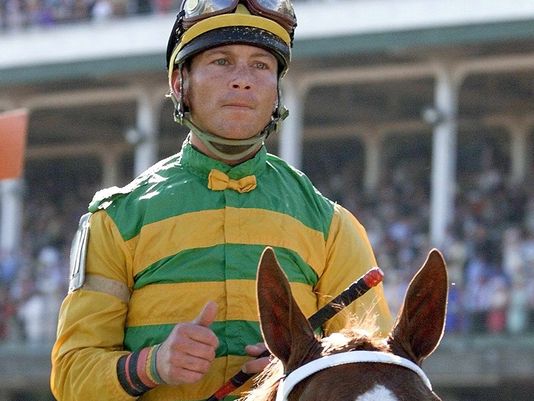




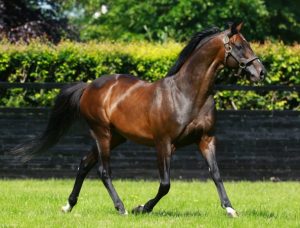 The young Coolmore stallion Camelot has been making waves on both sides of the Atlantic, surprising everyone with his first crop success, which continues as his first crop turns into sophomores. Montjeu’s fastest and most accomplished son racing, he would seem to have inherited the mantle from his father, whose greatness was undisputed. With the powerful backing of the O’Brien family, with Aidan and Joseph training and Donnacha riding and the well-known ownership group of Tabor/Magnier/Smith, sons and daughters of Camelot have invaded the United States after succeeding in Ireland and Europe.
 Green Desert must be considered on his own merit, as he brings riches to any pedigree. Danzig, an All-American sire, offers both speed and turf ability to the pedigree, and his status as a leading broodmare sire has been writ in stone. He adds his own American branch of Northern Dancer to Athena, who already includes a Sadler’s Wells sire line. Camelot is out of Tarfah, a Kingmambo mare, bringing another great blue hen, Miesque, the dam of Kingmambo, into play; she is a daughter of Nureyev. Nureyev and Sadler’s Wells are closely related, as they are both tail female Rough Shod II, yet another of the great blue hens of the twentieth century, through her 1964 daughter Thong, by Nantallah. Nureyev is a son of Thong’s 1969 daughter Special, by Forli, while Sadler’s Wells is a son of her 1975 daughter, Fairy Bridge, by Bold Reason (who of course is from the Nasrullah line, just as Special and Thong are). Though inbreeding to this family has proven results, it’s uncommon to see it so closely on the page of such a young sire as Camelot. Then, as if by magic, we note that Camelot’s second dam, Fickle, is by Danehill, a son of Danzig who is considered to have begun his own, significant sire line and was the leading sire in Europe and Great Britain for many years. Much as Fappiano is now considered a separate sire line from Mr. Prospector, and inbreeding to them has been shown to work, we must believe that this inbreeding to Danzig has limitless potential.
 We haven’t even begun to consider Green Desert’s dams’ side. His dam, Foreign Courier, was by another of the greatest twentieth century broodmare sires, Mill Ridge-bred Sir Ivor, by Sir Gaylord. Sir Gaylord adds yet another of the greatest mares of the twentieth century to Athena’s pedigree, as he was out of Somethingroyal, by Princequillo, the dam of Secretariat. Princequillo mares ruled the universe for many years, with him atop the broodmare sires lists, and Somethingroyal is one of those mares about whom one may say too much is not enough. Like Mahmoud, Princequillo mares passed on the large heart gene to their offspring, so what we are witnessing in the career of Athena can come as no surprise. To add to all the zigzagging, Sir Ivor’s dam, Attica, is by a son of Mahmoud, Mr. Trouble.
 A couple of years ago, I lauded the pedigree of Cupid, who now stands at Ashford, Coolmore’s Kentucky branch, owned and raced by the Tabor/Magnier/Smith triumvirate. This ownership group has a love of Roman and Greek mythology, and they have named this wonderful filly appropriately—Athena, the keen-eyed goddess of wisdom. A perfect name for this seemingly perfect girl, whose female relatives, both near and far, mark her as a star.
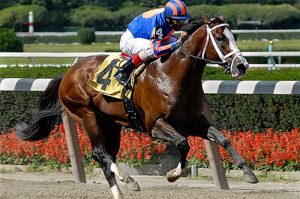 The world’s most expensive thoroughbred ever to sell at public auction has passed away. The Green Monkey succumbed to laminitis at his retirement home in Florida. He was fourteen.
 Every year, the Fasig-Tipton July Sale provides us with our first glimpse into which sires are hot and which are not. In the Cretaceous period when dinosaurs roamed the earth, some of us old timers will remember that Keeneland also had a select July sale (Fusaichi Pegasus sold in this sale), and Fasig began its July sale with what it called its “New Sires Showcase,” in which first and second crop sires were sold before the well-known and reliable sires’ offspring were auctioned. Now, freshman sires’ offspring are scattered through the single day sale, making this first select sale of the yearling season more egalitarian: a good horse is a good horse.
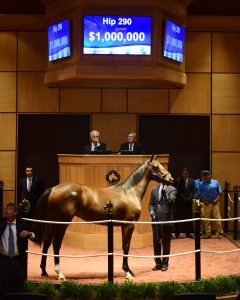 It’s easy to pick a Tapit or Uncle Mo or War Front to put into a select sale. The real riddle which must be solved by Fasig is which freshmen sires are worthy of inclusion? A freshman sire’s offspring is all promise and hope and dream, so my guess would be that those chosen for this sale must be exceptionally handsome. We get, therefore, our first view of the freshman sire landscape when we see their yearlings in this sale, and can make projections based on those chosen. In this year’s sale, 38% of the yearlings are by freshman sires, which Boyd Browning of Fasig has said is higher than usual. Of 349 entries, 132 are by new sires. What freshman sires seem to be excelling in putting out first crop fire crackers?
 Much as A.P. Indy has become the only Seattle Slew son to continue to affect the direction of thoroughbred breeding, it may be necessary to think of the Storm Cat, Medaglia d’Oro and Danzig lines as defining their own breed-altering lines. Think of all the sons of Slew who once stood at stud, and who are now all but forgotten: Slew o’Gold, Slew City Slew, Houston, Capote, etc. Just as many, if not more, sons of Northern Dancer dominated stud ranks for decades. That his influence has now dwindled to these three lines, Storm Cat, Medaglia d’Oro, and Danzig, would lead me to believe that Northern Dancer is now much less of a factor than his sons and grandsons who are carving out their own territory among prominent stallions. It is also worth noting that together, these representatives of Northern Dancer number only 29 in the entire freshman sire class—only three more than represent Tapit alone.
 Competitive Edge, a precocious son of Super Saver, was mentioned above as the only representative of that sire line with multiple yearlings in this sale. There are two other interesting one-offs. More Than Ready’s son Daredevil, winner of the Champagne S.-G1 at two, has six yearlings in the sale. A bargain at $7500, Winstar went out on a limb with an unusual ad campaign for this horse’s first crop, showing foals photoshopped doing adventurous activities that caught the eye; this kind of thinking out of the box is unusual in the thoroughbred business, whose advertising is usually a bland blend of statistics and conformation photos, or race photos. Kudos to them for getting this young stallion a first book of mares good enough to garner him this representation at Fasig. The other one-off sire line that must be mentioned is that of Indian Charlie, whose son, Uncle Mo, has set the stallion world on fire. Indian Charlie is represented by only Conveyance, with four entries, but sons of Uncle Mo went to stud this year, so this line seems certain to continue to achieve.
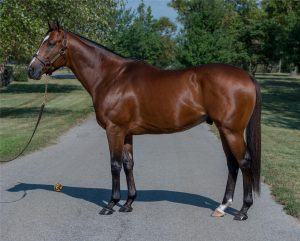 Kudos to Spendthrift Farm for a stellar weekend. Its freshman sire Goldencents, twice winner of the Breeders’ Cup Dirt Mile-G1, looks more and more to be a chip off the old block, another Into Mischief in the making. His Bano Solo, a two-year old colt out of the Unbridled’s Song mare Royal Paradise, easily won the fifth race, a maiden special weight, at Churchill Downs on June 23. Bano Solo was the most expensive Goldencents two-year old at $400,000, but is now looking like a smart bargain for his esteemed buyers, Winchell Thoroughbreds and Willis Horton. Leading the way by as many as five lengths, the colt was slowed down the stretch, and ended up winning by three lengths. Trained by Steve Asmussen, Bano Solo became the third winner for Goldencents, who is currently fourth on the leading freshman sires list and stands for $12,500.