Keeneland Week 1 – A Change in the Usual Suspects

The 2018 Keeneland September Sale represented change in more ways than the obvious maximizing of book one to four days, the entire first week of the sale, in reality putting book one and book two together, shortening the number of entries sold per day, and even beginning the sale at one o’clock because of the torrential rain in the weekend preceding the sale, which inhibited buyers’ ability to examine the select yearlings. It would appear that 2018 reveals a shift in the tectonic plates of the yearling market, with new stars emerging and energizing both the averages and the total amount of receipts to Keeneland. There would seem to be a belief in the future of thoroughbred racing once more.

First, we need to examine the book one results from last year’s September sale. The top ten sires, by receipts accrued, were utterly predictable: Tapit, War Front, Medaglia d’Oro, Pioneer of the Nile, Scat Daddy, Speightstown, Candy Ride, Giant’s Causeway, Hard Spun, and Kitten’s Joy. Not a single freshman sire appeared among them—there was no new sire igniting the hopes and dreams of buyers with promises of potential. The list really did represent all the usual suspects. Scat Daddy had died, so this was his ultimate crop. Hard Spun was the youngest sire on the top ten list, and seemed an anomaly though his yearlings looked the part, even if his production didn’t entirely support his inclusion in this elite company. Uncle Mo, advertised as “the hottest young sire on the planet,” still had naysayers and disbelievers—could a son of Indian Charlie really be a top sire, or was he a flash in the pan? Anyone who had seen him would surely become a believer, as he exemplifies studly handsomeness, in size, musculature, gaze. He knocks your eyes out. But still—Indian Charlie?

2018’s book one shook everything up. The leading sire was Medaglia d’Oro, selling 31 yearlings for an average of $625,645, for a total of over $19 million dollars. Some of this was due to Godolphin’s unwavering support of their star stallion, but the rest of the market seemed to agree, and bidding competition was fierce for the top lots by Medaglia d’Oro. But second on the list was the stuff dreams are made of: American Pharoah, with his first crop of yearlings, with 37 selling, for an average of $466, 757, for a total of over $17 million. Perhaps because it’s been so long since we had a triple crown winner, but as an inveterate student of yearling sales, I can’t remember a year when a freshman sire cracked the top ten, let alone made it to second place.

In third was the abovementioned Uncle Mo, finally getting his just rewards for his achievements as a sire. 40 of his yearlings sold, for an average of just over $422,000, and an average of $16,890,000. His top lots have routinely sold well at two-year-old in training sales, where they work fast, but trickle down economics has finally worked with his yearlings. In fourth place was last year’s first place stallion, Tapit. It’s hard to explain why this fall from grace occurred—was this crop simply not as good as previous ones, or was there too much competition from other stallions in the marketplace?

The real stand out, in terms of average, was War Front—everyone wanted one, or two, or even three. His 18 yearlings sold averaged $782,400, for a total of over $14 million dollars, and bidding seemed fiercest for those War Front offspring the market deemed perfect. Coolmore’s unwavering support of the offspring of this stallion was challenged by Godolphin, Larry Best, Phoenix, and other big buyers.

Now for the deserving newcomers to the top ten list: Curlin and Into Mischief, who both had breakthrough years as stallions, and deserved their new superstardom in the yearling market. They displaced Speightstown and Candy Ride, and even old faithful (now deceased) Giant’s Causeway. Pioneer of the Nile was next, having dropped a few notches from his fourth place finish in yearling sales last year (partially due to the popularity of his triple crown winning son), and then more surprises: Quality Road, a superstar in the making, at ninth, and Empire Maker, with his first crop after his return from Japan, in tenth place. I must mention that in eleventh place came my previously accoladed Honor Code, whose first day surge continued throughout book one.

The strength and health of the yearling market, though we remain at the very top of the market and haven’t descended into the much more problematic middle and lower market, cannot be disputed. The fact that young stallions are climbing up the list at the top indicates a buoyancy and a belief in the future that will undoubtedly continue at least through book two. Then the strength of the market will reveal its true self, when the top stallions’ offspring give way to the get of others. There will no doubt be some surprises, and I, for one, can’t wait to see them. It is wonderful, however, to see young blood being appreciated, and a variety of blood—the A.P. Indy line, the Storm Cat line, the Danzig line, the Unbridled line, the Mr. Prospector line, and yes, even Indian Charlie—giving the market breadth and depth.

— Roberta Smoodin
Day One of Keeneland September – Honor Code Surprises!

The first day of Keeneland September usually demonstrates that nobody knows anything. Consignors, unsure about the market, set reserves too high and end up bringing yearlings home, no doubt to unhappy owners. Buyers know just as little, and wait to put their hands up in the pavilion, thinking the market will stabilize, find its own comfort zone, after day one, so that they will get their dollar’s worth. With a 35% buy back rate (25% is considered high), the first day of the epic Keeneland September Sale of 2018 demonstrates that the usual suspects with the deepest pockets – Godolphin, Coolmore, Don Alberto Stables – fear not, and plunge right into the competition for the best. There is much to be learned from day one, however.
There can be no surprise that the leading sire, and of course leading first crop sire, at the sale was American Pharoah, who had 12 yearlings sell for an average of $527,000 – this ranking, it must be noted, is by gross rather than average or median. Then come the old stand-bys, the yearlings that sell well on day one no matter what – Tapit (averaging $864,000), Curlin ($654,000), Medaglia d’Oro ($592,000), followed by Pioneer of the Nile, Empire Maker (his first yearling crop since his return from Japan), and Quality Road.

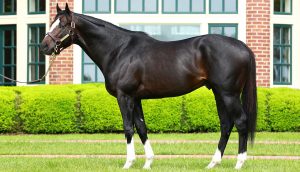
In eighth place is the big surprise of day one – first crop sire Honor Code, who had 13 catalogued, three outs, and only one RNA (in a sale with a 35% buy back rate). His nine yearlings who sold averaged $261,000. Honor Code’s stud fee at Lane’s End is $40,000, making him the best investment in the top ten leading sires on day one. His top colt fetched $400,000; his lowest sold for $100,000. His yearlings outstripped such stalwarts as Uncle Mo and War Front in terms of average, and they did it without having a million-dollar baby drag the average up; they sold solidly and consistently. And they looked the part, being uniformly large and racy with a fancy bit of white, like their sire, and with generous bone and straight legs. Honor Code’s median was $236,000 – the lack of discrepancy between average and median demonstrates the consistent value these yearlings were seen to have by the very unstable marketplace of day one, making it all the more impressive. The very low buy-back rate for the Honor Code offspring indicates that consignors knew what they had, and on a day when moderation in reserves was key, set their prices accurately.

Lane’s End has a current young star in Quality Road, whom they have stood since he began his stud career, and their part in sending Curlin’s offspring into the stratosphere before he was moved to Hill ‘n’ Dale cannot be denied. The market, on its most chaotic day, has spoken, and anointed Honor Code as the next in line, and given his pedigree (by A.P. Indy, from the female family of the great Serena’s Song), and the good looks of his offspring, the market, even on day one, seems to have told the truth.

— Roberta Smoodin

Stud Notes: Spendthrift Takes the Day

Saturday, September 9, was officially Spendthrift Farm Day. Missed the memo? Not to worry – Spendthrift goes on innovating, with its fabulous cast of young stallions and its ways of getting breeders involved with them, getting them large books of mares to make them competitive and commercial. Mr. Hughes, the owner of Spendthrift, has done more for the little guy breeder than any other farm owner, so it’s only right that he should reap the rewards. And the rewards were plentiful on September 9.
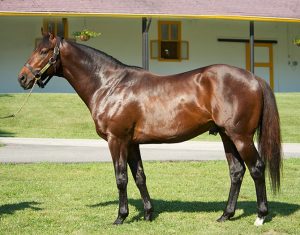
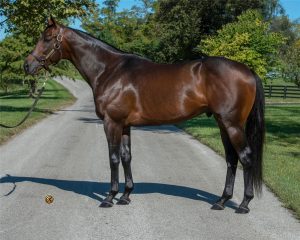
The boutique turf meet that is Kentucky Downs had a two-year-old stakes winner by a son of Indian Charlie. No, not that one – not Uncle Mo. Instead, Moonlight Romance, winner of the Kentucky Downs Juvenile Turf Sprint S., is by Liaison, Spendthrift’s second crop sire who has acquitted himself well enough to be number 14 on the leading second crop sires list. Moonlight Romance is even a Spendthrift bred, and out of a Malibu Moon mare, who himself stands at Spendthrift and is a leading sire annually. Trained by Wesley Ward for Kenneth and Sarah Ramsey, Moonlight Romance has started four times, with two wins and one second, for earnings of $358,800. Liaison, though not the monument to equine kind that Uncle Mo is (nothing compares with Uncle Mo in terms of stunning, statuesque good looks), is a beautiful young horse, who looks like another stallion to further Indian Charlie’s line.

The leading first crop sires list reveals more Spendthrift dominance—their son of Into Mischief, Goldencents, is number one on this list, and number two is the handsome son of Unbridled’s Song, Cross Traffic. His daughter, Dancin Shoes, went off at 39-1 in her first start, the British Columbia Cup Debutante S., which she won easily, causing her odds to shorten up in the Sadie Diamond Futurity at Hastings Racecourse on Saturday, which she also dominated, making her two wins in two starts, both black type. Unbridled’s Song has thus far not proved to be a great sire of sires, which is surprising given his ability to get stakes winners himself, but perhaps Cross Traffic will be that special son.

Given that the most highly anticipated movie of the fall is the latest version of “A Star Is Born,” allow me to dub Into Mischief into the equine category of that name. No one could have foreseen his rocketing ascension into the stellar category of leading sires, but there he is, fourth on the list, ahead of Tapit and Curlin, behind only Candy Ride, Kitten’s Joy and Scat Daddy. Spendthrift’s management of Into Mischief has been nothing short of brilliant, and Saturday proved that, with two stakes winners. First, in the Arlington-Washington Lassie S., at Arlington, Into Trouble took the seven-furlong event with ease. With her California-bred dams’ side (first dam by Bertrando), her price may have seemed steep at Keeneland September 2017, at $180,000, but she now appears to have been a bargain in her first black type success.

Then, at the Beverly J. Lewis S. at Los Alamitos, the hilariously named Gas Station Sushi, a three-year-old filly by Into Mischief, took home the grand prize. Also a Spendthrift home bred, she fetched $90,000 as a yearling at Keeneland September, and $240,000 as a two-year-old in training at OBS March, and has hit the board in all four of her starts, winning three of them, including a graded stakes race.

Gas Station Sushi were bred at Spendthrift prior to Into Mischief’s super stardom. Now that his book is likely filled with spectacular mares (Zenyatta was bred to him this year), the expectation that his offspring will only get better and more successful must be indulged. Congratulations to Spendthrift and B. Wayne Hughes—it couldn’t happen to more generous connections. Mr. Hughes has made wonderful young stallions available to breeders via various innovative means, has created his own stakes races for Spendthrift bred two-year olds at Churchill Downs, and throws the best party in the Bluegrass every year, on the dark day of the Keeneland September Yearling Sale. Long may he reign.

— Roberta Smoodin

Stud Notes: Derby Winner Orb’s Stud Career Skyrockets

Sophomore sire Orb didn’t make many waves as a freshman sire, but his career has now made a big splash with his first graded stakes winner, two-year-old Sippican Harbor, becoming the longshot winner of the Spinaway S.-G1 at Saratoga on Saturday, September 1. With only 83 starters, Orb now boasts 33 winners, but clearly Sippican Harbor is the belle of this ball, moving her sire up to number 12 on the second crop sires list. Sippican Harbor’s record is now three starts and two wins, for earnings of $242,650.
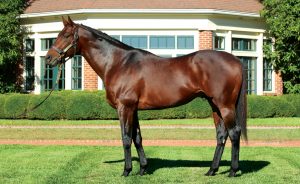
Her trainer, Gary Contessa, entered her in the Spinaway filled with doubt. “I really thought she was a turf horse, shows you what I know,” he said. “A blind squirrel finds a nut once in a while.” Out of a Deputy Minister dam and a Mr. Livermore second dam (the wonderful producer French Flick), Orb demonstrates he is following in his father’s footsteps. Malibu Moon has sired graded stakes winners Freedom Child and Heavenly Love with Deputy Minister mares, graded stakes winner Prospective with an Awesome Again mare, and graded stakes winner Sara Louise with a Mt. Livermore mare, making the concept of this cross an attractive one, especially since Orb himself is a representative of one of Malibu Moon’s most successful crosses, with Unbridled mares and daughters of his son, Unbridled’s Song. Both the inbreeding to Northern Dancer through Nijinsky II in Orb’s pedigree crossing with the Deputy Minister in his grade one winning daughter, and Nijinsky II’s affinity for the Blushing Groom line, in her second dam, seal the deal. Gary Contessa himself purchased the filly out of the Fasig Tipton Saratoga Yearling Sale in 2017 for $260,000, but she failed to reach her reserve of $110,000 at the Ocala Breeders Sale in March of 2018. Clearly Contessa is much more than a blind squirrel.

Orb won the 2013 Kentucky Derby-G1 over such luminaries as Will Take Charge, Revolutionary, Mylute and Oxbow, all currently at stud as well. He stands at Claiborne Farm for $25,000, but his first crop did little to boost his reputation as a sire, with only two winners and a grade three placer, Orbolution. His yearlings clearly looked the part, with an average auction price of nearly $150,000, bolstered by two million dollar plus yearlings. Orb has every right to be a sire on paper, as his tail female line goes back to the blue hen Laughter, by Bold Ruler, the dam of longtime Claiborne stallion, until his death, millionaire Private Terms, among many other black type winners.

Malibu Moon has yet to prove himself as a sire of sires, though his get more than proves his ability to sire top runners. This grumpy old man stands at Spendthrift Farm, and now, with Orb, Freedom Child, and Gormley carrying the mantle, this new grade one winner foretells good things to come.

— Roberta Smoodin

Stud Notes: Baffert and Smith Own Travers Day with Abel Tasman and Marley’s Freedom

It’s Bob Baffert’s and Mike Smith’s world – the rest of us are just lucky to be citizens of it. On Travers S.-G1 day, August 25, the so-called undercard featured two grade one races for fillies and mares, the Personal Ensign S. and the Ballerina S., and both were won by the dynamic duo who might as well be Batman and Robin given their unbeatable heroism. Gritty Abel Tasman (Quality Road) won the Personal Ensign with her trademark battle down to the wire, for the second year in a row, and despite an objection and inquiry. It was the most thrilling race of the day, easily. Abel Tasman has now banked $2,787, 385.
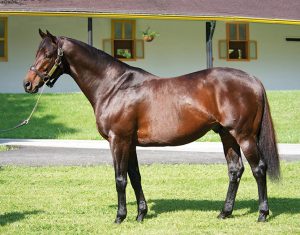
Then Marley’s Freedom (Blame) won the Ballerina in the most impressive race of the day, going away from a strong field with ease. She now has earnings of over $628,000, and looked unbeatable under Smith sitting chilly the whole way.

These stellar fillies represent two stallions who are shining stars this year, and whose offspring are showing up and winning at a phenomenal pace: Quality Road, who stands at Lane’s End for $70,000, up from $25,000 last year, and Blame, who stands at Claiborne Farm for a mere $12,500. It is also well worth noting that in this era of multi-million-dollar partnerships for the cream of the yearling and two-year-old crops at sales, Abel Tasman was sent through the Keeneland September Sale and went unpurchased, bought back for $65,000.
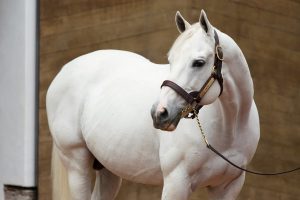
Marley’s Freedom went through the same sale in 2015, and was purchased for a bargain price, $35,000. Baffert and Smith have their share of the cream of the crop sales toppers, but these two fillies demonstrate that in the middle and lower ends of the market, grade one winning champions can be found.

–Roberta Smoodin

Stud Notes: Unique Bella and Noble Mission

If you are a race horse owner, you know that the highs make you feel like your brain is going to explode, and the lows break your heart, over and over. My own race filly just broke her maiden, and made me the happiest person on earth for a day. August 18, the low happened – millionaire, champion, and multiple grade one winning four-year-old Unique Bella fractured a sesamoid in training and was retired.
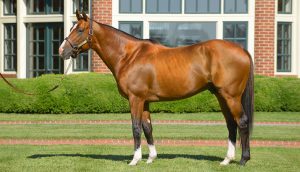
The sesamoid is a tiny bone in the ankle that absorbs much of the intense pressure of running, but at least today a fractured sesamoid, though career ending, isn’t always life threatening. This huge, gorgeous, gray Tapit made her name with her resounding victories, making other top-class fillies look like nags as she, under Mike Smith, put multiple lengths between herself and them down the stretch of such races as the Santa Ynez S.-G2, the Las Virgines S.-G2, and the Santa Ysabel S.-G3. Named Champion Three-Year-Old filly after her grade one win in the La Brea Stakes, her two grade one wins this summer, in the Beholder Mile at Santa Anita and the Clement L. Hirsch, at Del Mar, a race that much-loved Zenyatta similarly owned, sadly marked the end of a stellar career.

Out of the Unbridled’s Song mare Unrivaled Belle, her pedigree represents what has now become a classic cross for Tapit. The addition of any In Reality/Dr. Fager to Tapit’s pedigree, already rich in these American speed influences, makes top class race horses like Unique Bella. Owned by Don Alberto Stables, she was purchased for a bargain $400,000 in the Keeneland September Sale in 2015. This wonder woman was trained by the ever-careful Jerry Hollendorfer, who was known to break into a smile when discussing her, a huge show of emotion for this man with his patented poker face. Unique Bella will be missed by all who love racing.

On a Saturday racing card that was owned, it seemed, by the usual suspects (Tapit, Medaglia d’Oro, War Front, Curlin, etc.) in two-year-old races, the sixth at Saratoga stood out because it was a maiden special weight won by Code of Honor, by a length and a half, a son of first crop stallion Noble Mission. Noble Mission is a full brother to another wonder horse, the legendary Frankel, and he stands at Lane’s End. Code of Honor was his fifth winner, and won at first asking, at six furlongs on the dirt. His Dixie Union dam undoubtedly brings the dirt influence to his otherwise grass pedigree, but what is most interesting is that he is owned and bred by W.S. Farish, Mr. Lane’s End himself.
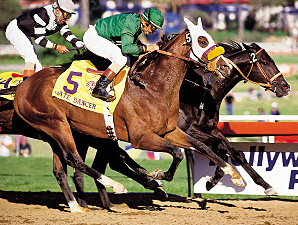
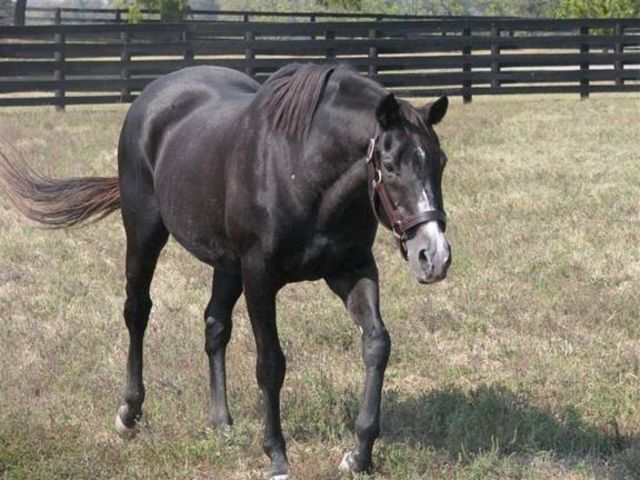

Dixie Union also stood at Lane’s End his entire career, making Code of Honor a complete Lane’s End production. Always a bastion of class and devotion to its stallions, Lane’s End and Mr. Farish are to be congratulated for this excellent maiden win. They support and make their young studs, with Noble Mission being the rule rather than the exception. Standing for $20,000 stands and nurses, he would appear to be well on his way to a similar success that his brother Frankel is already experiencing.

— Roberta Smoodin

The Great Races: The 1984 Breeders’ Cup Classic

By Kimberly French

WildAgainOn Monday (October 26) morning, a small select group of admirers, family and media gathered around a freshly constructed plaque that was to be unveiled at Thoroughbred Park in downtown Lexington. Although a decade has passed since John R. Gaines passed, his imprint on the legacy and direction of Thoroughbred racing will forever remain. On a day that would commence the countdown to the 32nd edition of the Breeders’ Cup that would be hosted by Lexington for the very first time, it seemed the perfect tribute to the man responsible for the event’s existence.

Gaines was a pet food magnate that suggested the sport needed to create a year-end championship event to cement divisional honors and to attract participants from all around the world. He proposed his concept in 1982 at a luncheon held during the Kentucky Derby festival week in neighboring Louisville. In Gaines’ opinion, this new event would only improve the sport and prove to be a boon for the entire industry. More than three decades later Gaines’ vision not only became reality, but was voted by a select panel of racing experts in 2006 as the sport’s most memorable moment of the last 100 years. The Breeders’ Cup has not only withstood the ravages of time, but has flourished in ways that could never have been imagined on that spring day in late April 1982.

Wild_AgainOddly enough, the inaugural Breeders’ Cup Classic is also on many racing historians and turf writers’ lists as one of the most memorable of all time. Not because a 31-1 shot captured a tremendously large prize, but because its sheer excitement and behind the scenes drama set the stage for what the future would hold. Essentially it cemented the Breeders’ Cup as an event that would be permanent and monumental in how the sport would be perceived, would morph and evolve. Therefore, the 1984 Classic cemented Gaines’ idea and all the machinations to achieve its construction. Its significance and appeal makes this contest one for the ages.

On November 11, 1984, the first Breeders’ Cup was presented at Hollywood Park. It had taken Gaines and his supporters, such as John Nerud, nearly two years to get the event off the ground. It was no simple task, as many involved in the industry perceived Gaines’ dream as folly. They felt it was a foolish notion with no substance and could never possibly succeed. Due to the untiring efforts of Gaines and his followers, the industry was brought to heel whether they fully believed in the Breeders’ Cup or not. On the day when the seven million dollar races finally were to be run, four of which determined the divisional honors, there was a decided majority that did not know what to expect or if the Breeders’ Cup would actually become a flop of epic proportions. After the intense three horse duel to the wire in the $3 million Breeders’ Cup Classic, people realized this event not only had merit, but purpose, and was here to stay.

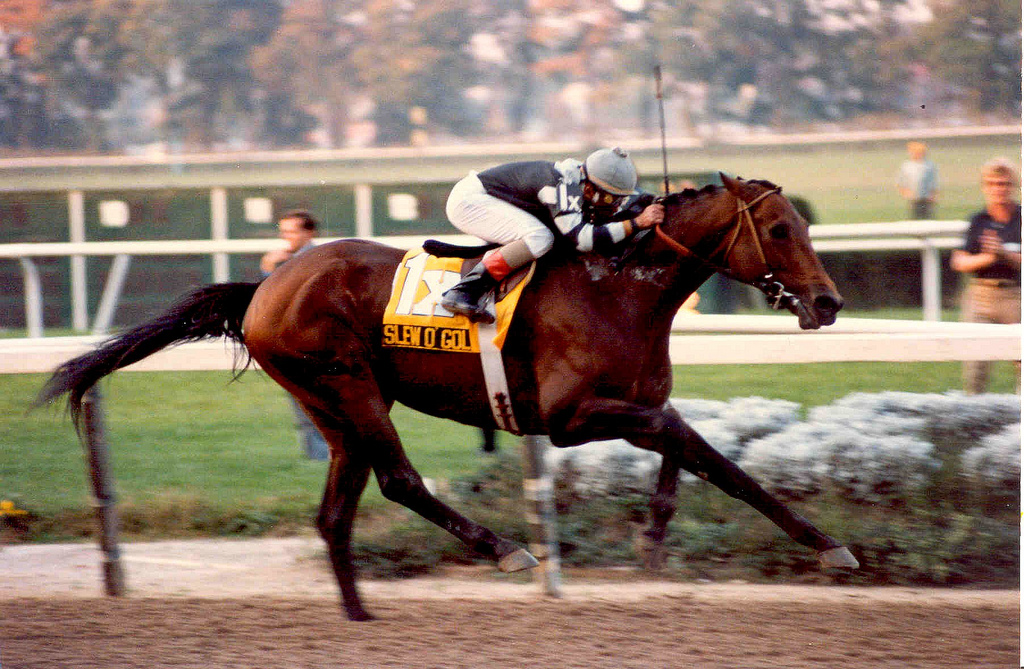
JohnGainesThe 1984 Classic was the final career start for the outstanding Slew O’Gold. Most bettors felt the stallion would simply prance down the stretch to his sixth straight triumph for that year’s campaign and would be crowned Horse of the Year after completing this final requirement. But they could not have been more wrong. As more than 64,000 people stood waiting for Slew O’Gold to hit the line in front, they began to realize Wild Again at 31-1 was a force to be reckoned with.

After putting away strong bids by Mugatea and the top 3-year-old Precisionist, who was a multiple champion during his illustrious career, Wild Again hit the top of the lane still with the lead. The stallion had been hard used during swift fractions, but showed no signs of spitting the bit or throwing in the towel. Slew O’Gold had bided his time just off the pace, without engaging in the speed duel in front. Within seconds, he was asked for his speed and drew alongside Wild Again, but shockingly enough did not blow right by him. As Slew O’Gold made his move and gained position, the hooded Gate Dancer was closing with a rush on the outside. The three horses nearly moved in unison SlewOGolddown the stretch with Slew O’Gold receiving the misfortune of being sandwiched in between his two rivals. As the wire approached, Wild Again seemed to moving in while Gate Dancer was  lugging out, which was something he had been disqualified for in the Kentucky Derby where he was taken down from fourth to fifth.

Wild Again crossed the finish line first, with Gate Dancer in second and Slew O’Gold in third. Less than a length separated all three horses and up flashed the inquiry sign. All tickets were to be held until the stewards conducted their inspection. After eight long, taxing minutes of scrutinizing the film, they concluded Gate Dancer had indeed impeded the progress of Slew O’Gold, but Wild Again remained the victor as he had committed no infraction. The official order of finish was Wild Again, Slew O’Gold and Gate Dancer.

Pete Pederson, the head steward at time, issued the reasoning behind the decision and even after he retired still had many people ask him how he and his colleagues could have made such a wrong choice. Slew O’Gold was bumped by both horses and should have been the winner. Pederson, however, never wavered from what the group determined. He claimed Wild Again never was a hindrance to Slew O’Gold’s chances and steadfastly defended the result on every occasion he was reminded of it.

WildAgainBCAlthough the race itself was certainly scintillating and a thrilling debut for the event, the history of how Wild Again even participated in that contest is even more intriguing, as he had just finished third in allowance company at Bay Meadows. He was hardly the caliber of horse that Slew O’Gold was and despite his connections fervently believing he belonged, they did not have the $300,000 plus supplemental fee to take that kind of risk of him.

Owned by the Black Chip Stable of Bill Allen, Terry Beal and Ron Volkman, Wild Again was not nominated to the Breeders’ Cup. Allen, who was known for his penchant for taking chances, was not on board to take a shot at the Breeders’ Cup with his horse. A client with the prestigious Lossen Agency, which was the largest bloodstock organization of its kind in the nation, Allen was convinced to pony up the cash to enter Wild Again in the first edition of the Breeders’ Cup Classic by the agency’s owner, Dick Lossen.

After Lossen explained all Wild Again had to do was finish third for Allen to get his money back, he was mulling it over, but was truly pushed into action when Lossen borrowed the $120,000 early nomination fee and delivered it in person to the Breeders’ Cup office. With Lossen forcing his hand, Allen used one of his Blushing Groom mares in foal as collateral and borrowed the entire fee from the bank.

The rest as they say is history, for Wild Again proved he was no fluke and went on to become one of the most successful stallions in the world. The horse proved the Breeders’ Cup was truly an event to determine world champions.


Watch the 1984 Breeders Cup Classic Here

Pedigree Review: Into Mischief’s Del Mar’s Best Pal Stakes Winner – Instagrand

In a weekend full of racing action, one colt stood out – Instagrand, winner of August 11th’s Best Pal S.- G2 at Del Mar. Frequently cynical racing commentators felt their blood pressure rise, and utilized the ultimate compliment when describing him -“freak.” Indeed, he had that man among boys look to him that we’ve become accustomed to seeing in Justify, that aura of professionalism one rarely sees in two-year-olds and that very masculine handsomeness.
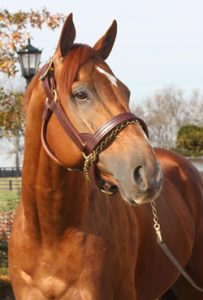
Instagrand demolished a decent field, bringing his record to two starts, two wins, for Jerry Hollendorfer and Drayden Van Dyke, and for owner Larry Best, who races under the stable name of OXO Equine. Best is to be congratulated for rocketing to the top of owner standings so rapidly, and for spending the $1.2 million at Fasig Tipton Florida March this year for this exquisite specimen whose action is effortless—he glides and floats, feet barely leaving the ground. Hollendorfer is pointing his young star toward the September 3 Del Mar Futurity – I can’t wait to see him again.

Instagrand continues to lend credence to the ascent of Into Mischief, who stands at Spendthrift Farm for $100,000, into the top echelon of stallions. His dams’ side is less distinguished, as he is out of the Lawyer Ron mare Assets of War, herself by Lord at War. Into Mischief has created stake horses with such a vast variety of mares that it would seem he crosses brilliantly with all other sire lines, though a second dose of Northern Dancer seems especially appealing to him. One stake winning son stands out, though, when considering Instagrand’s pedigree and why it works. Can the Man, who also stands at Spendthrift for $3500, has made a decent start in his first year at stud, and like Instagrand, was brilliant at two.

Most significantly, however, he is out of a Danzig mare, just as Instagrand’s dam is a great granddaughter of Danzig. Of course, Can the Man’s dam is no ordinary Danzig mare. She is a daughter of one of the all time great, blue hen broodmares, Juddmonte’s Blush With Pride, whose offspring fill a page with black type, and whose other daughter happens to be Better Than Honour, Broodmare of the Year and dam of Belmont-winning filly Rags to Riches, among others.

Can the Man got his speed from his sire, but got a bit of stamina from this dams’ side, through Blushing Groom, Blush With Pride’s sire. Instagram’s dam may not be as distinguished as Can the Man’s, but he does get a major boost in endurance through Lord at War’s dose of Ribot, the primary stamina influence in thoroughbreds to this day, which doubles the Ribot already found in Into Mischief’s dams’ side, through His Majesty.

The influence of Lord at War could make the difference in Instagrand’s ability to get a distance and go on to the classics at three. Can the Man, with his superficially superior pedigree, did not demonstrate this ability, and only achieved Grade 3 status. Instagrand has already demonstrated Grade 2 winning ability. Danzig coupled with some stamina influence would seem to be one key to success in breeding to Into Mischief.

Lawyer Ron, a son of Langfuhr, makes an interesting broodmare sire when coupled with Into Mischief. Through his sire, he brings the aforementioned Danzig, and also a dose of My Babu, which blends beautifully with the Turn-to in Into Mischief’s pedigree, through Stop the Music. But there’s more: Lawyer Ron’s dam, Donation, was by Lord Avie, which adds that essential extra line back to Secretariat’s great dam, Somethingroyal, through her other important son, Sir Gaylord, the sire of Lord Gaylord. Here is where the magic happens. Lord Gaylord is out of the Ambiorix mare Miss Glamour Gal. Ambiorix, bred so similarly to both Turn-to and My Babu, creates the triumvirate of inbreeding that coalesces to make an unusually high percentage of stakes winners. Ambiorix’s dam, Lavendula, is also the second dam of both My Babu and Turn-to.
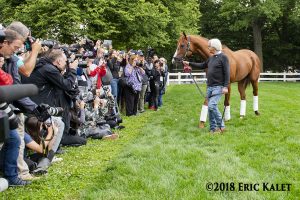
Here’s the other magic trick in Lawyer Ron’s pedigree—in considering him, it turns out he needs to become one of my favorite broodmare sires! Miss Glamour Gal’s grand dam is a mare named Hostility, by Man o’War, out of Marguerite de Valois, the full sister to both Bull Dog and Sir Gallahad III. Into Mischief’s pedigree contains numerous strains of the brothers, sons of the great Spearmint mare Plucky Liege, but it’s the addition of their full sister on the dam’s side that completes the collection of superior genetic material with the addition of the huge heart gene that can only come from a female contributor.

It must also be noted that Turn-to’s dam, Source Sucree, was sired by Admiral Drake, a half-sibling to the three full siblings already mentioned, another son of Plucky Liege. I’ve written about the importance of inbreeding to all the sons and the one daughter of Plucky Liege, but must continue to do so as every stake winner I examine continues to amaze me with the importance of the offspring of this one great mare born in 1912. Put Plucky Liege inbreeding together with two strains of Somethingroyal, not to mention Almahmoud through her two great daughters, Cosmah and Natalma, and this freak of a horse, Instagrand, is born.

One more common theme found in the lineages of Into Mischief’s stake winners is the addition on the dams’ side of Mr. Prospector. This makes sense, since Into Mischief’s pedigree is devoid of Mr. Prospector, but contains his relative from the Raise a Native line, Affirmed. Once again, Instagrand’s relationship with Mr. Prospector is from an underwhelming son of the great Mr. P, Stutz Blackhawk, the sire of Instagrand’s third dam, Added Elegance. However, Stutz Blackhawk is out of Amber Morn, a daughter of Ambiorix. What is so fascinating about this pedigree is that it combines so many important genetic strands through lesser relations, and yet the sum of the parts creates this magnificent beast. Clearly, collecting the genetic material known to make stakes winners, through whatever relations, works. California Chrome and American Pharoah (who, coincidentally, has his own Lord at War connection through his sire) are examples of this phenomenon, both having dams’ sides that, when examined closely, bring together important DNA through some undistinguished uncles, aunts and cousins.

The more one examines current pedigrees of stellar race horses, the more convinced one becomes that there really are only four or five great mares of the twentieth century that matter. Find them, in multiples, in a pedigree, and you will find a race horse. Certainly, we study stallions to find the right mates for our mares, and to acquire mares by excellent broodmare sires. But over and over, mare power lurks in the background, as it does in Instagrand’s superficially unimpressive pedigree. This $1.2 million dollar two-year-old may be a freak of a race horse, but his background of mare power makes him anything but a genetic freak. He has a license to be a great racehorse in his blood.

— Roberta Smoodin

Thanks to Thoroughbred People contributor and bloodstock consultant Roberta Smoodin for this article. Roberta offers pedigree analysis for sales and breeding recommendation services for your broodmares – please contact Roberta at [email protected] for more information.

Triple Crown Winner Justify Retired From Racing

Press Release:

Justify, undefeated winner of the 2018 Triple Crown, has been retired from racing, it was announced today.
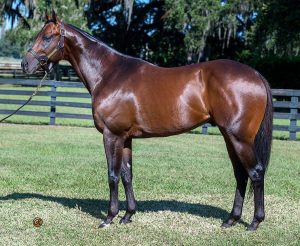
“Justify had some filling in his ankle, and he is just not responding quick enough for a fall campaign,” said trainer Bob Baffert. “We all wanted to see Justify run again, but ultimately it is my responsibility to make sure he is perfect. Without 60-90 days, I can’t be definite.”

Campaigned by WinStar Farm, China Horse Club, Head of Plains Partners LLC, and Starlight Racing, Justify dazzled at first asking on Feb. 18, winning his career debut at Santa Anita and proceeded to accomplish many historical feats en route to racing stardom. He broke the “Curse of Apollo” when he won the Kentucky Derby (G1) by 2 1/2 lengths on May 5, becoming the first horse since Apollo in 1882 to win the Derby without starting as a 2-year-old.

“He is an incredible horse and we are very disappointed he can’t run again,” said WinStar Farm’s Kenny Troutt. “All things happen for a reason, and we are blessed to have raced him to be the 13th Triple Crown winner in history.”

“When he won the Preakness, I allowed myself to start dreaming about the Triple Crown,” said Troutt. “When we look back on this, we have been a part of an undefeated Triple Crown Champion, and hopefully a Horse of the Year.”

Justify went to New York in pursuit of history in the Belmont Stakes (G1). Sent to the lead by his Hall of Fame rider Mike Smith, Justify never looked back, winning the Belmont by 1 ¾ lengths, becoming the first undefeated Triple Crown winner since Seattle Slew.

“Like everyone else, I am disappointed he won’t run again, but I am thankful he came into my life,” Smith said. “There was never a time when I rode him that I felt like I was going to get beat. There was no horse who could run with him without sacrificing themselves, and there was no horse who could come get him. He truly is a gift from God.”

Justify provided racing international exposure through the Triple Crown, winning the Belmont Stakes in China Horse Club’s red and yellow colors after taking the Derby and Preakness in WinStar’s silks.

“To win the Triple Crown is an amazing accomplishment,” said China Horse Club’s Teo Ah Khing. “The history of the Triple Crown and the difficulty of winning the three legs is not something I take lightly. It has been a great ride for all of us, and I have complete confidence Bob is doing the right thing by Justify.”

Justify will return to WinStar Farm early next month. He won all six of his career starts, amassing earnings of $3,798,000. In addition to his Classic wins, Justify also won the Santa Anita Derby (G1). Bred in Kentucky by John Gunther, the son of Scat Daddy—Stage Magic, by Ghostzapper was purchased by China Horse Club and Maverick Racing for $500,000 out of the Glennwood Farm consignment at the 2016 Keeneland September sale.

“The timing is bad for another start in 2018, and therefore, we have to retire him,” said WinStar Farm’s Elliott Walden. “Like American Pharoah, we can’t take the risk of running Justify as a four-year-old. We all wanted him to finish his career in the Breeders’ Cup Classic (G1), but it was not meant to be. As has been reported, there is a possible sale to Coolmore in place, but that won’t be finalized until a later date. We are excited to share him with our fans starting the middle of August after he gets acclimated.”

The “First Look” will be offered to WinStar StableMates members on Aug. 10th and 11th and can be scheduled through https://stablemates2.winstarfarm.com/.  Complete tour schedule available at https://visithorsecountry.com/winstarfarm/.

Justify will also parade at Del Mar on Saturday, July 28, before traveling to WinStar.

“The parade at Del Mar will be a great opportunity for the fans in the San Diego area to come out and see him,” said Baffert.

The National Thoroughbred Racing Association released the following statement in response to the news: 

“Justify’s extraordinary racing career – from maiden to Triple Crown winner in less than four months – was as brilliant as any our sport has seen. We can’t wait to have his first runners hit the track in 2022.”

– Alex Waldrop, President and CEO, National Thoroughbred Racing Association

Stud Notes: Ocala Stud’s Uncaptured Sires His First Graded Stakes Winner

North America has a new leading freshman sire: Uncaptured. Who? The unlikely leader is by Lion Heart (who?), a son of Tale of the Cat, not exactly a famed branch of the Storm Cat line in terms of producing sires. Millionaire earner Uncaptured was Canadian Horse of the Year and Two-Year Old Champion, the first horse since Deputy Minister to have that distinction, and was a multiple graded stakes winner at two. But no one expected this relatively unheralded young stud to surpass Goldencents on the leading freshman sires list.

The fast filly who put her sire into the number one spot was Catherinethegreat, who on July 20, won the Schuylerville S.-G3 on Saratoga’s opening day, taking the race wire-to-wire by 4 ¼ lengths. She had previously won a maiden special weight by 10 ¼ lengths, and now boasts earnings of $136,300.

Acquired for owner John Oxley by trainer Mark Casse at the OBS October Yearling Sale for $170,000, Catherinethegreat was selected as the best Uncaptured in the sale. Oxley had raced Uncaptured as well, with Casse training, and wanted to support his young stud. They certainly succeeded. Bred in Florida by Wendy Christ and Kathie Haines, the filly is a half-sister to Katinka (by Kantharos), a stakes winner of $138,000, and out of the Carson City mare Classy City Lady.

Kudos to Floridians for supporting Uncaptured, making him the most popular freshman sire in Florida with large books of mares—someone had an inkling that this was a stallion to be reckoned with. Every so often we Kentuckians need a wake-up call about stallions standing in what we consider to be the provinces. Bravo to the breeders, Oxley and Casse, and to Ocala Stud for standing this horse. Uncaptured is out of the Arch mare Captivating, and has in his family such Canadian greats as Bold Ruckus and Giboulee. Canada to Florida to stardom—an unusual path, but we clearly need to keep an eye on offspring of Uncaptured.

One can’t help but remember the skepticism, initially, about Scat Daddy, with his sire, Johannesburg, not known as a sire of sires…and we all know how he turned out.

— Roberta Smoodin