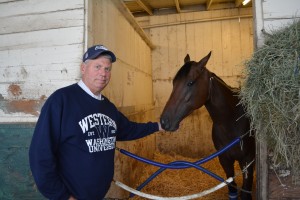
The Interviews: Thoroughbred Farm Owner and Ex-Jockey Bobby Gonzalez

DSC_0334

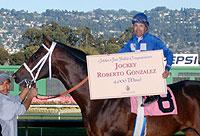
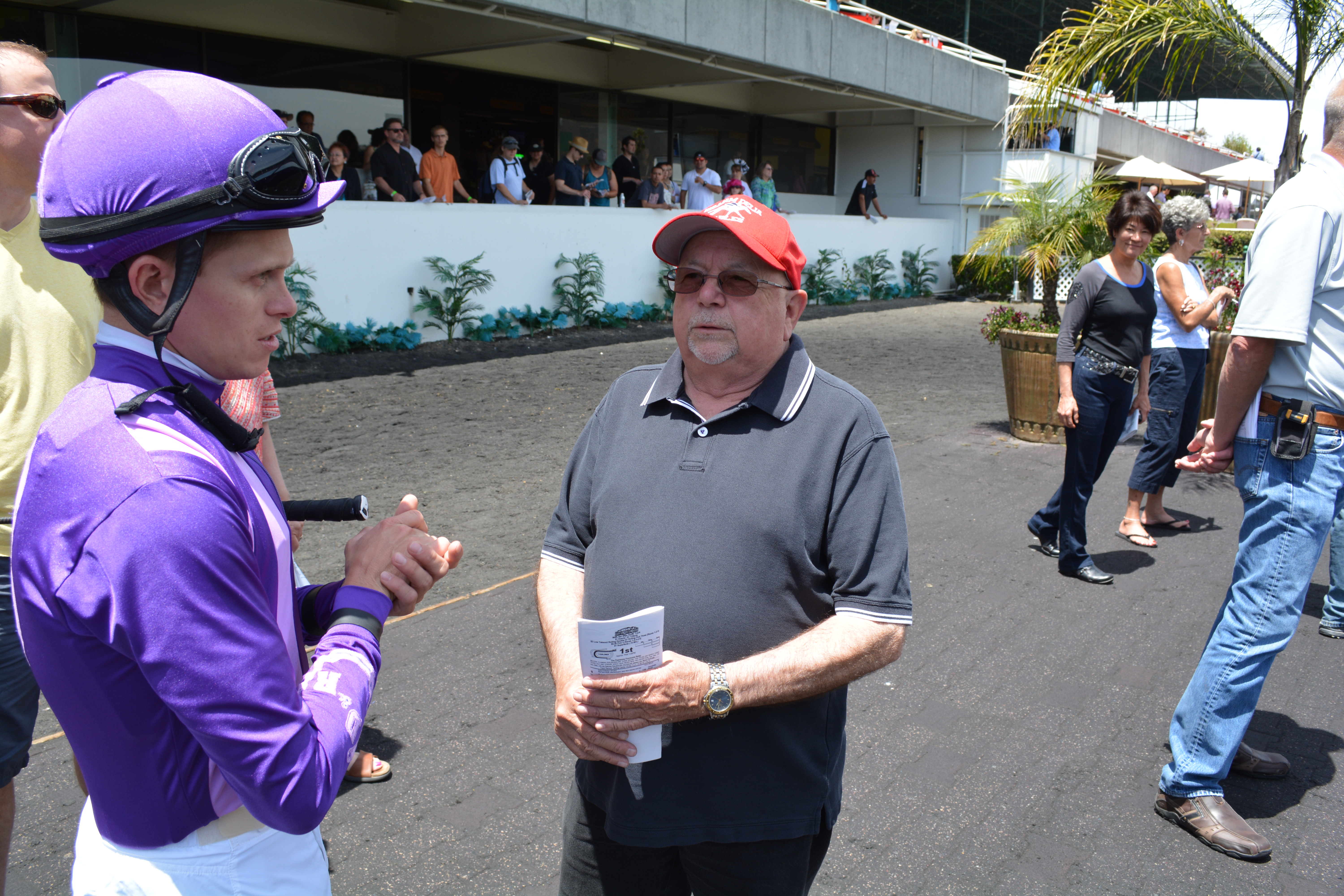
From riding match races as a teenager in the outreaches of Mexico to becoming one of the winning most riders in California with over 4400 winners and $64 million dollars in prize money, Bobby Gonzalez now owns and runs a layup facility in Brentwood, California. Bobby talked to us about his career.

TBP: Bobby tell us about how you got involved with horses growing up. 

BG: I was raised in Michoacan, Mexico, my parents and grandparents had horses around the place where we lived and I always loved to ride.  We came up to Tijuana in around 1968 as my father Sam Gonzalez started working as an exercise rider at Agua Caliente. I used to go and watch him gallop horses at the racetrack there and that was my first experience of a real racetrack, although I had already ridden many match races in other parts of Mexico by then.


TBP: Tell us about the match racing, was it legal or recognized as rules horse racing?

BG: It was legal, but no it was not recognized officially. There would be ten to fifteen match races in an afternoon, just two horses going against each other over 200 or sometimes 300 or 350 yards, it was all about speed like quarter horse racing. Horse owners would challenge each other based on what they knew about each other’s horses, there were thoroughbreds, quarter horses and half breds and some horses would sometimes run more than once the same day. There was no tote system or bookmakers but there was big money being bet by people with each other. People also would bet on the stages in a race too, you could bet on which horse broke the fastest and was in front first jump out of the gate and there were cameras to record which horse was in front after 100 yards, 200 yards and 300 yards, so it was like having four races in one.


Bobby Gonzalez 4000 wins picTBP: So that experience may be part of the reason why you became such a great gate rider here in the states. After the match racing what was the next step for you?

BG: I told my father that I wanted to be a jockey and I got a job at a thoroughbred ranch in San Clemente. They knew I had ridden in matches in Mexico so they asked me to ride match races here in California in Riverside county, which I did every weekend for a while. I worked at the ranch for three or four years and in ’71 I got a break when the trainer Jerry Dutton came to see some of his two year olds work. Jerry asked me to to go and work for him at Hollywood Park but I was scared to go to the racetrack at first and didn’t really want to go as I knew nobody there and spoke no English. Jerry kept telling me he wanted me to gallop his horses so eventually I went to work for him. I didn’t know what I was doing at first and I didn’t understand Jerry’s instructions either, I had to learn the Hollywood Park track by having one of the grooms draw me a map and then running round the track myself to see where the poles were.  I worked for Jerry for two years and got my jockey’s licence in 1975 as a lot of people had been encouraging me to go for it. Tony Diaz who rode then and now trains was a big help to me.

I had half a dozen rides and then rode my first winner on May 1st 1975 on a horse called Sawtoot. I was five lengths in front with a sixteenth to go and I was so excited I stood up four or five jumps before the wire. It was an allowance race worth $16,000 so it was a big score for me as working for Jerry I was making just $375 a month and I was on 10% of the winners share of the purse, so it was a big payday.


TBP: After that first winner how long did you have to wait for the next?

BG: Not too long, I rode three longshot winners at Hollywood Park just before Del Mar opened. Then on opening day at Del Mar I rode the winners of each leg of the daily double. After that I started getting a lot of attention and I think I was third leading rider of the meet.

Continued >>

The Interviews: Bloodstock Agent and ex-Trainer Mary Knight

Mary Knight Portrait pic

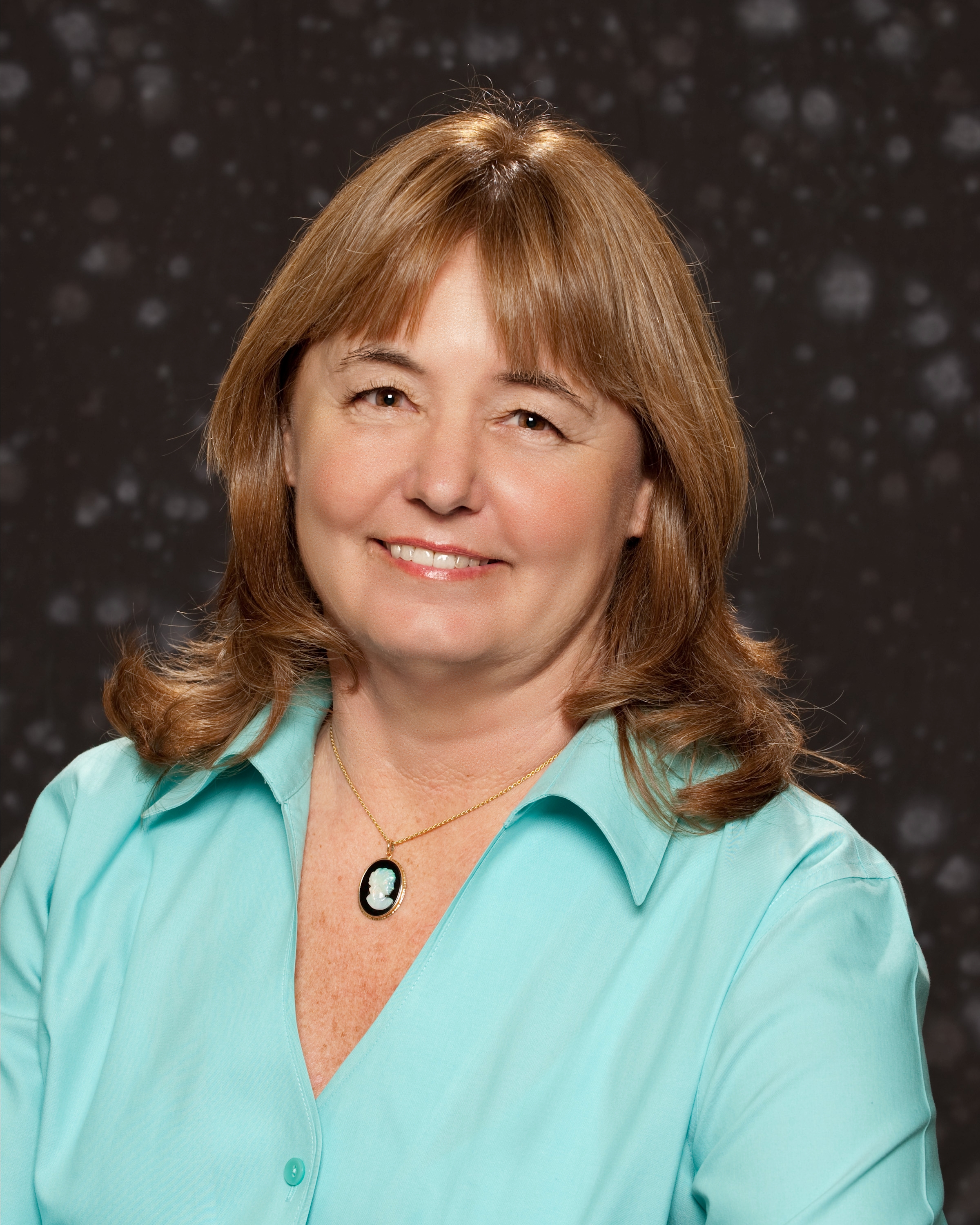
After training horses early on in her career with Bobby Frankel and later her husband Chay, Mary Knight has become one of California’s most successful and reputable Sales Consigners and Bloodstock Agents. Mary talked to Thoroughbred People about her life in racing and her views on the current state of the sport.

TBP: Mary were you interested in horses growing up? How did you get into the horse business?

MK: I was a horse crazy girl and while I was going to the College of San Mateo south of San Francisco there was a flyer in the students union saying they needed hot walkers at Bay Meadows, so I started walking hots for the quarter horse people. I really liked it, so when school finished in San Mateo I went down to Los Alamitos with the quarter horses. I was getting $50 a week walking hots.

I applied and got into Cal Poly and when I wasn’t in school I was working with the horses at Los Alamitos. From then on I just knew I wanted to be a racehorse trainer.

 TBP: So how did you step onto the path towards training?

MK: Well I really wanted to learn to start galloping horses, but it was very hard to go from walking hots and grooming to galloping. It was considered a privilege to go from the stall to the back of a horse. Even Bill Shoemaker – when he started out he worked like a dog at Suzie Q Ranch so he could get the chance to get on a horse. You had to start from the ground up. Some people coming into the industry these days don’t have that grounding and background.  I took the trainers test and I had taken Biology at Cal Poly, so I knew about anatomy and physiology and that helped me with the test. I did real well in it and I got a lot of publicity as there weren’t too many women around the racetrack at the time. “Womens Lib” was big then, I think the publicity came from the fact that racing wanted to show that it was embracing women. There was a very flattering article in the LA times about me!

TBP: Then you started working as Assistant Trainer to Bobby Frankel – how did you get that job?

MK: Bobby and my husband Chay owned a horse together, so we knew each other. I had Bobby’s horses at Hollywood when he was at Santa Anita, and when he was at Hollywood I was at Santa Anita, I really didn’t see that much of him, he just left me alone and let me do the job. The horses would come from the farm to me, I would get them initially ready and then send them on to Bobby. We did really well with first time starters and horses coming back from a break. Then I married Chay in 1975 and became his assistant trainer.

TBP: What nice horses were you involved with?

MK: Chay trained a good horse called Raise a Man who was favorite for the Kentucky Derby before he got hurt. He later stood as a stallion at Gainesway farm in Kentucky. He won the San Felipe, the San Vincente and the Malibu. We had another good horse called Splendid Spruce, he won the Santa Anita Derby and ran seventh in the Kentucky Derby. Then there was Rancho Lejos who we claimed for $10,000, he too ran in the Kentucky Derby and became a multiple stakes winner for us.

TBP: How did you get into the consignment business?

MK: A client of my husband Chay asked me if I would sell his horses at the two year olds in training sale at Hollywood Park, he had around fourteen head. He said he would pay all the bills and give me 5%. They were pretty nice horses, we got them looking fantastic and they sold like hot cakes. Wayne Lukas and Henry Moreno said “Mary you’re missing the boat – you gotta do more of this”.  My training background gave me an advantage over some of the other agents and suddenly I was off like a shot, all the big guys were giving me horses to sell – Wayne Lukas, Charlie Whittingham, Ron McAnally – it was a successful business right off the bat. I did the yearling sales, the twoyear old sales and the horses in training sales, which were much stronger in those days, some nice horses were sold there to people from all over the world. I’d have 50 to 60 horses at every horses in training sale back in the day.

Mary Knight Portrait pic

TBP: What would you say are the biggest differences in training horses between now and back then?

MK: In those days people were more inclined to give a horse time. These days trainers don’t want to let go of horses, and owners don’t want to take horses out of training and stop running. It costs so much money to get a horse to the races in the first place, people are very reluctant to turn them out and start that process over again – it’s a lot more expensive than it used to be. And I really think that constant confinement is a problem, the confinement factor is a huge factor, once a horse gets into training at the racetrack there’s no way he can even lay down and roll. All horses want to do that from time to time, but there are no turn out paddocks or places for them to do that at the racetrack.

TBP: Unlike other countries where horses really stretch their legs warming up and gallop to the start without a pony, horses here are ponied to the start and seem to barely get out of a jog  for a few minutes before they are loaded into the gate and are expected to run flat out. 

MK: Well horses here haven’t always been ponied to the start like they are now. When I started it was like it is in other countries, a horse only got a pony if he really needed a pony and one was requested. Now that exception is the rule – every horse has a pony. Not being warmed up enough is a contributing factor to injuries – people just want to focus on medication, but that is the least of it – believe me!

TBP: The statistics show that the average number of starts per horse has dropped significantly over the years. What factors do you attribute this to?

MK: Well it goes back to the fact that horses aren’t given enough time off for rest and recovery, and also horses are more fragile now because from an early age they spend too much time in confinement. They do have weanlings and yearlings run free after they are born of course, but as soon as they start being prepped for the sales – and they are not fully developed at that point – that’s when they start to be compromised.

TBP: Where do you stand on the Lasix debate?

MK: Trainers initially only used it on bad bleeders, the vet had to certify that a horse had bled visibly through the nostril for it to be given Lasix, but then it got to be that virtually every horse was on it because people did feel that it enhanced performance. Some horses are actually effected adversely and don’t run at all well on it, but overall I think Lasix will stay and I think we need it now. I used to buy a lot of very nice horses from New Zealand and Australia that came here specifically because they could run on Lasix. As for the idea that it masks other drugs, I would say that that is patently false, with the quality of drug testing equipment they have now there is no way that Lasix could mask anything. 

TBP: Synthetic tracks?

MK: Well when they made the mandate I thought it was ridiculous, because no one knew over time how it would work. Interestingly enough the year the mandate was made I went to work up in Washington at Pegasus Thoroughbred Training Centre where they had a Polytrack. I worked there for a year and a half and we had issues with injuries such as suspensory injuries, which were attributable to the inability of the track to yield at all. The problem was that the track didn’t allow a horse’s foot to slide, the foot would just hit and stick. We did figure out how to shoe for it though and the Washington climate was compatible  with it. I actually had 3 grade one winners come off of there the year and a half I worked there.

Mary Knight Portrait picAnother issue is that one of the things the synthetics were sold on was that they were low maintenance. But then people running horses in races later in the day felt that they would have been at a disadvantage if the track wasn’t harrowed. At Del Mar for example you could see the tractors going over it in the heat and see the wax from the surface coming off on the tires. The environmentalists also wouldn’t allow some of the fiber types that went into the original mixture either, so the surface was already compromised and was not what the mixture was supposed to be. People liked it in the morning but not in the afternoon, when it got hot and the wax became more liquid. The integrity of the mixture broke down.

Another problem was that everyone put in a different type of synthetic track, that was a mistake too as we then had all different types of synthetics of course. I feel that it has been an experiment that has failed. I think a well maintained dirt track is just fine, and we have some great track men around.

TBP: What good things are happening in California racing?

MK: I think Los Alamitos is going to be a bright spot and is going to help us. The location is great, the grandstand is much more in keeping with the number of people that come to the races, and they have made a very substantial investment and commitment to the racing industry when so many of these places and track owners are trying to get out of racing.

TBP: Do you think Los Alamitos will get more racing dates?

MK: Well probably, but the problem is that we already have too many racing dates, we’re overly saturated with too many dates. If other sports were going 24/7 like racing does people wouldn’t care about them like they do.

TBP: Do you have any thoughts about how to interest new fans in the sport?

MK: Something I have thought about and I don’t know whether it would work or not, is that it would be great if every racetrack could have a small museum of national or/and local horse racing history. Local schools are always looking for field trips etc. so to set up a space where we could show pictures and footage and movies of the old days and the history of racing at that track and across the country, it could only help. Also a lot of people are completely in the dark when they go to the track for the first time and there are plenty of racing people, exercise riders for instance, who would be happy to work part time in the afternoons to help people out and educate newcomers to the game. These days people are so far removed from the use of the horse and agrarian life.

If we could educate people to the breeding side of things and print pedigrees in racing programs, perhaps we could highlight and point out which horses are in that day by this sire or out of this dam etc.. I think it would pique curiosity and be another angle of interest for people that they are currently completely unaware of.  The more people know and understand about horse racing the more it will appeal to them.

TBP: Tell us about the Whole Body Vibration system and how it works.  http://youtu.be/lHEvzltefcI

MK: It stimulates the circulation and it mitigates much of the compromisefrom the confinement situation. Ideally every horse in the barn would go on it for around ten minutes a day. There is a small ramp for the horse to walk on and off, trainers usually position them at the end of their barn. Most of the major rehab centers around the company have them, Todd Pletcher has one, Doug O’Neill has one and loves it. It helps horses warm up too, if you put an old claiming horse on it for a few minutes before they go out onto the track the rider can sure tell a difference in the way they go. Horses take to it really well and they really like it, they come off bucking and playing and look forward to going on it again.

Mary Knight Portrait picI had a prototype made and I had it up at Winner’s Circle ranch, I’m on the board of directors of the Thoroughbred Rehab foundation, and we had a horse we had taken off the track called Super Strut who had won quite a lot of money but who had real bad feet. We put him on the machine and after 30 days his foot had grown 1.34 centimeters, which in the dead of winter is a big deal. Patrick Sheehy had Kinsale King, who had real bad quarter cracks, on one, it really helped him and he went on to win those big sprint stakes races. Everyone that uses it likes it, it’s a good piece of equipment and you can’t get into trouble with it, it’s virtually indestructable.

TBP: What are your plans for the future, you’ve had a great career in racing, are you planning on retiring or will you stay in the game?

MK: Well I intend to be Nanny to my future grandkids, but they will be learning a lot about horses and racing as I have no intention to leave the business completely and I will keep doing what I am doing indefinitely!

————————————————————————————

ThoroughbredPeople.com

The Interviews: Jockey Ricardo “Ricky” Gonzalez

DSC_0205

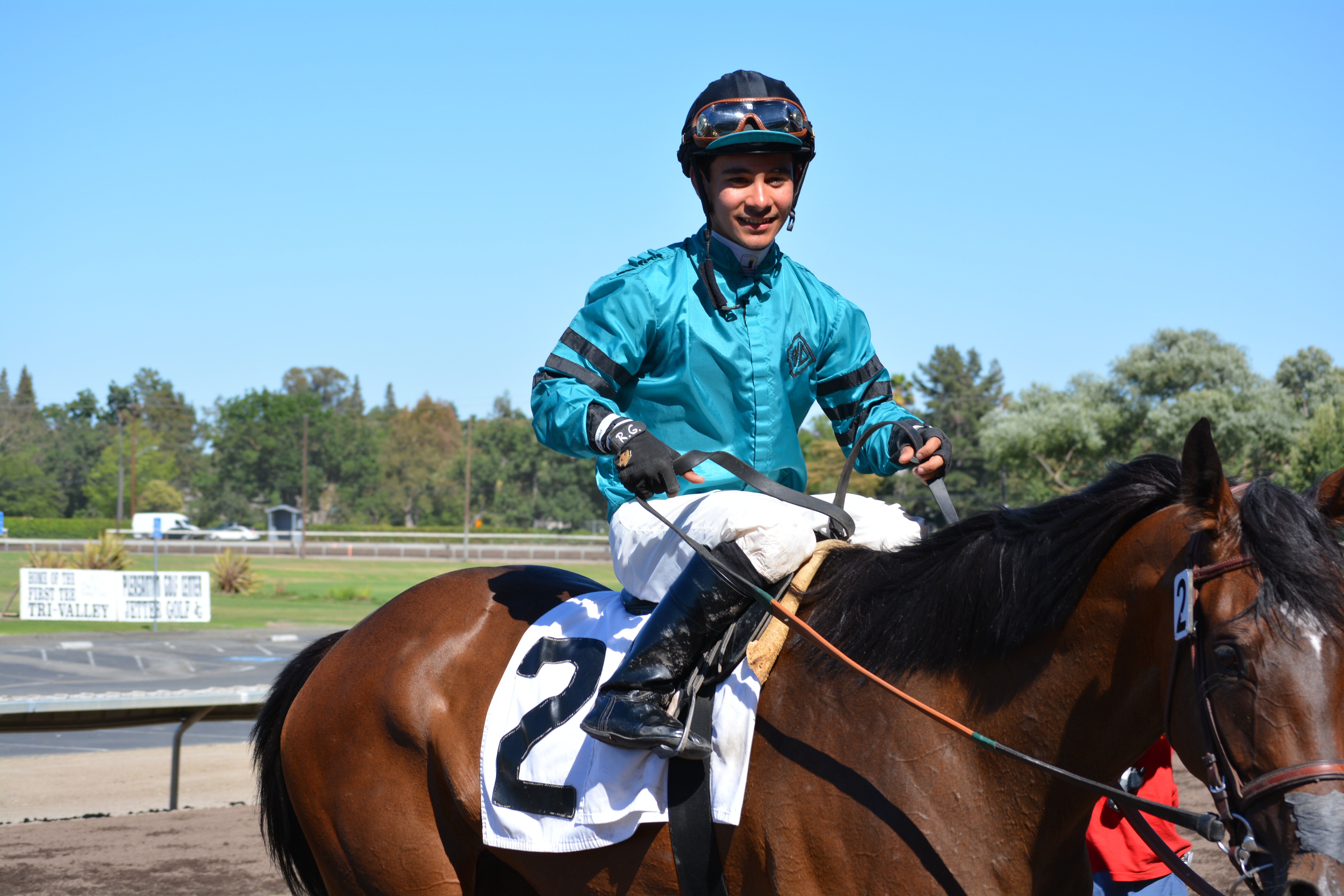
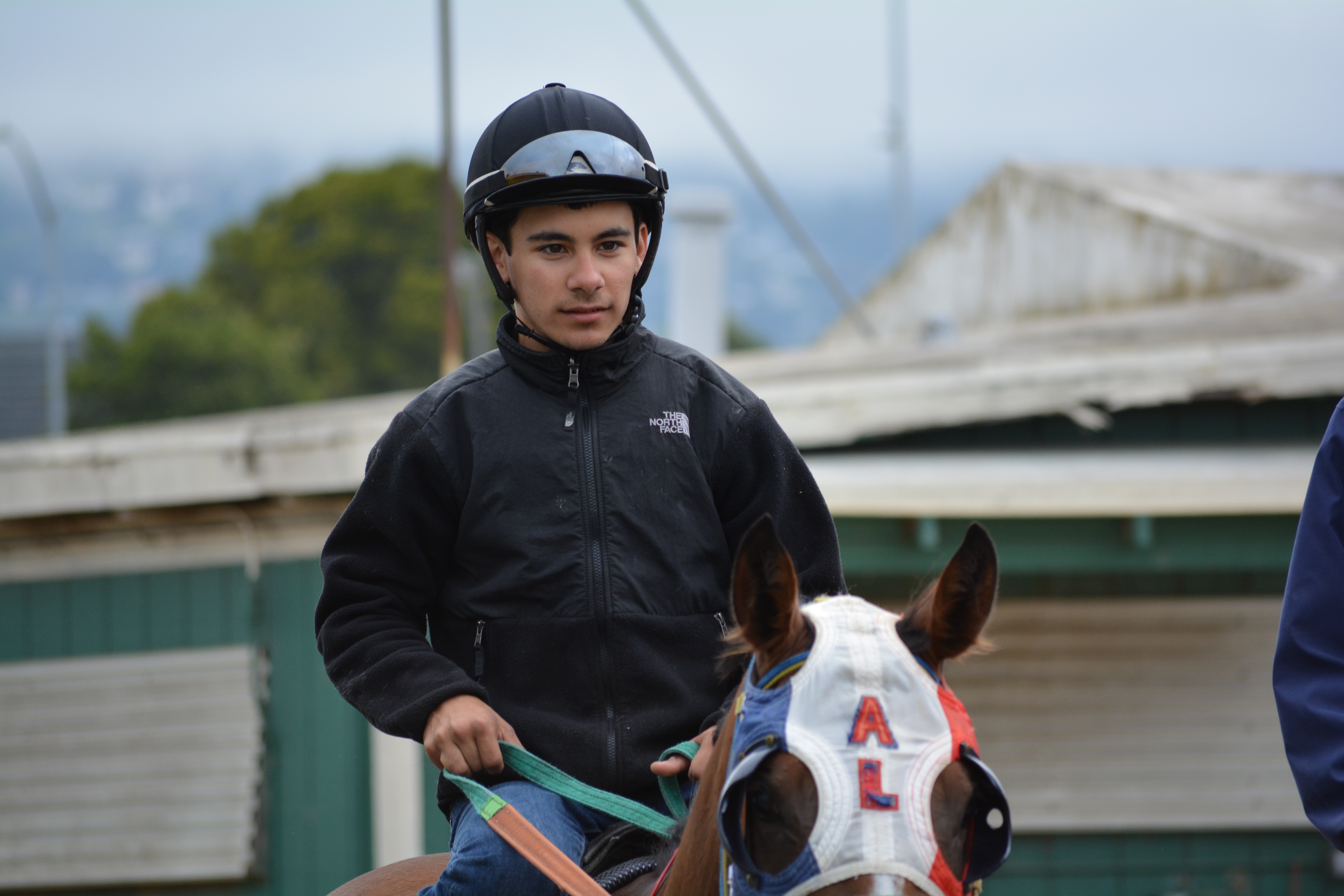
Ricky Gonzalez is creating quite a stir on the Northern California circuit. After just over three years of riding in the USA he has already ridden close to 500 winners that have earned over $8 million in purses. We talked to Ricky about the successful start he has made and how he got into racing.

TBP: Ricky you’ve had a great start to your riding career, tell us how it started.

RG: I started riding in Mexico City at Hipódromo de las Américas. I never sat on a horse until I was 14 or 15, I got interested after watching the TV show “Jockeys” on the Animal Planet station which we had down in Mexico. My Dad’s uncle who was a breeder in Mexico introduced me to Carlos Silva, he got me going down there. I started galloping and then working horses for him. I stayed around four or five months and I rode my first race there in Mexico City. It was a night meeting with a huge crowd and I ran fourth. Then I came to the US to Phoenix and Turf Paradise. I got my jockey’s licence pretty much right away. I didn’t speak any English at the time when I arrived, I was worried as I hadn’t realized how many Spanish speaking people worked at the track, but I started taking English lessons straight away and now my English is pretty good.


TBP: How long did it take you to get going when you arrived?

RG: I won a race on a pick up mount the week after I got to Phoenix on a horse called What A Laser. It was fantastic to get off the mark so fast. I was claiming ten pounds then, but I got to five wins pretty quickly so I was then down to claiming seven. I stayed around three months and then I went to Belmont Park, New York.  Angel Cordero was going to help me get started there, but I had problems with the visa process in New York state and I couldn’t get my licence, so I came back to Northern California when the Pleasanton meet was on last year. A trainer from Phoenix put me on some horses, then my new agent Ron Freitas started getting me plenty of rides.


TBP: What do you enjoy most about riding races?

RG: Well I love horses and I also love the adrenalin rush of riding, it’s amazing. You just want more and more.


TBP: How do you find riding on the synthetic track at Golden Gate after you had started out on dirt tracks in Mexico City and at Turf Paradise and Pleasanton here in  the US?

RG: Actually it was tricky to get used to, the first time I worked a horse on the Tapeta I went way too slow, I worked a horse for Bill Delia and I just ended up galloping really rather than working so it caught me out the first time, but then I got used to it and adapted. It’s nice to ride on because there is no kick back.


Ricky Gonzalez 2TBP: Who has helped you the most here in the US in the past year or so since you started?

RG: Well my agent of course and also Leslie Mawing who also had Ron as an agent, he helped me a lot. Leslie has gone to ride up in Washington now, but when he was here I shared an apartment with him and we would watch the replays of my races together and he’d coach me and give me advice about what I could have done and what I might try next time, he was a really big help to me. Also I am much better with the stick using both hands now, before I had trouble with my left hand and switching hands, but it comes fairly naturally now. 

DSC_0181TBP: Have you ridden in Southern California yet?

RA: Yes I had a ride at Hollywood Park on a two year old filly called E Equalsmcsquared for Eric Kruljac. She was a really nice filly and it was nice to experience Hollywood Park before it closed.


TBP: Who have been some of your favorite horses that you have ridden so far?

RG: Power of Ten is one of my favorites, Lloyd Mason trains her here at Golden Gate. She’s an allowance filly, I like her a lot, she has a big personality, she’s kind of crazy in the mornings and really tough to gallop but in the afternoon she tries hard all the way every time and is really tough. Another good filly that I really liked was Chati’s On Top that I rode for Bill Delia before she moved down south. And there is a horse called Dr. Williams who I won three straight on for Bill Morey. He is a really clever horse, a hard trier too, he puts himself in the right spot every time, he helps you and says “tell me where you want to go” and when you ask him he just goes, it’s like he knows where the wire is.


TBP: Most satisfying day’s racing so far?

RG: That has to be when I rode three winners in a day in November of last year at Golden Gate.  I had a fourth ride on the day and I was thinking maybe I can ride another winner but it wasn’t to be as when the gate opened my horse stumbled and that was his chance gone. Also I won the $100,000 Oaktree Distaff stakes at Pleasanton recently on Tribal Gal who was a longshot on the day, that was my biggest win so far and it was a great day.


TBP: What would you say is the best decision you have made in your career to date?

RG: Definitely coming here to Golden Gate Fields. When I was thinking about coming here some people were telling me it wasn’t a good move, saying there weren’t many horses here and all the best rides go to Russell Baze. Once I got here though I fell in love with it, I love it round here. Russell can’t win all the races!


TBP: I watched you in a head and head duel with Russell all the way down the stretch at Pleasanton recently and you won in the final strides after a close battle with the top rider, did he say anything to you afterwards?

RG: Yes, he looked across at me as we were galloping out and said “congratulations.” He’s a classy guy, still very strong and very fit, I don’t know how he does it.


TBP: Which other riders do you look out for here?

RG: Dennis Carr and Frank Alvarado, when either of those guys are close to you at the head of the stretch you know they’ve usually got plenty of horse and they are coming after you.


TBP: And which riders from across the country do you like to watch?

RG: Joel Rosario for one, I love the way he rides, and John Velasquez, they are the two riders I would like to learn from.


TBP: What are your goals for the next year or two?

RG: Well I like it here, I don’t have any plans to move anywhere else at the moment. If opportunities come up I’ll see when the time comes. I just want to keep riding winners and doing a good job.

————————————————————————————

ThoroughbredPeople.com

The Interviews: Trainer Bill McLean

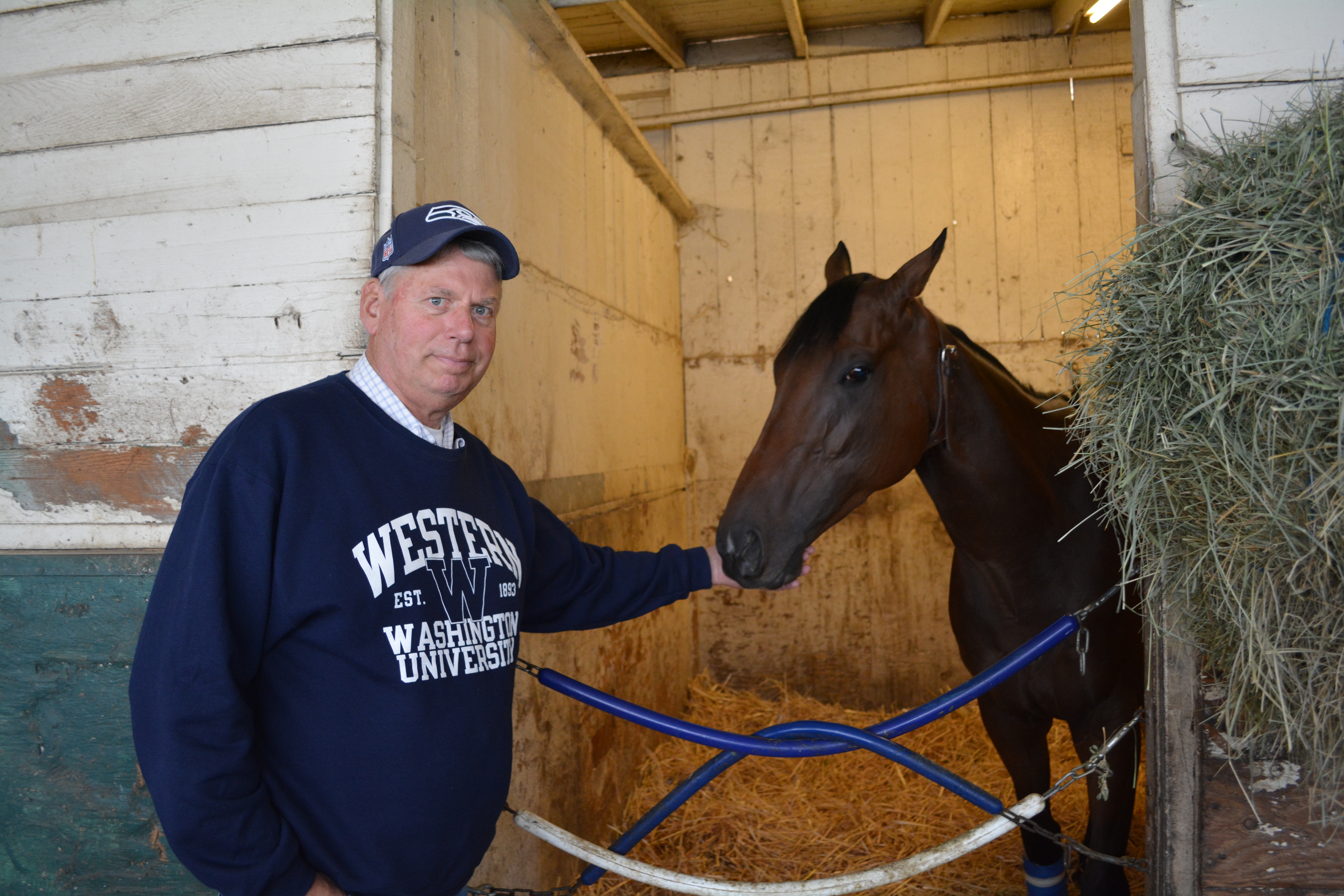
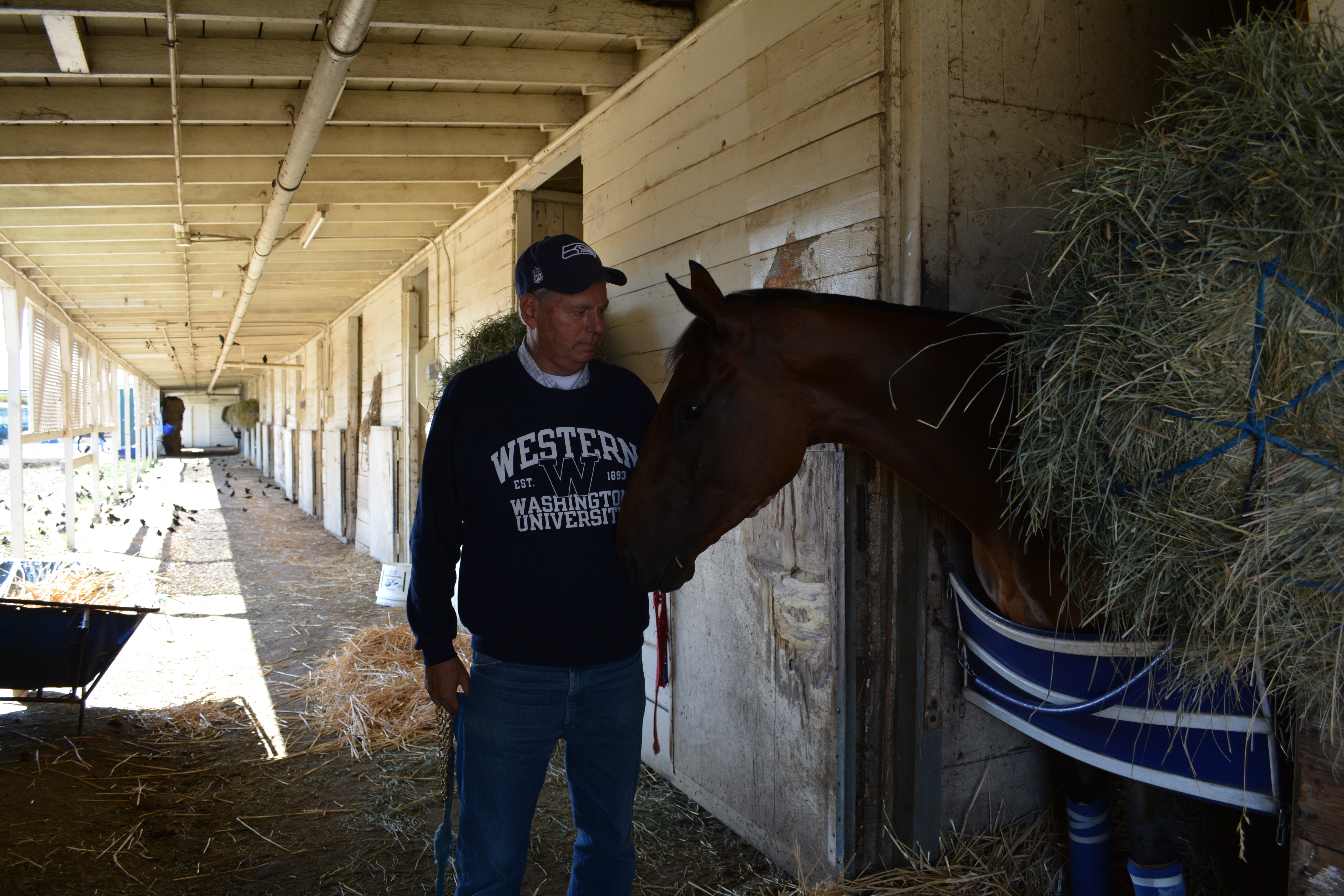
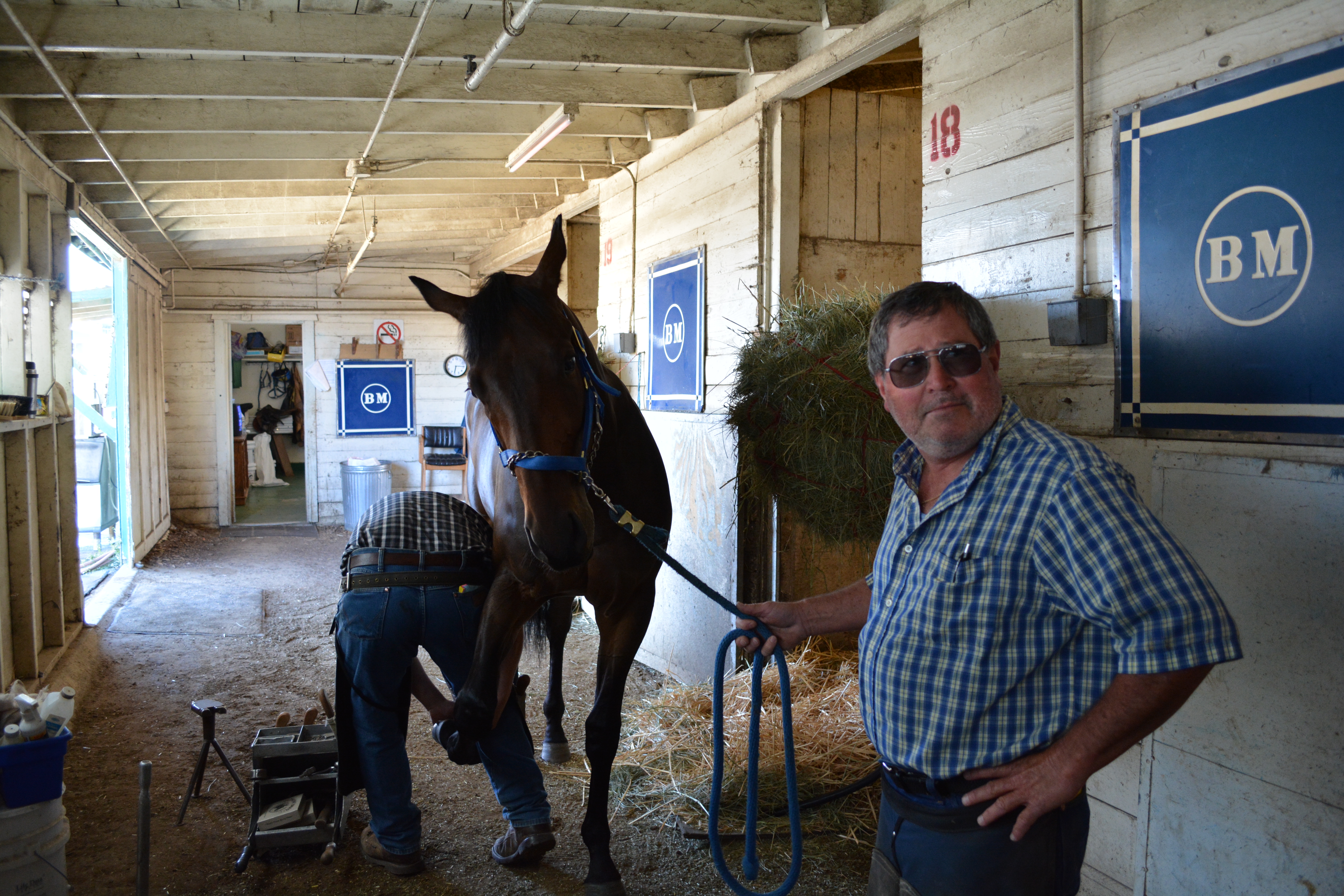
DSC_0192TBP: Bill, tell us about how it all started for you.

BM: My parents and my grandparents had a breeding farm just outside Vancouver, BC where I was born, in a place called Cloverdale just south of the city. They had a 40 acre place and they owned the Alibi stallion Dark Hawk, who sired the good horse George Royal amongst others. Dark Hawk was just a little horse a shade over 15 hands high, but he was a great sire, especially for mudders. So I learnt a lot about horses there on the farm, then I started hot walking at Hastings Park and when I got a little older I moved onto grooming for Carl Baze and Troy Taylor. I learnt a lot with those guys, they were great horsemen.

TBP: Who were your favorite horses that you remember growing up?

BM: George Royal was my big favorite. I remember seeing him win on the bullring at Hastings Park. Then I remember seeing him win a stake in Vancouver, Donny Richardson was on him who used to ride him for Bobby Hall most of the time. George Royal got stopped dead turning for home, but Donny just wheeled him and out and he flew down the stretch and won the race. Then he came south to Santa Anita and won the San Juan Capistrano with Johnny Longden in the plate. I remember watching him on the TV show from Santa Anita on the Saturday afternoon with Gil Stratton.

TBP: How did you get your start training?

BM: Well, I nearly didn’t, because for a good while I was actually training to become an accountant. I was still grooming in the mornings but I worked in an accountant’s office the rest of the day. I would groom for Carl Baze until 8.30am and then I would go put my suit and tie on and go to the accountant’s office, and then do night school at UBC, after I was done there. I did three years of that and when I was graduating the accountant firm said “Bill we are looking forward to having you come on board and thinking about you becoming a partner.” But all my buddies were at the track and my heart was at  the track, so I stayed at the track. My Mom wasn’t very happy about it at the time… I carried on working for Carl Baze and while I was with him I bought a horse called Bright Signal for $2000 on the cuff. Joe Baze, Carl’s brother and Russell’s Dad, rode him for me and he won the first time I ran him. He turned out to be a nice little horse. Then a couple of years later I came down here to Northern California to claim a couple of horses to take back up north. I got a few more horses and I started off really hot, I think of the first eight I ran I had six winners a second and a fourth. I thought “this game’s easy”… I knew it wasn’t….but it was a fun time. Then Troy Taylor, who was by then married to my sister Marilyn, moved to Longacres and he said “why don’t you come down here to Seattle?” There were a lot of good state bred bonuses in the races there so I made the move. It was about three hours drive from Hastings, I went down there and it worked out well, my barn got up to about 30 horses.

TBP: Did you come down to Northern California with horses much then?

BM: Yes, I would bring horses down to Bay Meadows in the fall for the meet there and then go back to Longacres when racing started there again. We’d finish at Longacres in September, then some of the cheaper horses would go to Portland and the better ones would come and run and train at Bay Meadows. My clients would often come down to watch their horses, they’d fly in on a Friday for the weekend and have a great time.

Then when Longacres closed in either ’94 or ’95, I took some horses to Yakima Meadows and Emerald Downs for a couple of years, but it wasn’t great, it was kind of messy and I missed Longacres, I really enjoyed training there.

TBP: Who have been some of your favorite horses over the years?
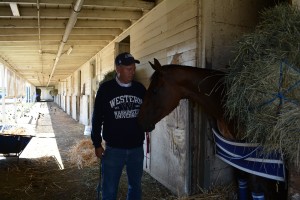
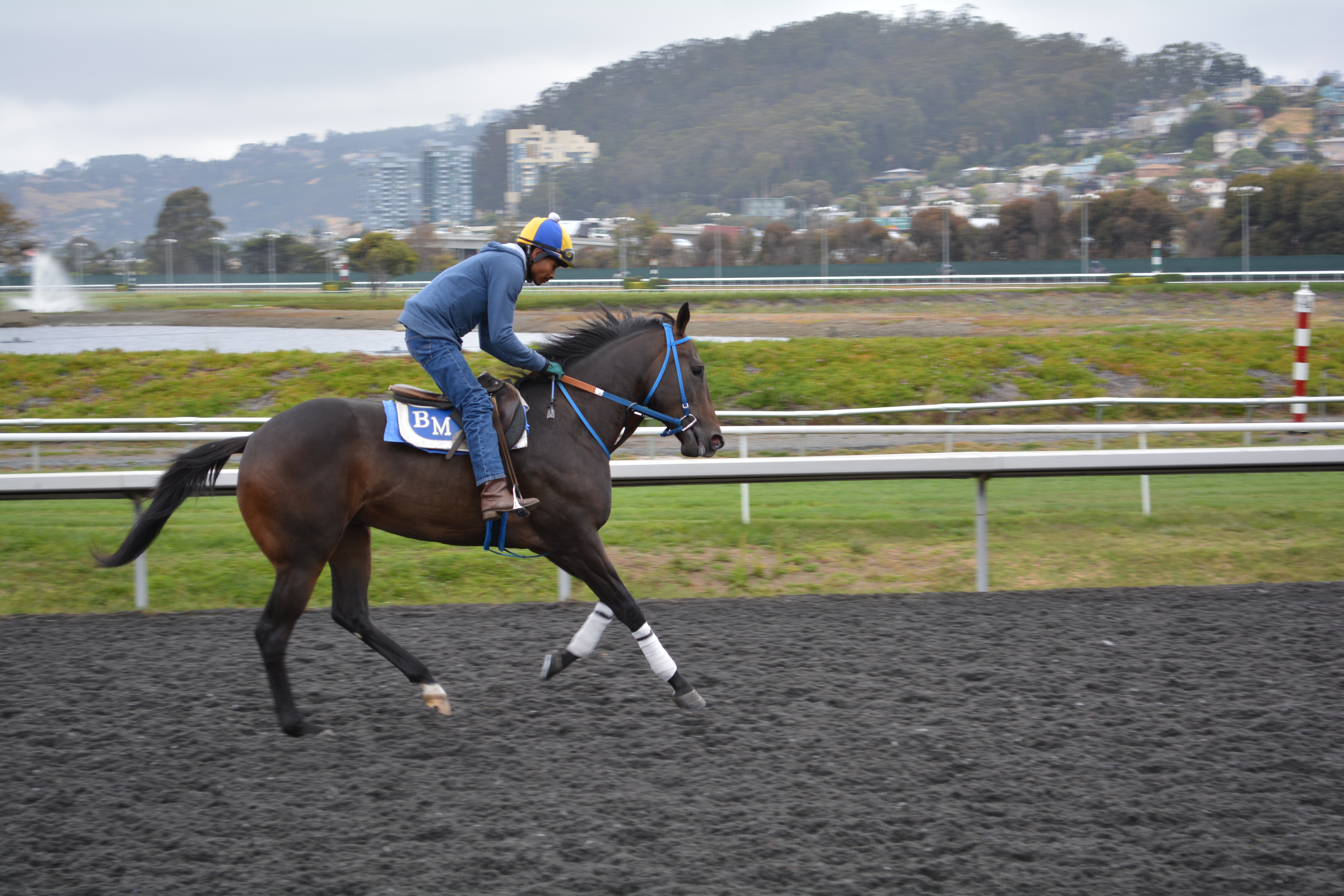
DSC_0185BM: I had a filly called Family Occasion, we bought her privately for $2000 as a yearling from Diane Kim, she was a lovely lady who raised a nice horse. She broke her maiden and then she won the big $100,000 stake for two year olds over a mile at Longacres. Then I had Money By Choice, I claimed her for $25,000, she went on to win stakes races for us at Bay Meadows and Golden Gate and won a lot of money, she was also mare of the year in Washington one year. Lil Sneeker, I claimed him for $25,000, he was about the best sprinter on the grounds here for a couple of years.

TBP: Who was probably the fastest horse you have trained in terms of pure early speed?

BM: I would say a horse called Hoopstar for Rex Mudd. He was a very, very fast horse who won a number of good sprint races both here in Northern California and in Canada.

TBP: And who is perhaps the hardest trying horse you have trained?

BM: Probably Lil Sneeker, he really didn’t like to get beat! But then some of the cheaper ones who don’t have much talent and have some problems but try hard, that’s nice to see and I have had many of those.

TBP: Do you have a certain training style? 

BB: I like my horses to break off slow in their works and then pick it up gradually. Mario Cisneros works a lot of my horses, he probably works six a week or so for me, it’s good when you have someone like him who understands how you like your horses to work and can be consistent. Some riders go flying off and don’t finish which isn’t good for anybody.
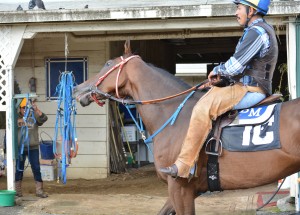
DSC_0291TBP: What do you enjoy about training?

BM: I enjoy the camaraderie of the back stretch and fellow trainers for one thing. I have good owners too, some good friends, we play golf together and stuff, I have good help too, I’m very lucky that way.

TBP: How many horses do you have at the moment and which have been doing well for you recently?

BM: I have around fifteen in the barn right now. Love In The Shadows is a nice mare who recently won a nice race down at Santa Anita. I claimed her for $8000, I got outshook for her for $6250 and they ran her for $8000 next time at Pleasanton, we thought she was worth it so we dropped a claim for her again then and got her that time. Since then she’s won four races, three at allowance level, she’s been a great story. I have a nice two year old called Bossie Emma who ran second in a maiden allowance, I think she is going to be a handy filly, and I have another nice looking two year old called Great Decision who is going to have some rest and come back in the fall, he’ll probably be a router.

TBP: What horses have you had that you felt could have been special but didn’t work out for one reason or another?

BM: I had a really nice colt who I bought at a sale in Seattle a while back, I think we paid $30,000 for him which was a lot for us, but he was a big,
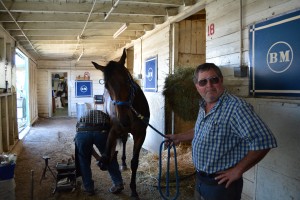
DSC_0198beautiful looking horse. He was training like a very good horse and ran promisingly but green in a maiden allowance sprint first time up. Gary Baze rode him and was very excited about him, he said “Boy when we go long on the turf with this colt he is going to be a good one.” Then he strained a tendon and that was that, it was a real sickener. He did run again after he had a lot of time off, but he wasn’t the same. He broke his maiden for $8000 and I eventually gave him away as a riding horse.

TBP: What do you think of synthetic tracks?

BM: I think we have the best synthetic track here at Golden Gate with the Tapeta track. It’s great when it rains because it drains so fast. The old dirt track here when it rained got messy, they had to tighten it down and it got real hard. I do like dirt tracks though. I think a good well maintained dirt track is fine for horses.

TBP: What changes have you seen in training horses since you started out?

BM: Well one of the biggest changes is that we just don’t have the number of horses we used to have. It used to be that if you ran a race condition like a $4000 non winners of the year it would be a full field, now you’ll see maybe six horses in it. The prize money at the low end could be better, I’d like to see more attention paid to the bottom end pots, that’s the bread and butter end of the business that can keep people in the game. And there used to be so many people at the track, Sundays are ok here and some Saturdays, but Thursdays and Fridays are very slow. I’m not a marketing guy but I don’t know why they don’t try stuff like free admission on those days. By the time you’ve paid to park, paid to get in, paid for a form, it’s all adding up for the customers.  We have a casino down the road at San Pablo and that’s big competition for us.

I think we need to pay more attention to interviewing people and the personalities involved – when my client/owner Chris Carpenter was interviewed at Santa Anita after we won there with Love In The Shadows it was nice for him and the crowd, they interviewed him in the paddock before the race too. I’d like to see more of that kind of thing.
DSC_0080

TBP: Would you like to see more long distance races?

BM: Yes I always used to like the mile and a quarter races, and further too, they’re exciting, they build up and crescendo, but we seem to be more speed, speed, speed with more five eighths and five and a half furlong races being run.

TBP: Was Lasix legal when you started training in Canada?

BM: No it wasn’t. I didn’t really have any bad bleeders in my barn there, but horses in Vancouver raced April through September and got the winter off, so they had plenty of rest. These horses here though in California, rather than give them rest people just keep dropping and dropping them down the claiming ladder. If horses were less stressed and had more time there wouldn’t be such a problem. Even here in Northern California the Bay Meadows meet used to close before Christmas, and Golden Gate wouldn’t open until February so all the horses got a nice break with five or six weeks off.

TBP: How do you feel about the future of California racing?

BM: Well it’s been good to see the positive changes at Pleasanton with Oak Tree coming in. The new Turf Club there is very nice, and there are rumors that they may put a turf course in there.  Then they might get more dates, it would be nice to see a fall meet run there around October time. Los Alamitos looks like it is going to be a nice dirt track, there are more options now.

TBP: Do you have any horses for sale in the barn at the moment, how should people get in touch with you if they are interested in getting involved?

BM: I’m always looking to claim horses, I have a good bunch of owners and a lot of them have just a sixth or an eighth of a horse so you can get involved for not a lot of money and we have a lot of fun. Anyone interested can contact me on my email address, [email protected]

————————————————————————————

ThoroughbredPeople.com
The Interviews: Trainer & ex-Jockey “Wild” Bill Delia

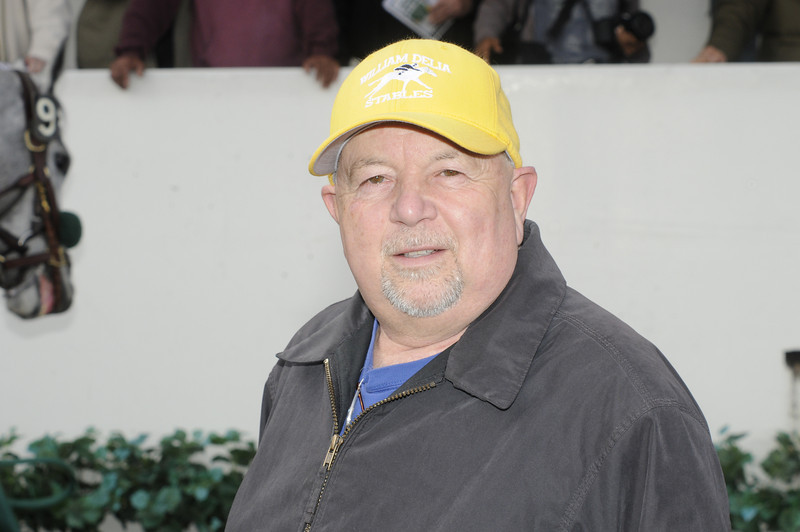
Bill Delia 1TBP: Where were you born and raised Bill, are you originally from California?

BD: I was born in Newark, New Jersey. I stayed there till I was ten, then the family moved to California. I haven’t been back to Jersey since.

TBP: How did you get interested in racing?

BD: Well I was real tiny, and my aunt and uncle who were racing fans said I should look into being a jockey because I was so small. I didn’t even know what a jockey was, so they took me to the races at Santa Anita and I was immediately hooked. From that day on all I thought about was the racetrack and the horses.

TBP: Who were some of the famous horses and characters that you remember from those times?

BD: I was a huge fan of Bill Shoemaker who I idolized. Of the horses, there were horses like Prove It, Olden Times trained by Rex Elsworth, he was a monster of a horse, Candy Spots, Gunbow, they were all tremendous animals, I used to love the Elsworth horses. Eddie Arcaro was riding then, Hartack, Eddie Belmonte, Johnny Longdon, Johnny used to ride a good horse called George Roe who I liked a lot, they were top notch guys. There were a lot of good horses around, they were tough old dudes.

TBP: Do you think horses like that were tougher and ran more often than horses today?

BD: I think they possibly lasted longer because we didn’t have as much racing in those days. There were breaks in between meetings and the schedule wasn’t non stop like it is today. Horses got time off.

DSC_0225TBP: So how did you get your first job in racing?

BD: Well it was tough at first because to get into racing you really had to know somebody, and I didn’t know anybody…  I tried to get into a jockeys school at Rex Elsworth’s ranch but I couldn’t get in there. So time went by, I was working at a pizza place and one day a regular customer who had a flower shop across the street told me he knew a guy who had some horses and he introduced me. The guy asks me “What size shoe do you wear and what do you weigh?” I said “I wear a five and a half shoe and I weigh 95 pounds”. He said “Be at Pep Road in El Monte at 5am tomorrow morning.”

He had a couple of mares at a boarding facility there. I went along and he put me up on a mare in foal, bareback and she just walked around the arena in the dark with me. After that first day he asked me if I wanted to go back the next day and I said yes. When I showed up again on the third day he said to me that I might make it, because most people had normally quit by then. Then he taught me how to groom and handle horses, and I progressed to jogging on the mare. A few weeks later he put me on a three year old filly that used to buck me off all the time, but I just kept getting back on.

She was my ticket to getting into Santa Anita, as when she went to the track I used to go and take care of her in the mornings there and then I got a full groom’s job there. I started breaking horses which they did back at Santa Anita in those days, and then I started getting on babies, and started galloping them on the track. That’s how I learned to gallop, and then I started to work some horses and things went from there. 

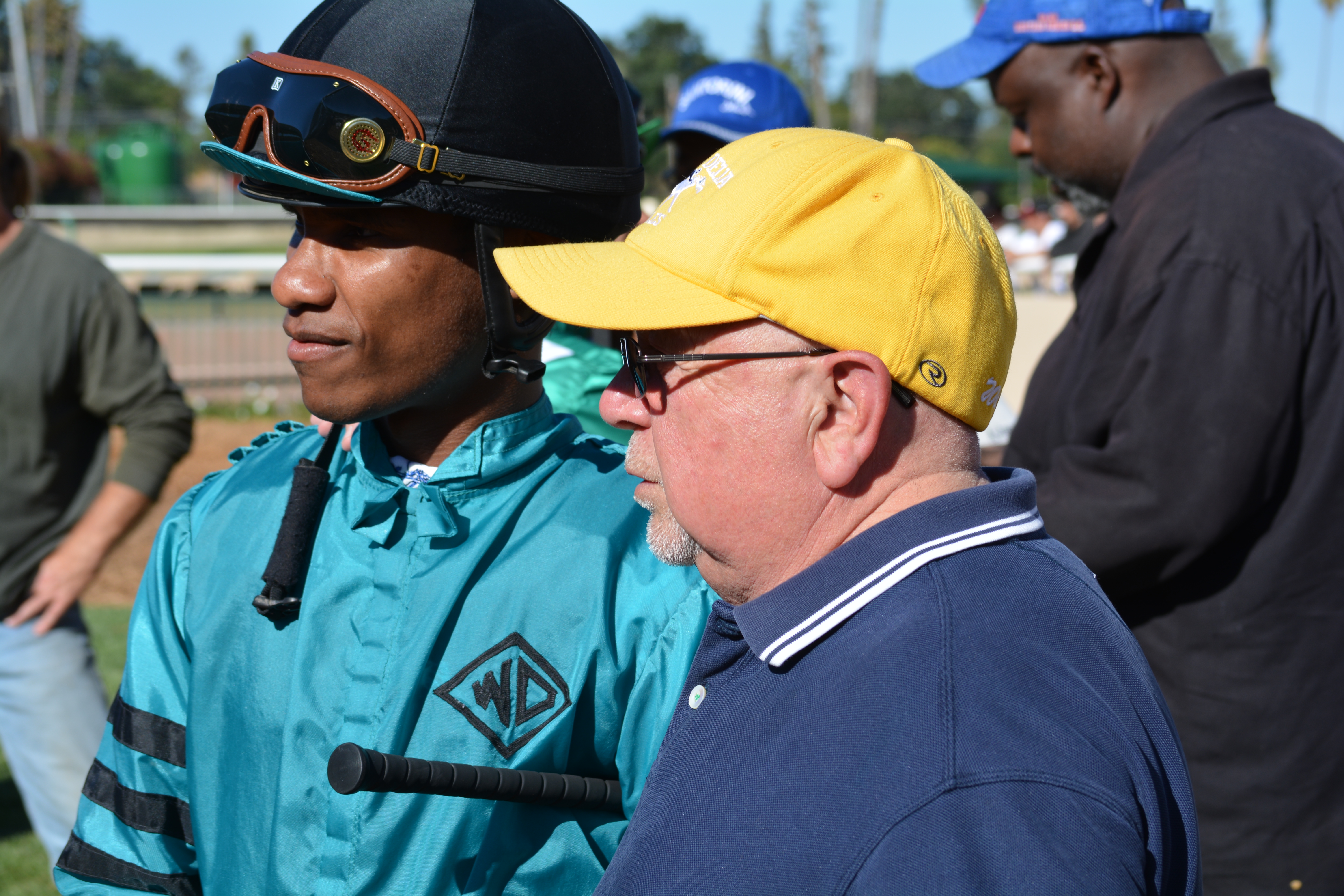
DSC_0228TBP: How did you get your first ride in a race?

BD: I started working for Farrell “F.W.” Jones, who was Gary Jones’s dad. I was working all of his horses and learned a lot with him. An agent called Alan Grey took me on as a rider and said he wanted to get me on a few horses at Agua Caliente. I stayed in San Isidro, which was literally about 50 yards from the border, and we used to go over the border every morning. I rode about 20 races there but didn’t ride a winner. Then I came back to Del Mar and Farrell Jones gave me a few rides. I came up to Bay Meadows and on September 18th 1968 I rode my first winner, a horse called Pesty Knight trained by Keith Stucke. He was even money favorite and I won by 5 lengths. It was a great feeling. Then I rode a winner at Santa Anita for Farrell called Polly Pie, after which I moved back up to Northern California permanently. Bob Hack who was a top agent had my book, things started to roll and I rode the Northern CA circuit for the next 20 years.

TBP: Who were some of your favorite horses that you rode?

BD: There was a horse called Baron of Dublin owned by Bart Heller who was a very nice horse. I rode him to win several stakes races and he almost went to the Kentucky Derby. He was trained by Bill Mastrangelo who I rode a lot of winners for.  I remember riding a real hard trier called Score and Win who after starting off as a $4000 claimer went on to win seven races in a row and a couple of stakes. He was a tough old campaigner who always ran well even though he had a long term knee problem. I rode another big hearted horse called Brown Giant who I won nine or ten races on including a stakes race at a mile and a quarter at Golden Gate. Leo’s Aussie was another one of my favorites, a hard knocker who I won on at Santa Anita as well as at Golden Gate and Bay Meadows. In those days though we weren’t running for the same kind of money that we are today, so horses didn’t earn as much relatively as they do now.

TBP: Did you have any bad falls or injuries riding?

BD: I was pretty lucky, I had a few falls and the worst was when I came off and compressed some vertebrae in my back at Golden Gate in 1983. I was off about three months but it could have been a lot more serious. Other than that I got busted up a few other times, broke a few fingers, broke my knee etc..

TBP: So then you started training, how did that come about?

BD: When I was riding a couple of people told me that they would send me a horse or two if I started training and I wanted to train, so while I was still riding I got a trainers licence and started off with one horse, a horse called Scissor Bill in 1984. He was a real honorary character but he gave me my first winner as a trainer. Then I started getting a few more horses and I finished riding altogether. I had a barn of around 12 and we would move the barn to Bay Meadows when that meet was on and move back to Golden Gate when that was on.

DSC_0114TBP: Did you prefer riding to training?

BD: Well I loved riding, I always knew it couldn’t last forever but I enjoyed the thrill and the fact that it was just me and the horse. I enjoyed that connection in the race and when you won everybody loved you. But sometimes you’re the flavor of the month and sometime you’re not. Your business can fluctuate a lot it and it can wear on you and you can burn out. But I always wanted to train and I really enjoy training too, it’s just a different kind of deal.

DSC_0256

TBP: What parts of training do you enjoy the most?

BD:  I love claiming horses and moving them up, that’s exciting, I’ve done a lot of that, and I like to go to the sales to find inexpensive young horses and develop them and see them do well. It can be a bit like developing your kids, it is very satisfying when it works out and it’s a different kind of high to riding.

TBP: What parts of the job can you perhaps do without?

BD: Sometimes in this business you can get some people who are a little flakey or who can’t take the lows as well as the highs. It’s a roller coaster business and you have to be able to roll with the punches. You have to be a good winner and you have to be a good loser. If you can’t be a good loser this is the wrong business to be in. Some owners don’t understand that a horse is a fragile athlete and isn’t a car that you can start up and turn off at will, there are so many things that can happen to a horse, it’s good to have owners who understand that.

TBP: Of the horses you have trained tell us about some of your favorites.

BD: Bai and Bai was probably my favorite. We bought her for just $3200 at a sale at Pleasanton, and we sold her for half a million dollars after she had won several stakes races and $300,000. We actually nearly lost her when we ran her second time out in a $32,000 claimer, someone was going to claim her but they tore up the claiming slip when they didn’t like the way she was acting in  the paddock. She won that race and then just improved and improved. She carried on racing for the new owners and did very well too.

2014-07-06 09.24.19Another favorite was a horse called I’m A Jewel, a horse I bought for $6000 after he had run second in an $8000 maiden claimer. Skinny little three year old at the time. I talked to three or four of my clients about buying a share and none of them were interested. Then I finally sold 50% to another client, we ran him for $12,500 and he won. I was looking for a claiming race next time out for him but there wasn’t anything suitable, so I ran him in an allowance race and he ran pretty well. Then I switched him to the turf at Bay Meadows, he was 50-1 but came with a late run and was only beaten half a length. He improved hugely and won two or three nice races, and then I decided that we should probably take a shot in the California Derby, which was a $200,000 race then in 1997. We ran him and he was 19 lengths off the pace going down the back side. He came running, circled the field and won by a length and a half. Thirty minutes later I won the other stakes race on the card with a filly called Truce and Balance. There was a huge party that night.

I trained a tiny horse who had a huge heart called Motel Staff who won a lot of races when I switched him to the turf. He showed up every time and we won a lot of money with him. He didn’t know how to run a bad race. He did well and went on to run and win until he was 12 years old.

TBP: What horses have you had that could have been top runners but didn’t get to show it?

BD: Possibly the one that had the most unfulfilled potential was a filly who could really run called Agitated Girl, a big beautiful thing who broke her maiden in a good time and had the potential to be a very nice stakes filly, but she got a tendon injury shortly after and she never got the chance to show what she could really do.

DSC_0122

TBP: Why are you known as “Wild” Bill Delia?

BD: Well, it started when I was a young rider, it was nothing too crazy but I had a reputation for being a bit of a party animal, tearing it up and dancing on tables and stuff. People started calling me “Wild” Bill and it just stuck.

TBP: What changes have you seen here at Golden Gate Fields in recent years?

BD: Well I am not a big fan of synthetics generally, but I do like the synthetic track here for the fact that we don’t have the same problems when it rains as we used to with the dirt track. This Tapeta track can take a lot of water and doesn’t get sloppy or muddy.

Simulcasting wasn’t in place when I started training, it has been good for the game in some ways of course but now people can bet from anywhere and don’t have to come to the track, it’s a shame to see how empty the stands are on some race days. We used to get great big crowds all the time and it was a lot of fun. But it still is a lot of fun. I just love horse racing – I’ve been in it for forty seven years now and I’m not leaving it till I fall over dead.


————————————————————————————

ThoroughbredPeople.com