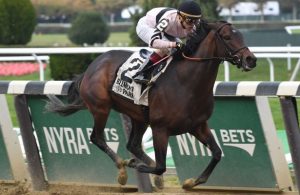
 If I were to invent a perfect imaginary pedigree, I would probably invent Lewis Bay’s. I’ve wagered on her many a time because of her stunning lineage, and have been let down until recently because of my high expectations of her. But her victory in the June 8 Bed O’ Roses Invitational S.-G3, in which heavy favorite American Girl virtually failed to show up, validated her pedigree further, allowing me the great pleasure of writing about her. Her trainer, Chad Brown, said of her, after the race, “she deserves to get a Grade 1,” and, with that pedigree, she certainly does. The bay mare has won graded stakes races in each of her years at the track, at two, three, four and now five, so she can hardly be faulted, and she is a millionaire earner. From her 15 starts, she has been in the money 14 times, so the girl clearly tries. Her breeder, Alpha Delta Stables, ran her through the Keeneland September sale in 2014, buying her back for $170,000—surely a disappointment, as they had spent $1.7 million on her dam, Summer Raven, at Keeneland November in 2009. Summer Raven is now looking like a bargain, having produced not only Lewis Bay but also graded stakes winners Winslow Homer and Misconduct, both by Unbridled’s Song, and she is currently back in foal to Bernardini, the sire of Lewis Bay. Summer Raven’s affinity for Unbridled’s Song should be noted, since he is by Fappiano, just as Quiet American in Bernardini’s pedigree, is by Fappiano.
The first thing that initially drew me to admire Lewis Bay’s pedigree was that she was by Bernardini, out of a Summer Squall mare. This is a brilliant doubling of A.P. Indy’s and Summer Squall’s superb shared dam, Weekend Surprise, one of the greatest Secretariat mares of all time, and a wealth of other genetic material. Although I’m sure it exists, I don’t believe I’ve seen this twinning of Weekend Surprise, so close up, in any other stakes horse—Lewis Bay is 3 x 3 Weekend Surprise. So we’ve got a collection of Bold Ruler, the amazing Princequillo mare Somethingroyal (twice in each dose, through Secretariat and Sir Gaylord), Buckpasser, and My Babu, doubled. Add to this the dose of Buckpasser in the dam’s side, through Toll Booth, and the added, balanced, Princequillo line mares, top and bottom—Cequillo on top, through Quiet American, and Hardship, a granddaughter of Princequillo, on the bottom. For good measure, add another dose of Somethingroyal on the dam’s side, through Drone, the sire of Hardship and a son of Sir Gaylord, by Somethingroyal. Drone was out of Cap and Bells, a daughter of Tom Fool, which draws in the strands of Buckpasser, also by Tom Fool. Princequillo was the leading broodmare sire for years on end in his heyday, and contemporary pedigrees still demonstrate how powerful his influence is—one of the keys to breeding stakes winners is through as many daughters and granddaughters of Princequillo as one can squeeze into a pedigree, the most common being Secretariat’s and Sir Gaylord’s dam, Somethingroyal, a mare whom you simply can’t get enough of in a pedigree.
Summer Squall has every right to be a great broodmare sire on paper, but in person he was small and pigeon toed and light boned, an unimpressive specimen who nevertheless sired the winner of two/thirds of the Triple Crown, Charismatic, a huge, handsome, chestnut horse, among others. By Storm Bird, it’s no wonder that his pedigree features a second dam, Rahy Rose, by Rahy. The Storm Cat (by Storm Bird)/Rahy cross is a stone cold nick, responsible for Giant’s Causeway, Freud, and many others. Rahy, who stood his entire career at Three Chimneys in Midway, Kentucky, was known affectionately there as “the pony,”as he was a very small chestnut horse. By Blushing Groom, and out of Glorious Song, by Halo, who was out of the great Ballade, he too demonstrated early on that he would be a broodmare sire to be reckoned with. I owned two Rahy mares early in his career, believing that they would prove to be more than useful, and they were small chestnuts, like dad. But there was another make and model of Rahy Mare, a taller, leggier, longer bay, such as Serena’s Song, and that type has proved to be the better producer. Summer Raven represents the latter type.
Rahy represents a classic nick: as previously noted, he was by Blushing Groom, while his dam, Glorious Song, was by Halo, making him a Nasrullah-line sire over a Turn-to line broodmare sire. It is in this strain of Rahy, however, that we begin to see the pattern that defines and pulls together Lewis Bay’s pedigree, along with the preponderance of Princequillo mares. Halo is out of one of the two greatest Mahmoud mares, Cosmah, the other truly great being Cosmah’s half sister and the dam of Northern Dancer, Almahmoud. Lewis Bay is 5 x 4 inbred to Northern Dancer, top and bottom; inbreeding to these sisters is a tried and true pedigree gambit. This is not the extent of Mahmoud’s influence on this pedigree, however. Glorious Song, whose sire Herbager lends a bit of stamina and turf to the pedigree, is out of Miss Swapsco, by Cohoes. Cohoes is a son of Mahmoud, and is out of a daughter of La Troienne, who might have been the most influential mare of the twentieth century, and who also appears here through Buckpasser and Seattle Slew. Miss Swapsco’s dam, Soaring, is by Swaps, and out of a mare whose dam is by Mirza, whose dam is Mahmoud’s second dam, Mumtaz Mahal.
Many other strains and variations involving Mahmoud influence this pedigree, making him the most powerful relative for Lewis Bay (and the 1933 stallion may be responsible still for nearly 90% of gray coat color in thoroughbreds). On her dams’ side, Lewis Bay’s dose of Drone brings more Mahmoud to the table, as he is by Sir Gaylord, out of the Mahmoud daughter, Ghazni. Lewis Bay’s tail female line goes to Moonstone as seventh dam, another daughter of Mahmoud. Add to that Hardship’s grandsire, Court Martial, whose own pedigree features Lady Josephine, Mahmoud’s granddam, and the proliferation of Mahmoud blood becomes overwhelming.
One more clever bit of inbreeding should be noted. Lassie Dear, the dam of Weekend Surprise, is by Buckpasser, out of Gay Missile, who is by Sir Gaylord and out of Missy Baba, a daughter of My Babu.
Toll Booth, on the dams’ side, is by Buckpasser, out of Missy Baby herself. The two doses of Weekend Surprise, top and bottom, are pulled into the tapestry of this pedigree by Toll Booth. Weekend Surprise and Toll Booth are so similarly bred, that they influence Lewis Bay’s brilliance more than such old blood, occurring singly, ever could.
Lewis Bay’s pedigree is represents the best, classic blood, from the Princequillo and Mahmoud to the Buckpasser and Missy Baba. Her lineage is a veritable art museum—displaying works of art of yore that still influence our idea of art today. Sometimes history comes alive, just as art does. Just as “Las Meninas” by Velazquez could be said to be the granddam of “Les Demoiselles d’Avignon” and other paintings by Picasso, Lewis Bay is an example of the theory that the past is prologue.
— Roberta Smoodin
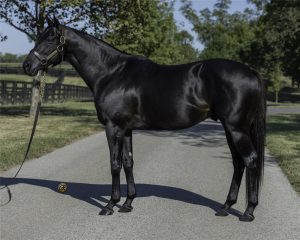 Spendthrift Farm’s freshman stallion Shakin It Up is having one heck of a June. Two of his first-time starters became winners on debut, propelling the stallion, who stands for $5000, to number five on the freshman sires list. The handsome son of Midnight Lute did not demonstrate unusual precocity at two, but was a G1 winner at three in the Malibu S.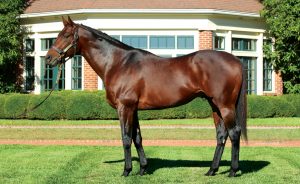
 We live in a world where there are so few things we can really count on: the proverbial death and taxes, of course. And Old Faithful, the reliable geyser in Yellowstone that erupts every ninety minutes, to the awe and admiration of tourists who don’t realize they’re standing on a spot that may explode into magma and boulders and unbreathable ash at any moment. But in the thoroughbred world, there are some stallions that can be counted on, and Thursday, May 17, exemplified that.
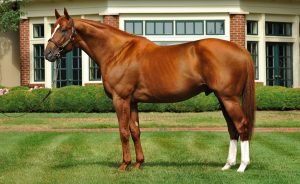 Todd Pletcher won an allowance by 7 ¼ lengths in the slop—that colt is named, rightfully, Legit, and was bred by David Greathouse II, of the illustrious Greathouse family that once stood Clever Trick and others. Curlin is number six on the leading stallions list, one notch ahead of Tapit, whose $300,000 stud fee is twice that of Curlin’s. An addendum: on Friday, May 18, Irish War Cry won the Pimlico Special-G3.
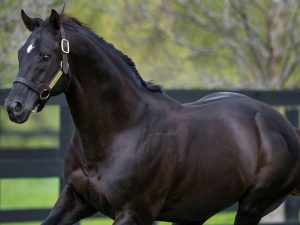 others. The redoubtable More Than Ready gets racehorses that go long and short, dirt and turf, are precocious yet stick around. Fourteenth on the leading sires list, his $75,000 stud fee also seems reasonable, and Winstar has managed his career beautifully. He marks his offspring, which are usually compact, almost coal black, and very nicely made with short backs and attractive heads.
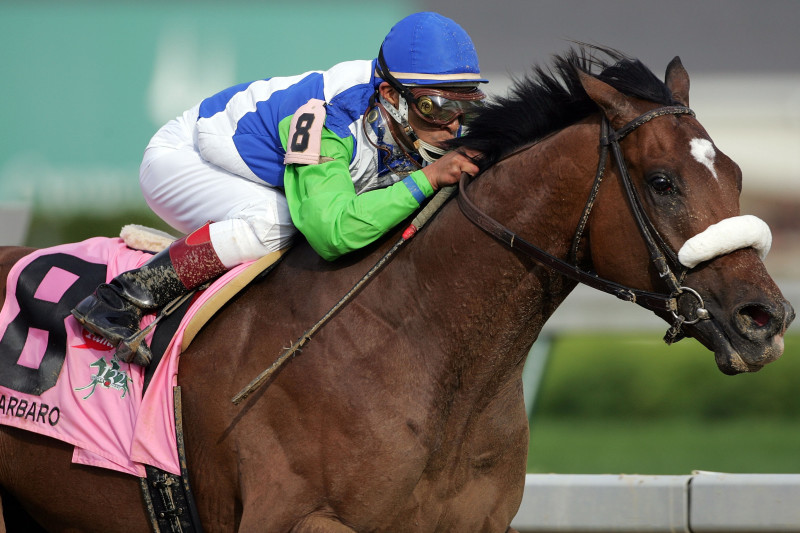 Saturday May 6th 2006. It was the day I saw the Kentucky Derby won by the horse who was going to become the first Triple Crown winner in 29 years.
 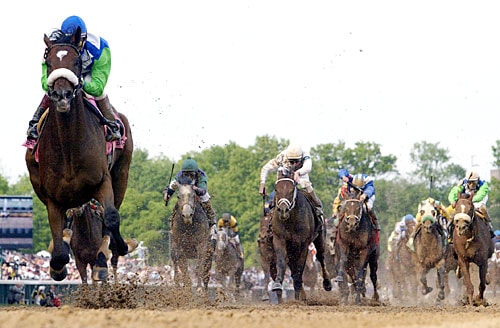 Everybody knows what happened in the Preakness. I can still sadly, see it now. Twelve years on I still vividly remember the knot in my stomach that suddenly arrived along with a dark sense of foreboding, as Barbaro burst through the gate before the field was ready.
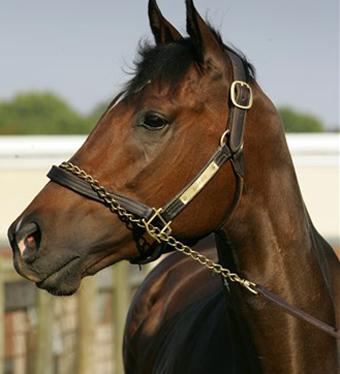 Trained by the master horseman and ex-Olympic Equestrian champion Michael Matz, Barbaro was a sound horse in great physical shape. The nature of Barbaro’s injury suggested that it was very possibly initiated when he became fractious in the gate and broke out of that stall – always a physically straining, stressful, combustive situation, especially on a horse’s hind end.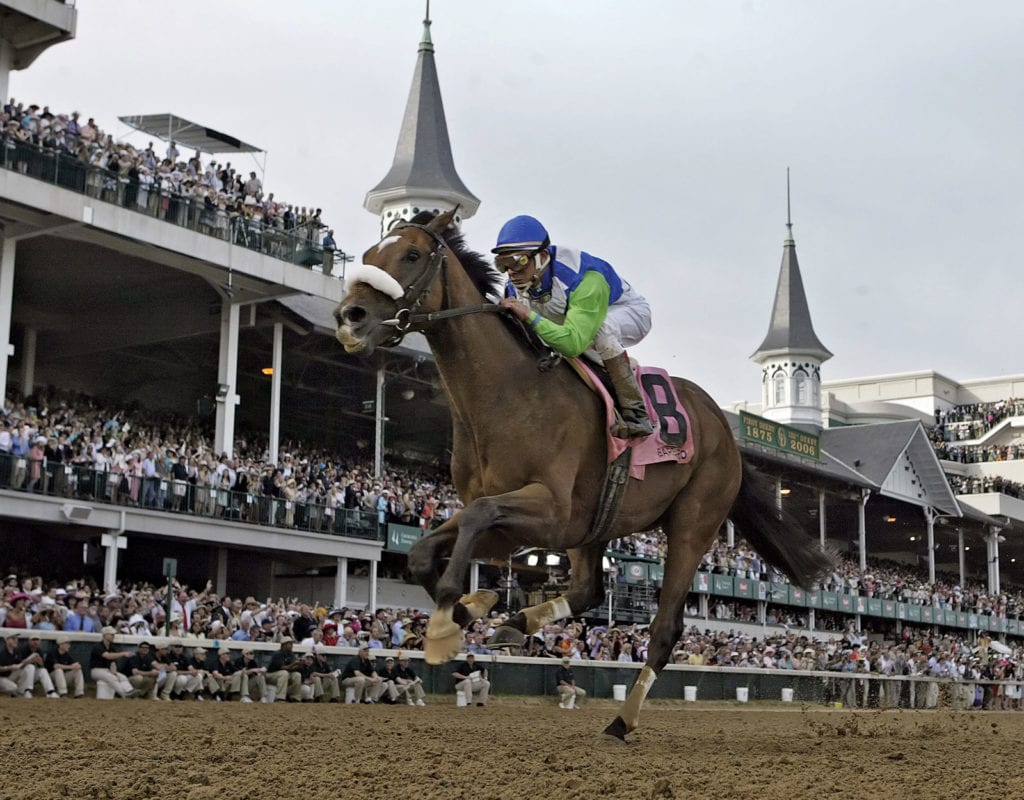
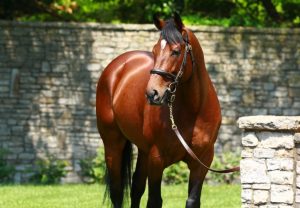 Like Giant’s Causeway before him, Declaration of War stood his first season at stud at Coolmore Ireland before being imported by Coolmore America, where he stands for $25,000, stands and nurses. And again, like Giant’s Causeway, whose only European crop yielded the champion Shamardal, Declaration of War’s European crop has yielded a Two-Year-Old Champion Colt and now a Group One classic winner, Olmedo. On Sunday, May 13, Olmedo won the Poule d’Essai des Poulains-G1 at Longchamps, just outside of Paris, to cement his reputation after winning the Prix du Jockey Club-G1 as a two-year-old and being named French Champion. Olmedo won by a dramatic neck after many horses faltered in the very soft, wet going, including Coolmore’s own War Front colt, U.S. Naval Flag; the dire conditions on the track very nearly got Olmedo, as well, but he came out of the downward bend that was the end of many of his rivals and continued on. Trained by Jean-Claude Rouget and ridden by Christian Demuro, Olmedo is owned by the successful partnership of Antonio Caro and Gerard Augustin-Normand. Olmedo currently has a race record of five starts, two wins, three seconds.
 OCEANPORT, NJ – After nearly seven years of legal wrangling, Monmouth Park Racetrack has won its right to sports betting after the Supreme Court announced this morning that the Professional and Amateur Sports Protection Act (PASPA) is unconstitutional.
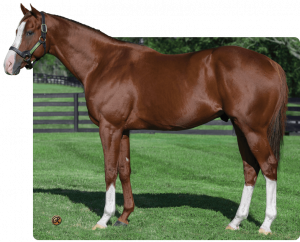 First, the disclaimer: I am in love with Will Take Charge. I loved him on the track, and then, when I saw him in the flesh at Three Chimneys Farm shortly after his retirement, he took my breath away. I could have looked at him all day. He’s a large horse, with tons of bone, and that amazing head and white face: both handsome and pretty, the only horse I can think of that can embody both the masculine and feminine ideals of beauty. He instantly became my pick for leading freshman sire of 2018, and I was thrilled to see his first foals sell well as weanlings, yearlings, and then two-year-olds. I looked at as many of them as I could at sale, and loved them as well: he had stamped them with his own good looks.
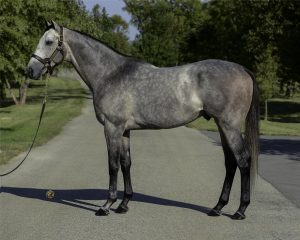 The very fast Cross Traffic, who stands at Spendthrift Farm, in Lexington, Kentucky, for $7500 stands and nurses, was represented by his first winner, Dreaming Diamonds. Out of the D’Wildcat mare Xuniel (and representing, therefore, the tried and true Unbridled’s Song/Storm Cat cross), Dreaming Diamonds took a maiden special weight at Churchill Downs by 3 ¼ lengths on Thursday, May 3. Owned by Rob Auerbach and Mark Winston, Dreaming Diamonds is trained by Tom Amoss and was ridden by Corey Lanerie. Cross Traffic himself didn’t start until he was a four-year-old, but excelled by winning the Grade 1 Whitney Invitational Handicap, defeating such foes as Mucho Macho Man and Fort Larned, while running a stunning 116 Beyer, and finished second, by a nose, in the Metropolitan H.-G1.
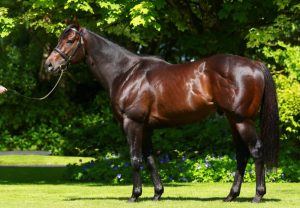 No Nay Never was Champion Two-Year-Old in France in 2013, having won the Group 1 Prix Morny at Deauville, so precocious two-year-olds are no surprise given his pedigree and race record. He also closely resembles his late father, being a muscular, masculine, handsome solid bay. His stud fee is 25,000 euros.
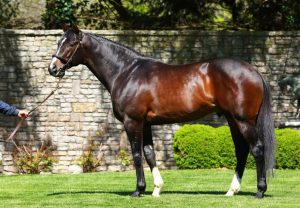 Verrazano is currently a bargain at $17,500, considering the high prices his yearlings fetched at auction. Verrazano was a monster on the track at three, winning both the Grade 1 Haskell Invitational S. (by a record 9 ¼ lengths, with a 116 Beyer) and the G1 Wood Memorial S.
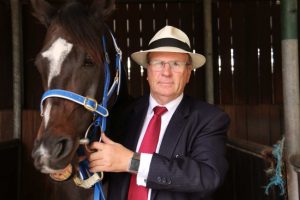 Upon reviewing one US jurisdiction’s rules of racing, in this example, the California Horse Racing Board’s rules, the penalty for a licensed trainer caught for a first *”Milkshaking” event is a 30 day suspension plus a fine. A second offence – 60 days plus a fine. And if the trainer is found “Milkshaking” a third time? The penalty is a 90 day ban plus a fine – with a maximum imposable suspension of 365 days in the presence of “aggravating factors”.