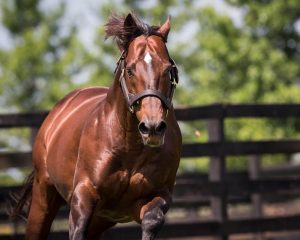
 Amidst the pomp and pageantry and bitten fingernails of Derby/Oaks weekend, with Justify shining in the slop and Monomoy Girl fighting like a tigress down the stretch, one stallion quietly racked up wins: Ghostzapper. The sire of both Proctor’s Ledge, the winner of the Grade 2 Churchill Distaff Mile and Holy Helena, the winner of the Sheepshead Bay S.-G2 at Belmont, Ghostzapper completed his superfecta when American Gal, out of the Ghostzapper mare American Story, won the Humana Distaff S.-G1 at Churchill, not to mention the hero of the day, as splendid a horse as you will ever see, Justify, being out of a Ghostzapper mare.
Quite the Saturday for the 18-year-old stallion who quietly and perennially gets racehorses. Now he has jumped to number 12 on the leading sires list, and 14 on the broodmare sires list. Seemingly unremarkable, until you notice that the other leaders all have more producing mares than he has: he has 50, while such greats as Giant’s Causeway, leading the list, and A.P. Indy, have over 280. Ghostzapper has the fewest broodmares, by far, of any horse in the top 50.
 Ghostzapper has stood his entire career at Adena Springs in Paris, Kentucky, the longtime favorite of the stallion manager who adores his playful charge. An elegant, lightly boned horse with an intelligent head and eye, plain except for a small white star on his forehead, one would never guess what a cut throat killer this horse was on the track. A multiple grade one winner (the Breeders’ Cup Classic in new track record time, the Metropolitan H., the Vosburgh S., and the Woodward S.) and earner of nearly $3.5 million, what was mindboggling was that he almost always won by multiple lengths, in super-fast times, and was known for his ability to do the near-impossible: run the last quarter faster than he ran the first. He was a jaw-droppingly good racehorse, and made rivals look like broken hearted nags. Horse of the Year and Champion Older Male titles were a foregone conclusion. I loved to watch him run, because he was the kind of racehorse who made your heart beat faster with his utter brilliance.
His pedigree boasts classic distance on top, speed on the bottom, and is free of inbreeding in the first four generations, making it possible to breed him to almost anything – more Northern Dancer, Mr. Prospector, and In Reality make it possible to mine American bloodstock for mates with ease. His sire, Awesome Again, was also the winner of the Breeders’ Cup Classic, and his mother, the Relaunch mare Baby Zip, was also the dam of the great and recently deceased sire City Zip, an undervalued stallion who threw speed to spare. Awesome Again is by Deputy Minister, out of the Blushing Groom mare Primal Force, who is a daughter of the Mr. Prospector mare, Primal Prospect.
I love Relaunch mares, with their combination of In Reality and The Axe II, bringing Mahmoud and La Troienne to the table to meet flat out speed. Add the Tri Jet mare Thirty Zip as his second dam, and you’ve got speed on speed, and even more outcross. In a world that is attempting (in my opinion, a scary option) to inbreed to Storm Cat and A.P. Indy, Ghostzapper’s pedigree makes him attractive to a wide variety of mares. Bring on the Northern Dancer, the Mr. Prospector, and the Fappiano – Ghostzapper loves them all.
Proctor’s Ledge is bred on the same pattern as grade one winner Contested, whose dam was by Arch, and second dam was by Seeking the Gold. Both of these pedigrees strengthen the Northern Dancer and Mr. Prospector in Ghostzapper’s pedigree by echoing it. In Proctor’s Ledge, Danzig is featured in Arch’s pedigree, and Proctor’s Ledge’s second dam is by Mr. Prospector himself. Her third dam, Drumtop, is by Round Table, adding the cachet of Princequillo to the mix. But the class of the pedigree is epitomized by Proctor’s Ledge’s sixth dam, the great Rough Shod II, making Proctor’s Ledge tail female Rough Shod. This puts her in the company of other greats who were tail female Rough Shod: Nureyev, Bound, Sadler’s Wells, Tate Gallery, and Topsider, whose dam, Drumtop, is Proctor’s Ledge’s third dam. This family, like so many great ones, has almost disappeared, so a race filly with Rough Shod in such a highly visible position makes Proctor’s Ledge very valuable both as a racehorse and as a broodmare prospect.
Of course, it should be noted that her Saturday success in the Churchill Downs Distaff Turf Mile was on the grass. The disappearance of this family could have to do with the weakening of turf breeding in this country, which for so long was dominated by Nureyev. What’s interesting about this pedigree is what is absent from it: any other strain of In Reality or his relatives, rarely seen in Ghostzapper’s offspring.
Like Proctor’s Ledge, Holy Helena is bred along proven lines for Ghostzapper. Out of a Holy Bull mare, her pedigree harkens to another of Ghostzapper’s great fillies, Judy the Beauty, a champion, millionaire, and multiple grade one winner. Holy Bull’s sire, Great Above, is almost a twin of In Reality in terms of blood, and Holy Bull himself, out of the Al Hattab mare Sharon Brown, duplicates The Axe II as found in Ghostzapper’s pedigree, through Relaunch; Relaunch and Holy Bull complement each other to perfection. It can be no coincidence that Holy Grace, Holy Helena’s dam, has a dam by Stately Don, a son of Nureyev. What are the odds that this is mere coincidence? Slim and none. Clearly Ghostzapper loves to be offered a bit of Rough Shod II in a pedigree. Holy Helena too has a great tail female relative – Missy Baba, by My Babu. Frank Stronach bred Holy Helena himself, so it’s no surprise that her third dam is Sooni, a Buckpasser mare. Stronach has long been a proponent of getting as much La Troienne into pedigrees as possible, along with In Reality and his relatives, and Holy Helena’s pedigree reflects the success of this philosophy.
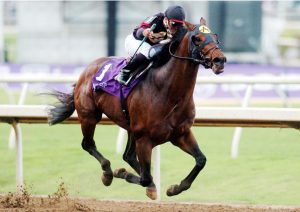 Ghostzapper’s grade one winner as a broodmare sire, apart from Justify, was American Gal in the Humana Distaff on Saturday, and in her pedigree we see many of the same themes as we’ve seen in Holy Helena and Proctor’s Ledge. But most interesting is inbreeding to Relaunch, top and bottom, plus the appearance in Tapit, her sire Concord Point’s sire, of Relaunch’s full sister, Moon Glitter. This inclusion of brothers and sisters enhances the possibility that the resulting horse will get the big heart gene that makes a race horse. More doses of In Reality, top and bottom (American Gal’s tail female fourth dam is Really Fancy, by In Reality), and inbreeding to Northern Dancer through Dixieland Band, Nijinsky and Vice Regent through a daughter, reflect the pedigrees of the first two stakes winners examined. Breeder/owner Kaleem Shah was smart enough to borrow a page from the Stronach/Adena playbook in the construction of this pedigree, and it has paid off.
Then there’s Justify. In a previous column, I testified to the greatness of his pedigree, and my admiration for his breeder, John Gunther of Glennwood Farm. The strengths and sublimity of this pedigree are numerous, with Ghostzapper adding the panache of Relaunch, with his wealth of In Reality, La Troienne, and Mahmoud, and his numerous doses of the Spearmint mare Plucky Liege. Barring any catastrophic injury to Justify (other than the well-documented “scratches” afflicting his left hind), we can expect Ghostzapper, with his 50 producing dams, to vault up the broodmare sires list, at very least into the top ten, if not the top five.
Ghostzapper was a racehorse for the ages. It’s looking like his stud career and broodmare sire career are following suit. Given his production on all levels, his $85,000 stud fee seems reasonable, as he gets racehorses. Though he has not produced a running machine as bloodthirsty and heartbreaking as himself, he is by no means done yet. Nor are his daughters close to being done – That running machine may just be Justify.
— Roberta Smoodin
Thanks to Thoroughbred People contributor and bloodstock consultant Roberta Smoodin for this article. Roberta offers pedigree analysis for sales and breeding recommendation services for your broodmares – please contact Roberta at [email protected] for more information.
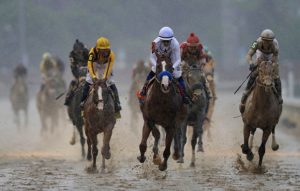 This year’s very strong, exciting Kentucky Derby field was marked, as well, by the supremacy of certain sires to a surprising degree. What were the odds that nearly half of the field would be comprised of the get of three stallions? Scat Daddy, sire of the winner, Curlin, sire of the second placed horse, and Medaglia d’Oro, whose promising offspring failed to impress. What’s no surprise is that these three stallions are leaders in three-year-old earnings as well.
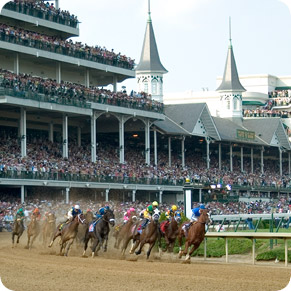 I was a writer of fiction first, novels and short stories, and for a long time, this line of work supported my Thoroughbred habit, until that habit became a full-time job, more interesting to me than writing fiction. I do, however, like to make things up—characters, worlds, fantasies, metaphors. I have a vivid imagination. So it occurred to me—why not create the perfect, imaginary Kentucky Derby contender?
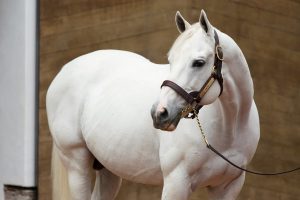 If I could afford any sire I wanted, and why not, if this is imaginary I can also imagine a big bank account, the one sire I’d consider would be Tapit. If my imagination gave me a budget to work with, I’d consider a son of Tapit—Belmont S.-G1 winning Tonalist. Tapit is the no-brainer here, if my imaginary bankroll includes winning the lottery. His pedigree offers everything that money can buy except stamina, which I’ll get from my dams’ side. By Pulpit, he offers A.P. Indy and Mr. Prospector, both tail female Frizette through Myrtlewood, a powerful doubling of that great female line. Tapit’s dam, Tap Your Heels, offers Unbridled as her sire (Dr. Fager, In Reality, Buckpasser, plus another way back to Mr. Prospector through his entirely distinctive Fappiano branch), and the Nijinsky II mare Ruby Slippers as her dam. I was lucky enough to see Ruby Slippers when she went through a Keeneland mixed sale years ago, and, aside from being a genetic marvel with her dams’ side offering La Troienne and In Reality, she was the prettiest little gray mare you could ever hope to see. She had a doll’s head, and big soft eyes—she could have been a child’s stuffed toy.
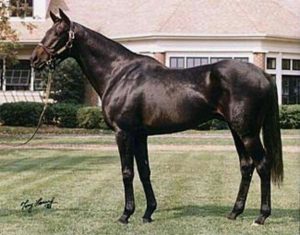 What Tonalist has to offer, for the budget-minded imaginer, is stamina, in the form of Pleasant Colony (by His Majesty, by Ribot). This was what allowed an endurance-challenged son of Tapit to get the Belmont’s mile and a half. Tonalist doesn’t look like any other Tapit—he harkens back instead to Pleasant Colony, with his very masculine head, stout bone and high withers, not to mention his chocolate coat. An Evans-bred, Mr. Evans didn’t sell this big, strong colt because of an accident that left both his front legs scarred, though no real damage was done. Thanks to fate, Robert Evans won a Triple Crown race with his homebred. Add another dose of Buckpasser and My Baby on his dams’ side, and you’ve got a young sire who should be able to produce offspring that can get any distance. Kentucky Derby, here they come.
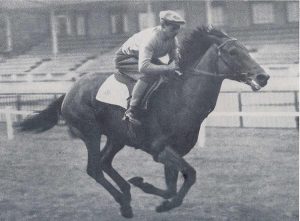 If my imaginary bankroll can only afford Tonalist, my imaginary mare from my imaginary broodmare band changes. Two more doses of Ribot, one through a doubling of Pleasant Colony and the other through Arts and Letters, may make a horse who can win at two miles, an unnecessary indulgence. I’m looking for more speed for Tonalist, so I might settle on a Graeme Hall mare, like the dam of Curalina, Whatdreamsaremadeof.
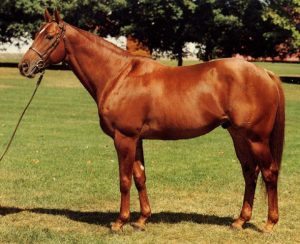 If I desire a totally imaginary mare for my Kentucky Derby horse, that changes everything. A whole new genetic stew would result. I have a terrific soft spot for Irish River in a mare’s pedigree—that dose of Klairon, which so complements My Babu and Turn-to in Tapit, and is so hard to find in contemporary pedigrees, is matched with Princequillo, Nasrullah, Sir Gallahad III and his half-brother Admiral Drake. And then there’s the physical—Irish River had more bone than just about any horse I’ve ever seen, those short stout cannon bones seared in my memory. Stoutness and stamina would be the result of the imaginary Irish River mare in my colt’s pedigree. And I can’t help longing for a bit of Giant’s Causeway thrown in, for both the Storm Cat and the Rahy, wonderfully complementing the Nijinsky.
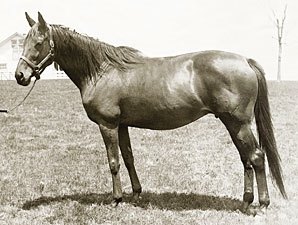 With the Kentucky Derby just around the corner, I need my imaginary colt to have turned three and accrued a hundred points. I have my imaginary hat ready, and plan to be at Churchill on the first Saturday in May, with my Derby horse ready to go, a fire breathing dragon going a mile and a quarter in just under two minutes. Can’t wait.


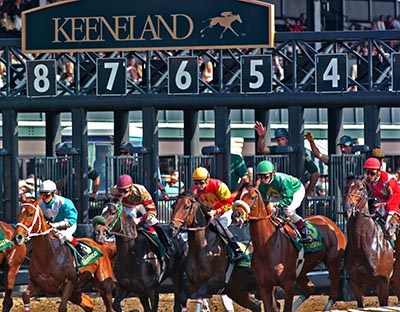

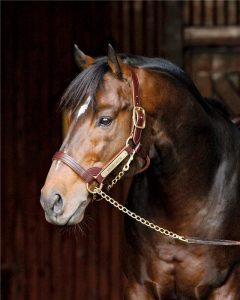 What’s not to love about Malibu Moon? Perhaps his curmudgeonly displeasure at open house stallion shows at Spendthrift, where viewers are warned not to pet or offer fingers to the old man, now 21. But currently at number eight on the leading stallions list, with his Magnum Moon considered the favorite for the upcoming Kentucky Derby, and his sons turning into sires themselves, he seems a bargain at $75,000, while the Tapits and War Fronts of the world are priced far higher. Malibu Moon has already sired a Kentucky Derby winner, Orb, and his list of graded stakes winning sons and daughters takes over his page in the Stallion Register.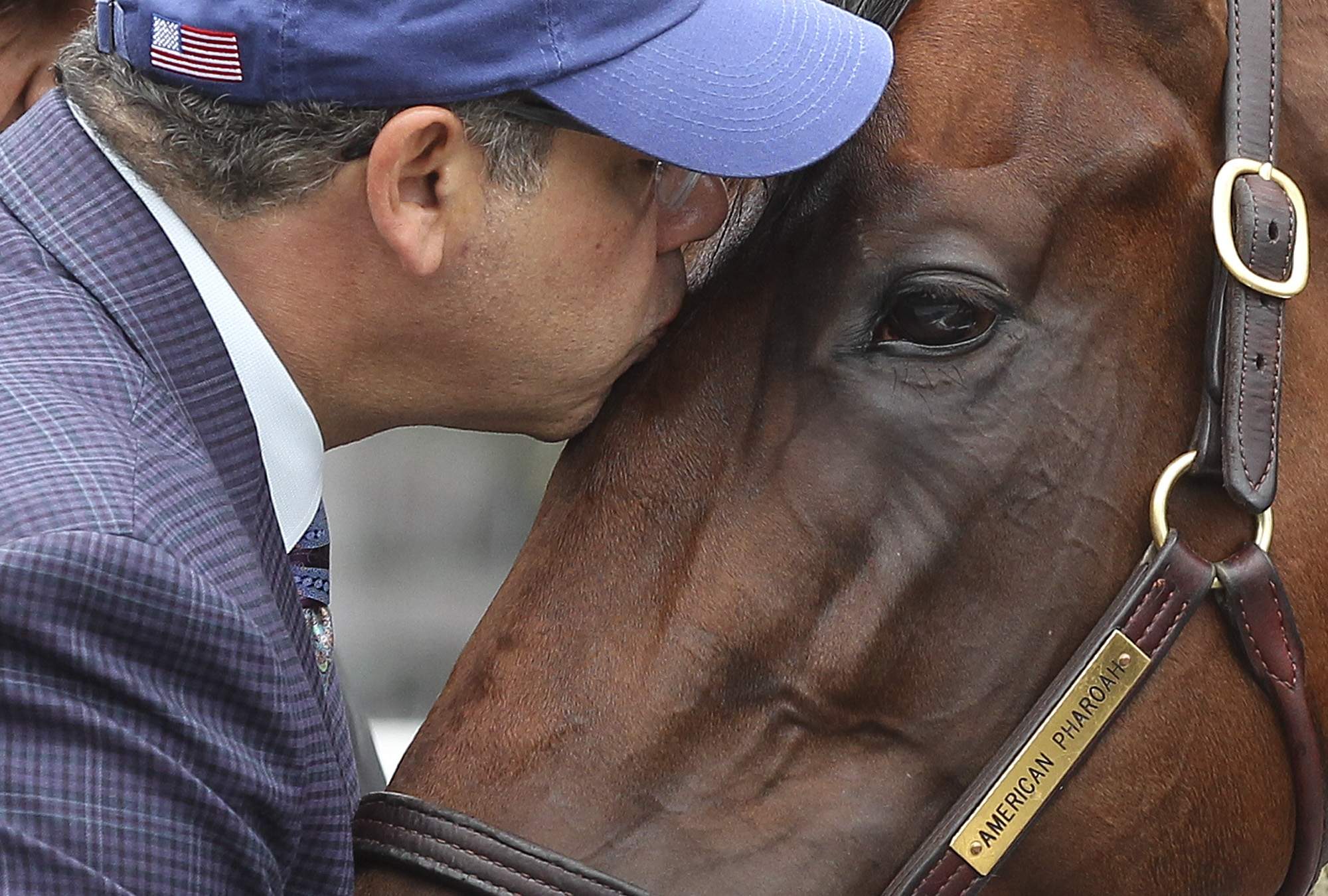


 Commenting upon a post parade on TVG, Simon Bray said, “I’ve never met a Scat Daddy I didn’t like.” Most horsemen share this opinion these days. In what has been called the deepest Kentucky Derby crop in recent memory, after a spate of lightweight fields, the late Scat Daddy, with his penultimate crop, stands out. Two will surely be in the field, and they are both thrilling colts—Justify and Mendelssohn. In only his third lifetime start, Justify easily beat Bolt D’Oro in the Grade 1 Santa Anita Derby, with Mike Smith chilly and still in the irons. Some may argue that Mendelssohn didn’t win over much of a field in the UAE Derby-G2 on Dubai World Cup day, but his 18 length victory, his first time on dirt, left him neither breathing hard nor sweating. He could have gone around again, with the same result. Being slightly more than a half-sibling to both the great Champion Beholder and sire sensation Into Mischief, it’s no wonder that, after spirited bidding, Coolmore/Ashford took the colt home for three million dollars (and he now appears to be worth every penny). Justify was no slouch in the auction ring either, fetching $500,000 from a partnership headed by China Horse Club. Of course, the Derby frequently besmirches the records of favorites and disdains famous horses, but these two Scat Daddy colts have so thrilled racing fans that it’s difficult to get excited about any other horse.
 John Guenther of Glennwood Farm must be congratulated for breeding Justify. The gorgeous chestnut colt’s pedigree is a marvel of riches and clever doublings and triplings of important relatives designed to promote both speed and endurance. Further inbreeding to Mr. Prospector and Nijinsky exists in many of Scat Daddy’s top offspring, and Justify gives us this as well, and more.
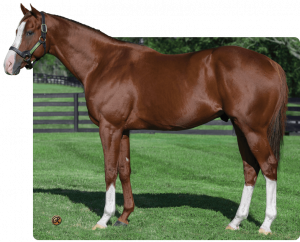 With the leading freshman sire race about to get underway for 2018, Will Take Charge looks like a natural to me. He’s about the handsomest stallion you will ever lay eyes on—he is mindbogglingly good looking, in a very masculine way, and has bone and conformation to spare. I loved him on the race track, and was knocked out when I saw him in person. I know Three Chimneys has put together a terrific inaugural book for him, and his yearlings sold very well last year. No other freshman class stallion of 2018 could touch him in terms of looks and race record. The only other stallion whose looks can compare, in my opinion, was Union Rags, and we all know how his first crop turned out, and continues to turn out. The 2019 freshman sire race surely is American Pharoah’s to lose (though Triple Crown winners have been hit and miss as sires—Seattle Slew vs Affirmed and Secretariat).
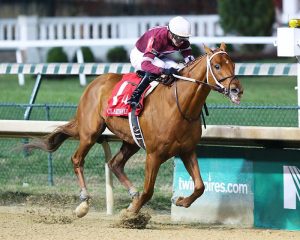 Gun Runner hails from the same sire line as Arrogate, but through a totally separate branch of that tree. His great-grandsire is Fappiano, the same as Arrogate’s, but Gun Runner inherits his Fappiano through Cryptoclearance, a useful stallion but not nearly as influential as Unbridled, Arrogate’s grandpa. It’s worth noting that both Unbridled’s Song and Candy Ride have relatively undignified female families, that haven’t gotten much else besides these two exceptional stallions. Candy Ride, six years younger than the deceased Unbridled’s Song, has yet to get that outstanding son who will brand him as a sire of sires, though Misremembered, Sidney’s Candy and Twirling Candy have marked themselves as young stallions to keep an eye on. So the similarities between Arrogate and Gun Runner continue to multiply, and continue to raise doubt.
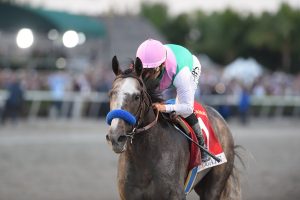 Juddmonte seems determined to see to that. They recently announced that such mares as Songbird, Paulassilverlining, Perfectforthpart, Lucas Street, Centre Court, Sortilege, Plum Pretty, She Be Wild and Lady of Fifty were in foal to their champ. With such broodmare sires as Ghostzapper, Medaglia d’Oro, Smart Strike, and various sons of Storm Cat represented in that list, Juddmonte’s superb expertise of pedigree would seem to give Arrogate an edge in the 2019 freshman sire contest. Never before has Juddmonte so aggressively acquired race mares, specifically to breed to Arrogate, with Paulasilverlining being the poster girl for that campaign, with her dose of In Reality, Mr. Prospector, and an added doubling of Deputy Minister. I can’t wait to see that foal race in the Juddmonte colors!
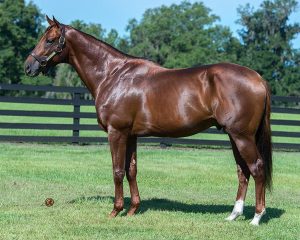 An unlikely star emerged from the first crop of Adena Springs Kentucky’s stallion, Capo Bastone (Street Boss/Fight to Love). In the second race at Keeneland on April 11, 2018, Hargus won a maiden special weight for two-year-olds by 2 ½ lengths, earning $26,820. Capo Bastone stands for $4,000, and wasn’t on anybody’s radar as a freshman sire to watch.
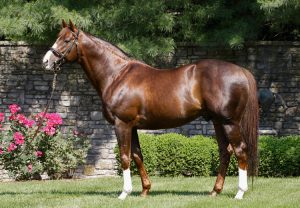 If one were to design the ideal horse, the result might very well be Giant’s Causeway, whose death at 21 on April 16, 2018 marks a great loss for the thoroughbred horse industry. Without question Storm Cat’s best son at stud, his sons and daughters have thrived on the race track and in the breeding shed themselves; a Giant’s Causeway mare is the dam of the great Gun Runner.