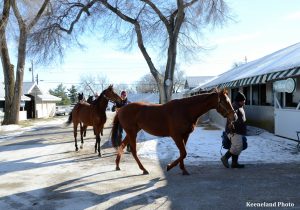
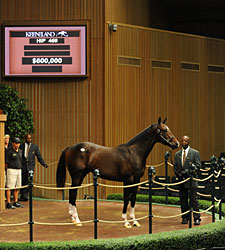
 The Keeneland sales can be an overwhelming experience for the uninitiated and initiated alike, with 49 barns full of horses, selling on numerous days, with horses continually shipping in and out and various types of thoroughbreds available: in-foal mares, barren or maiden mares, broodmare and racing prospects, weanlings, and even geldings, stallions, and among these both racing and stud prospects. With luck, there may even be a mare who has already foaled, and will be brought through the ring with her new baby at her side, a rare two-for-one deal that both takes the guesswork out of foaling a mare whose habits you don’t know, and getting the late Christmas present of the cutest thing in the world, a new foal.
The January sale is known to be a cull sale, though not in a pejorative sense, because animals that such renowned entities as Juddmonte, Darley, Adena Springs, Hill ‘n’ Dale and others want to get rid of are spectacular buys for the rest of us. Also, should you want to pinhook, the January sale is ideal, as it represents the shortest turnaround time possible. Short yearlings  purchased at January can be turned around in September or October, and mares and new foals can be turned around in November. If you’re looking for a quick return on your investment, the January sale can’t be beaten. As well, because of the tendency for the weather to be utterly miserable (I’ve driven to the sale in blizzards), attendance is usually far sparser than for the more popular November sale.
Even a relatively small sale like the January Keeneland sale demands strategy and efficiency, though, if you are a serious buyer. The Keeneland backside occupies many acres, stretching from right outside the sale pavilion to a good mile walk uphill to barn 49, so organizing your trek through the barns is essential. Sales companies such as Taylor Made and Eaton Sales are given prominent barns, with stock generally separated into mares and short yearlings, which are then separated into colts and fillies, to avoid potential hijinks by already studdish colts.
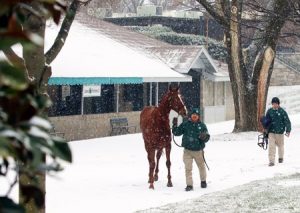 As well, once you make the decision to visit a sales company’s barn, you must have a list of the animals you want to see—you will be handed a card listing all of the company’s offerings, and must check off those that you want to see, and then wait your turn on one of the many walking areas to see your choices and make notes on them. Each sale company hires a variety of workers for the sale, making the backside a beehive of activity, with grooms, stall cleaners, those who actually show the animals to you, honchos with notebooks full of the details you require (x-rays and scopes on short yearlings, and information on mares’ pregnancy records, family updates, etc.), and the “clerks” who hand out, then collect your cards, and organize your viewing for you. This parade of workers follows each hip number into the back walking ring, into the sales pavilion’s walking ring, and then into the ring itself. It’s an amazing display of organization and safety, though an occasional animal will act up and demand extra help.
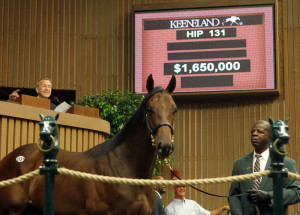 Clearly, you can’t see everything, so a serious, analytical reading of the catalogue is the first step in selecting those pedigrees that appeal to you (along with birthdays for yearlings, breeding dates for mares, and an attempt to foresee which animals will be in your price range) and are, therefore, worth looking at. In the January Sale in particular, I look for animals that seem slightly misplaced, and might slip between the cracks, yielding great bargains.
After high-selling, high profile animals, there will frequently be a dead spot. Very early in the sale is also frequently dead. And don’t forget lunch time, when carousing in the Keeneland dining areas distracts some buyers from the serious business at hand. I once purchased a small, hairy Red Ransom yearling colt in January for $5,000, and sold him at Keeneland September for $25,000. My best buy, a Time for a Change short yearling with a gorgeous pedigree but a late birthday, was hammered down to me for only $1500, and I sold him at the summer Texas yearling sale just a few months later for $40,000. I also purchased a Robin des Pins colt, a gorgeous, big chestnut with a quality page, for $7000, and likewise sold him at the Texas yearling sale for $40,000.
Though deals such as these are far rarer these days (note the late Jurassic period sires mentioned), pinhooking stand outs are still possible. It should be noted, however, that I had my own fully equipped farm, so I incurred no boarding fees, and no sales prep fees, as I had the capability of prepping for myself. Sales prep for yearlings is ridiculously expensive and labor intensive, and must be factored into the possibility of profit. My only expenses were feed, hay, farrier, vet and supplies, and my investment of my own sweat on a daily basis.
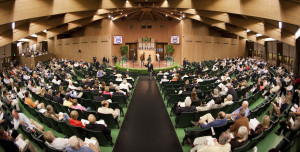 One more thing to be aware of before putting time and energy into traversing the Keeneland barns: you must be able to make split second decisions when bidding, because each animal, except for the very high-priced ones, is only in the sales ring for three minutes. (I’ve clocked it.) So you must disregard the nerves inherent in the process and rapidly figure out if you should put your hand up. You must know your financial limitations, and stick with them, and trying to figure out whom you’re bidding against is useful. Remember that reserves are placed on most animals by the sellers and consignors, so bidding too quickly may result in your bidding against a reserve instead of a real, live, human bidder. But if you wait too long, you will lose out.
I’ve attended the sale with clients who wanted to buy, but took too long to make up their minds, and the animals they wanted ended up going home with someone else, whose veins filled with ice water allowed them to triumph while indecisive buyers were left to parse why they got left out. It’s also worth paying attention to the Keeneland employees who bring the tickets out for the new buyers to sign, because many tickets don’t come out—they go right back to the Keeneland office, meaning the horse went unsold. You can frequently go back to the barn and make a private deal for such animals, when sellers are disappointed that their offerings didn’t sell.
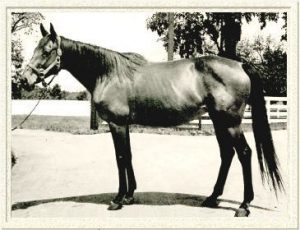
 First off, when doing your pre-sale examinations at the barns, there are animals everyone will want to see. In this sale, there is one serious stand-out: Abel Tasman. The Champion and multiple Grade One winner is a must-see, for, as fans of racing, this is a once in a lifetime opportunity to view, close up, a great mare. The big race mares are a different species, and breathe more rarefied air.
A few years ago, while I stood in the back walking ring, a huge, gorgeous, queenly mare came in, and I said to my companion, “that’s what a thoroughbred mare should look like.” When I checked my catalogue, I discovered she was Iotapa, a multiple graded stakes winner. Unforgettable. Others in that category were the enormous, fabulous Champion (and producer) Phone Chatter, and Tapit’s grand dam, the most adorable, chubby, little, doe-eyed, white mare I’ve ever seen, Ruby Slippers, for whom I had enormous horse lust. If you love good horse flesh, the sales are incomparable for these kinds of sightings and memories.
Abel Tasman is being sold by Taylor Made, the perennial leaders in sales results, partially because of their sheer numbers of offerings, but also because they tend to get such quality in their consignments. They are ultimate professionals, and it’s always a pleasure to visit their consignments. For Keeneland January 2019, Day One, Taylor Made has three barns, two, three and four, which are conveniently located just below the sales pavilion, making them a good starting place for your pre-sale examination safari. I usually start at those lowest barns, one through ten, and then move up to the second tier, 11, 12, 14, 15, 18 and 19 (the absence of 13 makes superstitious sense, but what happened to 16 and 17?), before heading up to the rest of the barns. Remember to factor into your meanderings the usual terrible weather in Lexington in early January, and dress accordingly.
 The card I’d fill out for Taylor Made consignment viewing would, of course, include Abel Tasman, though chances are that when you arrive at the barn, she will be out, being viewed, by many people. Look at her first—as the pre-sale attention goes on, she will become tired and aggravated, and your sense of her will be tainted by this. Paying attention to what others are looking at is important, because you might encounter something gorgeous that you hadn’t marked, but whose physical appearance is so stunning that you will be forced to consider it.
Also, if you know the players at all, seeing someone semi-famous to sales aficionados, with a big bank account, looking at one of your choices will save you the time of looking—clearly, that animal is unaffordable. Bob Baffert is, of course, one of these sale celebrities, but you should also be able to recognize such important players as Donato Lanni, David Ingordo, and anyone from the Coolmore crew or the posse of Sheikh Makhtoum.
Here is a sampling of what I’d look at for the sale’s first day at the Taylor Made barns, and why:
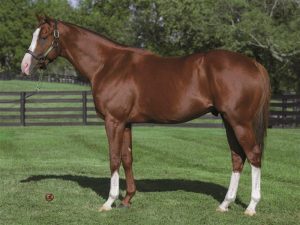 38: A Will Take Charge yearling colt, early enough birth day to have size, in-breeding to Somethingroyal, tail female La Troienne. The page of Kentucky Derby winner Sea Hero. The Will Take Charge offspring tend to be big and handsome, like dad.
39: An Into Mischief yearling colt, foaled February 4, with a minor black type dam. The third dam, however, is unbeaten super-mare Personal Ensign, who engendered a line of champions and millionaires that is still potent. A no-brainer.
45: Miss Pleasant, by Pleasantly Perfect, twelve years old, room for only the first dam on the page. Her first foal was a stakes winner by Congrats, and she is in foal to Malibu Moon on a February 23 cover. She herself was a stakes winner, and graded stakes placed. The only thing that could make this better is if she has her new foal already by her side.
71: Paris Bikini, a six-year-old Bernardini mare, in foal on a March cover to Distorted Humor, whose third dam is the Juddmonte Blue Hen Blush with Pride, a family that is very hard to buy into. Blush with Pride is the only mare to have produced two Belmont S-G1 winners, the filly phenom Rags to Riches and Jazil. Paris Bikini has a 2017 Curlin filly and a 2018 Into Mischief colt—she is all potential. Another no-brainer.
107: Liam’s Map yearling filly, foaled February 9, out of a Storm Cat mare—Unbridled’s Song on Storm Cat works beautifully. Add in a Holy Bull second dam, for more of the In Reality/Dr. Fager line that Liam’s Map is so rich in, plus a champion Mr. Prospector fourth dam, Tersa. Great page, and the first offspring of Liam’s Map have been very well received. I’ve seen him, and love him.
118: Ruby’s Realm, a 2006 Empire Maker mare, whose dam, stakes winner Ruby Ransom, produced millionaire Strut the Stage, and whose daughters have produced. Ruby’s Realm has already produced a small stakes winner, has a 2017 Honor Code about to hit the track, and is in foal to Twirling Candy, with a great nick—nothing Twirling Candy likes better than more Fappiano. And Ruby’s Realm’s third dam? Myrtlewood Lass, making her a part of the same tail female family of Mr. Prospector, Seattle Slew, and Forestry. Love this page.
 Of course, it goes on and on—Taylor Made’s consignments are always gold mines. And this is just the start—you haven’t even trekked up the hill yet. You need a system, and it helps to have some guiding theories. I like the classic female families, of course, and having made a yearly effort to look at both new and old stallions in the flesh, I have certain favorites. A spectacular looking young stallion, as Will Take Charge was when I first saw him, and as Liam’s Map and Honor Code are, makes a big impression, and I would love to be able to invest in any of those. And of course, certain broodmare sires are favorites: Empire Maker chief among them, but also Bernardini and Malibu Moon, and many from the Storm Cat line.
Being able to sort out what you will probably like, from what you don’t believe in, is a great start in culling hip numbers from the catalogue that you won’t want to look at. Being able to read and analyze a catalogue page quickly is a must, as occasionally a horse comes through the ring that isn’t garnering the attention it should—figuring out why, and if the bidders are making a mistake that you might be able to take advantage of during those three minutes she is in the ring, may provide you with a chance at a terrific bargain.
Exhausting, amazing, horseflesh more gorgeous than you have ever imagined—the Keeneland Sales are too fascinating and too much fun. Plus getting to see the very wealthy bid against one another, bidding more in one raise of an index finger than I have in my total bank account, is an experience that boggles the mind. Everyone should go to a Keeneland Sale, just for the experience, but if you’re not intending to buy, be prepared to sit on your hands and catch nobody’s eye. Or you could go home with a horse.
— Roberta Smoodin
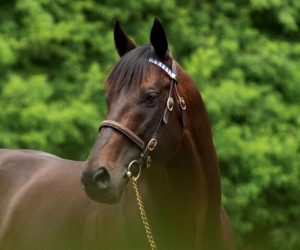 Opening day of Santa Anita’s winter 2018 meet demonstrated that Santa Claus was still at work for stallions Street Sense and Twirling Candy. Mckinzie, whom Bob Baffert touted early in the year as one of his very best three-year olds, finally showed his stuff, in a crowded Malibu S.-G1 field that showed that trainers believed the race was wide open for the taking. Mckinzie thought otherwise, and won by nearly five lengths with complete ease, coming from off the pace and making his challengers look like Grade One amateurs. Darley’s Street Sense, who stood for $45,000 in 2018, once again stamps himself as Street Cry’s best son, and Mckinzie’s pedigree underscores what, historically, works with Street Sense.
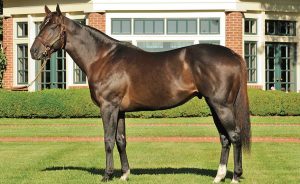 Also on opening day, the surprise win of Gift Box in the San Antonio S.-G2, showcased the beautiful gray’s ability, and similarly underscored what his sire, Twirling Candy, needs to make stakes winners, just as his sire Candy Ride does: more Fappiano. Gift Box is 5 x 4 Fappiano, through Cryptoclearance and Unbridled’s Song, making him similarly bred to Twirling Candy’s best runner, Danzing Candy, who is out of a Songandaprayer mare. Twirling Candy stands at Lane’s End for $20,000, and as long as students of breeding keep bringing him more Fappiano, he will continue to produce. Candy Ride similarly loves an infusion of Northern Dancer blood in his mares, and Gift Box brings this too, as he is 6 x 5 x 5 Northern Dancer (though none of these represent the Storm Cat line so important in Candy Ride’s best offspring). Much like Mckinzie’s dams’ side, though, an important Blue Hen makes a cameo appearance in Gift Box’s dams’ side: Somethingroyal, dam of Secretariat, the influential Princequillo mare whose genetic presence continues to mark the thoroughbred breed. She appears through her son, Sir Gaylord, Secretariat’s older brother.
 The moral to this story? Never count out the influence of Blue Hen mares like La Troienne and Somethingroyal, though their presence in contemporary pedigrees might be well off the usual five generation pedigrees most look at. They reach out from the past to create the Mckinzies and Gift Boxes of today’s pre-eminent racing.
 Second crop sires in the United States have been dominated by Hill ‘n’ Dale’s Violence, and there is no reason to assume that will change before the end of the year. Violence entered stud in 2014 for a fee of $15,000, and he is up to $40,000 for 2019, but his statistics support this raise in stud fee. Depending upon what sire list you refer to, he has around 228 named foals, and 148 starters, with 81 winners, and is hitting at the requisite ten percent for stakes winners with eight currently, and over five million dollars in earnings.
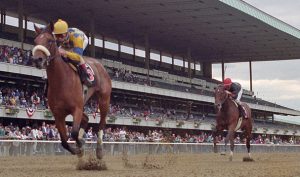 It’s Violence’s third, fourth and fifth dams that stun, however. His third dam is millionaire, Champion, and multiple Grade One winner Sky Beauty. His fourth dam is another multiple Grade One winner, Maplejinsky, by Nijinsky II, who combined with Blushing Groom, his close genetic relative, to create Sky Beauty. And his fifth dam is Gold Beauty, Champion Sprinter, and the dam of sire Dayjur. The build up of Northern Dancer blood through Sadler’s Wells, Storm Bird, and Nijinsky, plus the introduction of Blushing Groom, and the strength of Gone West, who brings Mr. Prospector and Secretariat to the mix, demonstrates exceptional strength and possibility.
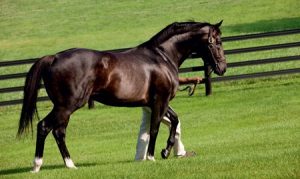 We can only assume that Violence’s best crops are yet to come, and that if he attracts mares from the Unbridled/Fappiano lines, and the A.P. Indy lines (given his dose of Damascus in his sire line, plus all the Secretariat), that his impact will continue to be impressive. Anyone with a nice Tapit mare should think about breeding to him—I certainly would. It should be noted, as well, that his specialty, as a race horse, was at a mile or a little longer, a recipe for a successful sire, but that his pedigree also infers that distance shouldn’t be a problem. Violence is clearly a young sire to be reckoned with, and the best representative, currently, of his superlative father, Medaglia d’Oro.
 It isn’t extraordinary that Bob Baffert took both of the Grade One events for two-year-olds at Los Alamitos on November 8, nor is it extraordinary that his charges finished one/two in the Los Alamitos Futurity and one/three in the Starlet S. , with Drayden Van Dyke up on both winners. What is extraordinary is that Improbable, the thrilling, over five lengths, runaway winner of the Los Alamitos Futurity and Chasing Yesterday, whose gutsy, wide trip all the way around two turns demonstrated her exciting talent, share such similar genetic material as to be weird twins of sorts. Just juggle the DNA a bit, and their similarities are, certainly no pun intended, more than improbable. Here are the basics: Improbable is by City Zip, out of the A.P. Indy mare Rare Event, while Chasing Yesterday is by Tapit, out of American Pharoah’s dam, Littleprincessemma, by Yankee Gentleman.
 Then, we have the appearance of very important full siblings, Relaunch and Moon Glitter. Relaunch appears via Improbable’s sire, City Zip, himself out of a Relaunch mare, Baby Zip. Baby Zip also prominently appears as the freakishly fast Ghostzapper’s dam. Relaunch’s full sister, Moon Glitter, features prominently in Tapit’s pedigree, as his third dam who, with Nijinsky II, created Ruby Slippers. So these siblings are in position three in Improbable’s pedigree, and position four in Chasing Yesterday’s pedigree, both via the sire line, and both contribute big doses of hard-knocking American speed through In Reality.
 We’d be remiss not to note the importance of Secretariat’s Princequillo dam, Somethingroyal, in both pedigrees, through Weekend Surprise, A.P. Indy’s dam, and, in Chasing Yesterday’s broodmare sire, Yankee Gentleman, an otherwise underachieving son of Storm Cat, who was out of the great Secretariat mare Terlingua, making Chasing Yesterday 5 x 5 Secretariat. Her pedigree also includes, through Minnetonka, the dam of Ecliptical (by Exclusive Native, her second way back to Raise a Native), the sire Chieftain. Chieftain is always a fascinating addition to any pedigree that includes Secretariat, as he is bred so similarly to the Triple Crown Winner of 1973.
 There was the eternal question for both of Baffert’s charges: can they get two turns? Because, at this time of year, everyone is already thinking about the 2019 Kentucky Derby and Kentucky Oaks. Both of these youngsters would seem to have the goods, Improbable through Belmont winner A.P. Indy and Stravinsky, and Chasing Yesterday through A.P. Indy, inbreeding to Northern Dancer, inbreeding to Secretariat with the addition of Chieftain, and a stray dose of Graustark, a serious stamina influence, a ways back in her pedigree. For the first time, I haven’t even mentioned Chasing Yesterday’s important dose of Fappiano through his best son, Unbridled, in her sire, Tapit. These two amazingly similar pedigrees deserve a book to be written about them. Perhaps that will yet happen, if both stay healthy and visit Kentucky on the first Friday and Saturday in May, 2019.
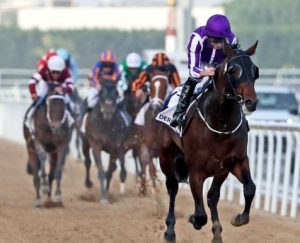 Anyone who witnessed Mendelssohn winning the UAE Derby-G2 at Meydan can only regard his retirement with both regret and excitement. Certainly, he beat little in that field, but winning any Derby by 18 ½ lengths indicates a special kind of talent. And this was after he took the Breeders’ Cup Juvenile Turf-G1 the previous year. Word was that the Coolmore gang was desperate to get him a Grade One win on dirt in this country, to improve his popularity and fee at stud, but he disappointed last month in the Cigar Mile-G1, and could only hit the board in the Dwyer S.-G2, the Travers S.-G1 and the Jockey Club Gold Cup-G1, though he was usually favored to win. The extremely handsome colt brought three million dollars as a Keeneland September yearling in 2016, and being a half-sibling (or a little more, given the Storm Cat dose that seems magical with blue hen dam Leslie’s Lady) to both leading sire Into Mischief and multiple Champion Beholder guarantees interest in him as a stud. Now, he is retired to Ashford Stud/Coolmore America, and will stand the 2019 season for $35,000.
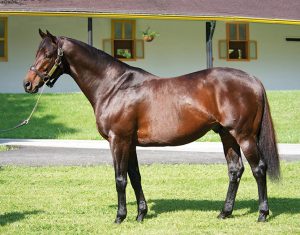 The international news and the national news continue to be the blame game: who did what, when, and to whom, and who’s lying (everybody) to whom (also everybody). But in thoroughbred racing, the blame game is something entirely different. Claiborne Farm’s young stallion, Blame, currently at number 18 on the leading sires list with only four racing crops, has offspring that continue to excel, and this weekend’s racing was no exception. It’s worth noting that, in the top twenty leading stallions, Blame, as a foal of 2006, is joined by only Uncle Mo, Lookin’ at Lucky and Quality Road, all stars in their own right, among much older sires, usually from the foal crop of 2000 or before.
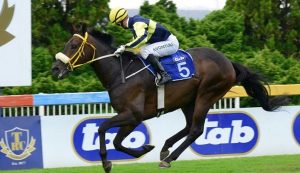 At Lingfield Park in Southern England on Saturday, the nine year old gelding Captain Lars won his 11th race of 2018. He won the 5 furlong sprint on the synthetic track in 57.72 seconds. Captain Lars is rated the equivalent of an American older $10,000 – $12,500 open claimer.
 The news Saturday that the affable and fan friendly Michael Wrona had been suddenly and unceremoniously released by Santa Anita as their Track Announcer was a shock move by track management and a highly puzzling one. With his succinct and accurate race calls, Michael had greatly impressed many and won over most initial doubters in the two years since he had won the job in a highly competitive auditioning playoff with other top announcers. Trevor Denman was always going to be a tough act to follow, but Michael was welcomed and considered to be the new long term voice of Santa Anita by California racing fans.
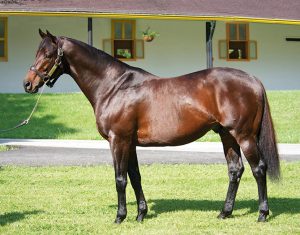 Friday, November 23, 2018, proved once again that certain female families maintain their powerful DNA over generations, no matter what. The Grade One Comely S. was won by a daughter of Blame, who stands at Claiborne and has been coming on strong this year. Her name is Blamed, and she led gate to wire, as the favorite. Blame has a pedigree loaded with great dams, including Courtly Dee (by Never Bend), Con Game (by Buckpasser) and Special (by Forli), but as if that wasn’t enough, her dams’ side brings more female strength to the equation that created Blamed. Her dam, Salsa Star, is by Giant’s Causeway (adding, of course, Terlingua, one of the greatest Secretariat mares, and Mariah’s Storm, arguably the greatest Rahy mare), while her second dam, Miss Salsa, is by Unbridled (more Buckpasser). Then the coup de grace—her third dam is Oscillate, by Seattle Slew, who is tail female La Troienne—exactly the same Blue Hen whose power has been built up by all the Buckpasser. What a pedigree!
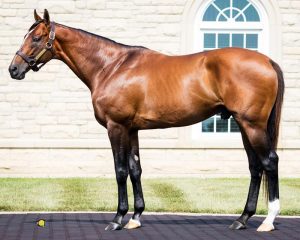 Mucho Gusto, the winner of the Bob Hope S.-G3 at Del Mar on Saturday, November 17, contributed his sire’s first graded stakes win. Mucho Macho Man currently ranks at number nine on the first crop sires list, with $499,811 in earnings. With only 70 named two-year-olds in his first crop, and 31 runners, Mucho Macho Man, who stands at Adena Springs in Kentucky, alongside his sire Macho Uno, has seven winners, and two repeat winners. His number of winners is at a respectable near 10% compared to his crop numbers, and Mucho Gusto is his second stakes winner, along with Mucho Unusual. Mucho Gusto, owned by Michael Lund Petersen, bred by Teneri Farm and Bernardo Calderon, and trained by the ubiquitous Bob Baffert with Joe Talamo up, has a decidedly more interesting and classic pedigree that deserves examination.
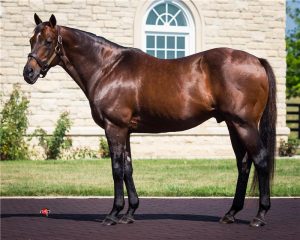 His relatively undistinguished dams’ side, however, offers a perfect match with Macho Uno’s dams’ side, presenting as it does one of the most powerful crosses in the stud book, the combination of Blushing Groom and Nijinsky II. It should also be mentioned that Macho Uno is a half-brother to perennial great Awesome Again. The common factor is their mother, Primal Force, by Blushing Groom, out of the Mr. Prospector mare Prime Prospect. In Mucho Gusto, the combination of Nijinsky/Blushing Groom/Mr. Prospector that we find in his sire, Mucho Macho Man, is echoed perfectly in his dam, Itsagiantscauseway, providing a beautifully balanced zig-zag pedigree, these important bloodlines coming through both the male and female side of his family.
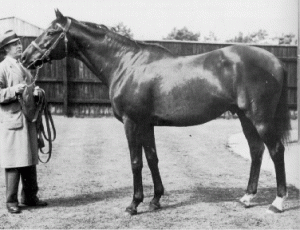 The Nijinsky/Blushing Groom cross isn’t just magic. If you trace their families back just a few generations, you’ll find that these two important sires are very closely related, via powerful influences from the past. First of all, both are from the Nearco sire line, and Nearco appears three generations back in both sire lines.
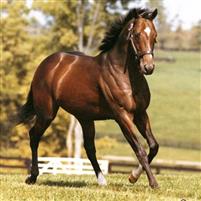 There is a near-triplet to add to those mixed up twins, and that is Storm Bird. Mucho Gusto is out of a Giant’s Causeway mare, as previously mentioned, and Giant’s Causeway represents one of the most potent crosses for Storm Cat, with his Rahy (Blushing Groom) dam. As a son of Storm Bird, Storm Cat crossed brilliantly with both Blushing Groom and Nijinsky, and the reason is his sire, Storm Bird. Like Nijinsky, Storm Bird was a son of Northern Dancer, thus bringing all the strengths of that pedigree—Nearco, Mahmoud, Blenheim and Blandford to the mix. Like Nijinsky as well, Storm Bird features Bull Dog in his dams’ side, through Bull Page and Blue Lea, and Sir Gallahad through his son Gallant Fox, exactly as Nijinsky does.
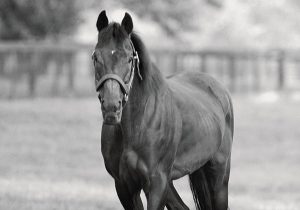 We can’t ignore, either, the twinning of Mr. Prospector in Mucho Gusto’s pedigree. In Mucho Macho Man, Mr. P appears through Ponche, an undistinguished son of Two Punch, himself a lesser son of Mr. P., and in Primal Force, whose dam is the Mr. Prospector mare Prime Prospect, the zig zag once again. Mucho Gusto, however, brings the true power of Mr. P through his second dam’s sire, Seeking the Gold, one of Mr. P.’s first rate sons, reeling in and galvanizing the power of Mr. Prospector found in Mucho Macho Man.
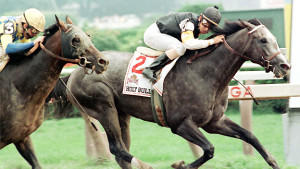 Though Macho Uno’s sire, Holy Bull, was an exemplar of tough, blue collar, American dirt/speed breeding, he had no difficulty with distance and could carry his speed. Holy Bull destroyed decent competition, and was a big, muscular, masculine example of thoroughbred gorgeousness. Adena Springs has long appreciated what his looks and pedigree bring to breeding, and committed to carrying his line forward in Macho Uno and Mucho Macho Man. His presence in Mucho Gusto’s pedigree offsets all of the turf breeding, making it possible for Mucho Gusto to be any kind of horse as a three-year-old. Remember, Mucho Macho Man ran from two to six on his iron legs. It’s also worth noting a hint of stamina in Mucho Macho Man’s dams’ side, in the equine personage of Hoist the Flag. With all this, don’t be surprised to see Mucho Gusto going the distance as a three-year-old, perhaps even in the Run for the Roses.