Siskin’s Impressive Railway Victory a Strike For First Defence

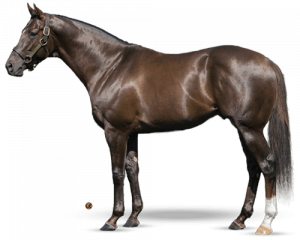
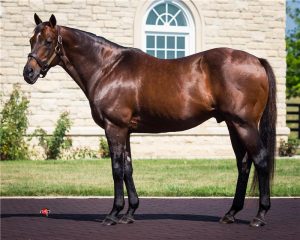
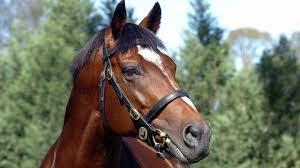
On Irish Derby Day, another race may have stolen the show: the Railway S.-G2, a showcase for some of the best two-year-olds, featuring Monarch of Egypt, a much-touted son of American Pharoah (purchased at Keeneland September for $750,000) owned by Peter Brant and the usual Coolmore suspects, trained by Aidan O’Brien, ridden by Ryan Moore, and the highly esteemed Fort Myers, a son of War Front, also Coolmore-owned, out of a Galileo mare, whose second dam is a full sister to the great Giant’s Causeway. But it was the other blockbuster breeder, Juddmonte Farms, whose First Defence colt, Siskin, easily won over the other two, and whose connections include being trained by G.M. Lyons, and ridden by Colin Keane.

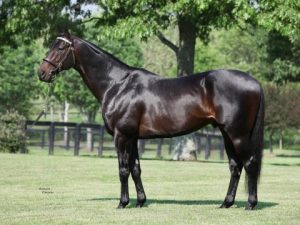
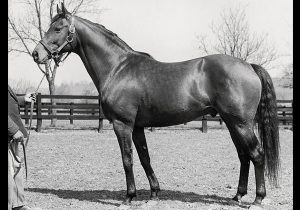
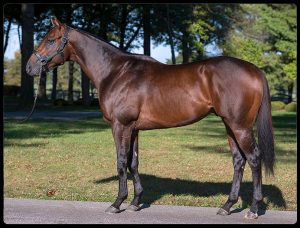
First Defence, who stood his last season in North America in 2016, the year Siskin was conceived, makes a big, rugged colt with tons of bone. I had one from his first season at stud, and his coarse handsomeness made him a favorite at my farm. Siskin has the same look, a large, solid, plain bay colt, but his pedigree, pure Juddmonte breeding, makes him stand apart. He is a Who’s Who of Northern Dancer inbreeding, featuring El Gran Senor, Danzig, Lyphard, and the Minstrel, but as usual, and especially in Juddmonte breeding, mares rule the day.

First Defence is a grandson of Broodmare of the Year Toussaud, and his mom herself is no slouch: she’s the Seattle Slew daughter Honest Lady, grade one winner of nearly $900,000. But his pedigree also features Blue Hen Courtly Dee, through the dam of Green Desert (Foreign Courier, by Sir Ivor), Secrettame through Gone West, and Monroe, a daughter of another great Juddmonte Blue Hen, Best in Show, by Sir Ivor. Siskin is tail female Best in Show, one of, arguably, the two greatest mares in the Juddmonte tradition, the other being Toussaud. Hence, Siskin’s dams’ side is packed with as much greatness as his sire’s side, including the three doses of Somethingroyal, through her son Secretariat and her grandson Sir Ivor.

Though First Defence now stands overseas, Juddmonte’s continued success with him is a paean to their breeding program, which depends upon stellar mares in epic proportions. Let us not forget that Juddmonte is trying the Unbridled’s Song route yet again, with their beast of a race horse, Arrogate. No doubt his first book, now on the ground, was filled with some of Juddmonte’s best mares. First Defence, himself a son of Unbridled’s Song, may be abroad, but he is not forgotten, thanks to Siskin.

— Roberta Smoodin

That Nijinsky Eye…

Has anyone else noted the phenomenon of the Nijinsky II eye? I’ve been aware of it for years now, and was reminded of it when Simply Breathless got her close-up in the paddock at Santa Anita as she awaited her photo op in the winners’ circle after the Wilshire S.-G3, a stunning upset for a truly gorgeous mare. Simply Breathless was bred in Great Britain, and I was unfamiliar with her pedigree, though aware of the brilliant campaign her trainer, Neil Drysdale, had planned for her since her importation. Then I saw that eye.

Her left eye was completely white-rimmed around the iris, giving her a slightly mad, bad and dangerous to know appearance, though her body language was cool and calm. I instantly thought: Nijinsky. I’ve owned a Seattle Dancer mare and a Royal Academy mare who both had that Nijinsky eye, and started observing it at sales as well. Nijinsky doesn’t have to be as close up in the pedigree as he was in the two mares I’ve owned with his blood; from what I’ve noticed, Nijinsky’s influence anywhere in the first six generations can cause that remarkable, crazy-looking eye to appear.

Simply Breathless is a product, in her sireline, of Juddmonte breeding, as Bated Breath, her sire, is by Dansili, and features all of the goodies inherent in stellar Juddmonte planning, such as Danehill, Irish River, Blushing Groom, Mr. Prospector and Danzig again, not to mention the tail female Blue Hen Monroe. It should be noted that her dams’ side features another dose of Danzig, through his wonderful but almost hopefully infertile son Lure, and more Mr. P through Gulch.

But look a little closer. Dansili is out of Hasili, by Kahyasi, a son of Ile de Bourbon. Ile de Bourbon’s dad? None other than Nijinsky II. I wish I could consult with Mendel on the genetics of this, as for me it is only observation rather than science. But there it is. And I love the Nijinsky eye, and the insane look it gives to mares. I’ve not observed this in stallions with Nijinsky in their blood, so perhaps, like the big heart gene, it can only be passed on to female offspring. Anyone else noticed this?

— Roberta Smoodin

Monongahela & The Return of Round Table

Monongahela’s longshot win in the Philip H. Iselin S.-G3 on 6/22/19 was a thrill for all pedigree nerds, as he may be the lone representative of a long-lost sireline, that of the great Round Table and his son Princequillo, who still influence the breed through his female offspring, through his son Apalachee and his grandson K One King. Monongahela is a five-year old son of K One King, trained by Jason Servis and ridden yesterday by Jose Lezcano, and the horse now has six wins from 24 starts, with total earnings of $381,043.

K One King was a winner at two and three, of a non-graded stakes at three, but his triumph was at four, in the Oaklawn H.-G1, over, among others, Cat Thief. Retired after a suspensory injury with earnings of just under $700,000, prestigious Gainesway Farm in Lexington brought him onto their formidable roster in 2000, no doubt because of his unique pedigree, as the Princequillo/Round Table line had already all but disappeared. His stud fee was $6500. He then began a tour of the Bluegrass, standing at Margaux Farm, Silver Springs Stud, and Millennium Farm, with his stud fee dropping to a low of $2500. Despite research, all one can assume is that he was retired after the 2018 season. His entire stud career resulted in only 284 foals and 211 starters, and a dismal 2% blacktype winners. A big, handsome, chestnut, he was, as noted, from a sireline known to have great, producing daughters rather than great male race horses, and at this time there are no representatives of that sireline at stud that I am aware of.

K One King’s sire was Apalachee, a son of Round Table, out of Moccasin, a daughter of the great Blue Hen Rough Shod II, a sterling pedigree. It also featured inbreeding to Nantallah, a son of Nasrullah, and Heliopolis, by Hyperion, a truly old school mix of blood. Monongahela’s dams’ side adds two doses of Turn-to which call out to the two doses of Nasrullah on his top side, as well as another dose of Nasrullah through Mr. Prospector’s dam, Gold Digger, plus adding that all-important Buckpasser through his broodmare sire, Touch Gold, with it’s strong dose of La Troienne.

Add inbreeding to Native Dancer, top and bottom, through Native Charger and Mr. Prospector, plus the strength of Deputy Minister, and this pedigree begins to take the shape of a potential stakes winner. But the true key to the pedigree is Monongahela’s third dam, Just Us Girls, by Stage Door Johnny. A great stamina influence, Stage Door Johnny was by Prince John, a son of Princequillo, providing the huge heart gene of that great broodmare sire on Monongahela’s dam’s side, and reaching out to match the Princequillo sireline. Finally, it must be noted that Nantallah’s dam, Shimmer, is inbred to Sir Gallahad II, adding more of his dam, Plucky Liege, to the Bull Dog, Sir G’s full brother, in the dams’ side of Monongahela.

This collection of truly old school pedigree nicks warms a pedigree nerd’s heart. That Princequillo and his son Round Table, who once dominated thoroughbred breeding, have become nearly extinct saddens one, but Monongahela’s victory in the Iselin demonstrates the staying power of those great, nearly extinct sirelines.

— Roberta Smoodin


Track Superintendent Ken Brown Readying Colonial Downs Surfaces For Reopening

When the first thoroughbred race since 2013 is held at Colonial Downs Racetrack this August, one person in particular will breathe a sigh of relief.

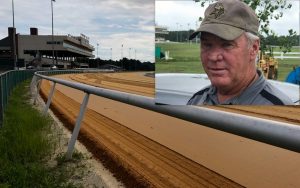
Track superintendent Ken Brown, who began his second stint at the New Kent, Va., track in April, is in charge of bringing its two highly regarded racing surfaces back to life after years of inactivity. The last Thoroughbred race was held there in July 2013 and the last Standardbred race took place over the dirt track in October 2014.

“It took me a while to wrap my head around the scope of what needed to be done,” said Brown. “When I first got here, the dirt track especially didn’t seem too out of whack but quickly realized it needed a lot of work. We brought in surveyors, got Joe King’s (original track architect) plans, and reached out to industry experts for advice.”

The New Kent venue features a 1 1/4-mile dirt oval with a chute in the backstretch that allows horses to encounter just a single turn in a one-mile race. The only North American track with a bigger dirt oval is at Belmont, which is 1 1/2 miles around.

Brown was able to save about one-third of the track’s prior cushion and will bring in the other two-thirds needed from new material, which has all been extensively tested and analyzed to meet the highest standards of surface safety. Two inches of the dirt track cushion is down now and four more inches are set to be placed in the next two weeks. “It’s a tedious process,” he said. “It takes six hours for the paver to make a lap of the oval and it can only cover an area 13 feet wide at a time.”

“It’s a shame the dirt track doesn’t get used more,” said John Dale Thomas, Colonial’s longtime Thoroughbred and harness track superintendent who still serves as a course consultant at New Kent. “It’s got those wide sweeping turns which are so great for the horse. We’re just fortunate here to have two top-notch ovals here.”

Colonial is probably best known for its Secretariat Turf Course. The 180-foot-wide surface features bermuda grass and at its outmost rail position, is 1 1/8 miles around. At its inner most rail spot, the course is seven-eighths of a mile around. In all, there are nine different rail positions. Colonial expects to card 80 percent of races on the grass this summer when racing begins August 8.

A controlled burn of the turf took place on April 16 which helped remove dead cover from the top in a quick and efficient manner. Since then, it has blossomed into a lush green color though the nice Virginia spring weather gave Brown a challenge. “It takes an enormous amount of water to hydrate a course that size,” he said. “With the hot and sunny conditions we had for a while, it was a struggle to get the amount of water on it the way I would have liked but we managed.”

Several consecutive days of rain this past weekend helped Brown’s mission in watering the course though it held up work on the dirt track by several days. “We sprayed the turf surface for weeds last week and the dirt track is still on schedule so we’re in nice shape.”

Horses will begin arriving when the barn area opens July 25. Racing begins August 8 and continues three days a week until September 7. The highlight of the meet is the Grade 3 Virginia Derby on August 31. “There’s always pressure to make deadlines but you strive to make it perfect whether you’re a pilot, mechanic or horse track superintendent,” said Brown. “In our world, every race day is like its a Kentucky Derby or Preakness day. We treat it the same and strive to make it perfect.”

Asked what it was like to work the Preakness Stakes at Pimlico for 18 years, he admitted that high profile days can be nerve wracking. “You’re on pins and needles all day and the adrenaline is just flowing . By the end of the day, you’re exhausted but don’t even realize it until the next day.”

Ferris Allen, Colonial’s all-time leading trainer, spoke highly of Brown. “Ken is a straightforward no-nonsense taskmaster when it comes to preparing and maintaining racing services. He knows his stuff and he has no interest in the spotlight. He simply likes doing his job well.”

Brown grew up north of Toronto, Ontario, and got his start in the business by joining his brother at a summer job at Woodbine in 1973. His brother chose not to stay in racing but Brown never left. His longest stint was at the Maryland Jockey Club (MJC) from 1987-2005. Since the MJC had a management contract with Colonial Downs for most of his last ten years there, Brown was involved in the dirt track and turf course construction in 1996, then worked the meets after the track opened in 1997. He left Maryland in 2005 and went on to spend ten years at Delaware Park and the last two years at Minnesota’s Canterbury Park.

“Ken was recommended to me by Jamie Richardson, track superintendent at Churchill Downs,” said Jill Byrne, Vice President of Racing Operations at Colonial Downs. “The safety of our track surfaces for the horses, jockeys and exercise riders is of upmost priority. Ken’s knowledge, expertise and reputation in the horse racing industry along with his dedication to insuring that safety standard, made it an easy decision to bring him on the team.”

Brown expects race days at Colonial to be sun-up to sun down affairs since horses train in the early morning hours and racing doesn’t begin until 5 p.m. “I got a taste of that at Canterbury since they often raced in the evening. I’ll do whatever it takes here to make the track surfaces safe. This job isn’t easy,” he added. “It’s more scientific and there’s way more attention to detail now versus when I first got involved several decades ago. Horse racing has changed as well though over time.”

A typical card at Colonial will feature racing over two different surfaces at varied distances. Getting the starting gate in its proper position from one race to the next will be a key part of his job as well. “Colonial Downs is probably the favorite track I’ve worked at in my career but that turf course is a monster,” he said. “One of my biggest challenges will be to make sure the gate gets in the right spot.”

Thomas, who still spends time at Colonial and actually conducted the controlled turf course burns there in 2018 and this year, has an appreciation for credentials Brown brings to the table. “Ken has been a track man for 40 years and learned under John Passero,” Thomas said. “He’s very capable.  I think everyone’s going to be happy with the surfaces this year.”


Golden Gate Fields Winter/Spring Meet Sees 7.4% Increase In Handle

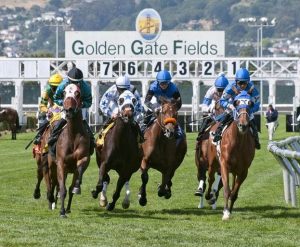
Golden Gate Fields saw another strong increase in all sources handle at its 2018-19 Winter/Spring Meet, which concluded on Sunday, June 9. The 94-day meeting, which began on Dec. 26, was highlighted by a successful edition of the inaugural Gold Rush Weekend in April, and track management and horsemen look forward to continued positive trends and numbers heading into the next live race meet which begins Aug. 15.

To give an idea of the upward trend in handle, something Golden Gate Fields has seen over the past two years, we look back at the last six Winter/Spring meeting all source handle numbers. Golden Gate Fields published an all source handle number of $302 million after the 2014 Winter/Spring meet. The handle decreased slightly in 2015, with $301 million bet on the racing product.  And 2016 saw yet another decrease, this one more significant, with $293 million bet throughout the meeting.  Two years ago, 2017 saw the lowest all source handle number of the past six Winter/Spring meetings, with a posted number of $282 million.

In 2018, Golden Gate made a number of changes to improve the product, and showed a 13.1% increase in all source handle, with $319 million bet at the Winter/Spring meet last year. The 2019 Winter/Spring meeting generated another bump up in all source handle, with $343 million bet, indicating a 7.3% increase. The comparison from 2018 to 2019 should also include the fact that Golden Gate ran 94 days in 2019 as opposed to 95 days, or one extra day, in 2018.

Another positive gain was in field size, where Golden Gate Fields was able to bump up its average field size to 7.0 horses per race. This is a 2.9 percent increase over 2018.

“Clearly, we are always looking to improve and the combined team effort has resulted in another great meet,” said general manager and Vice President of Golden Gate Fields David Duggan. “We are always committed to improving the racing product and the Golden Gate experience. That said, we are pleased with the position we are in half-way through 2019 and we are very optimistic for the second half of the year and, indeed, racing in Northern California.”

The first-ever Gold Rush Weekend, a two-day racing event featuring 8 stakes races and a number of on-track promotions, was deemed successful after high quality, competitive racing and enthusiastic support from fans and horseplayers resulted in an all source handle number on Saturday and Sunday of $14,077,741, an increase of nearly $6.1 million over the $7,979,824 wagered over the same two days in 2018.  A total of 212 horses competed in 25 races over the Gold Rush Weekend, making for an average field size of 8.48 runners per race.  Seven horses who competed in stakes on Gold Rush Weekend have come back to win other stakes races since then, while 2 additional horses have hit the board in Grade I races.

Abel Cedillo was the leading jockey at the Winter/Spring meet with 134 wins, 30 more than second place finisher Juan Hernandez. In the trainer standings, Jonathan Wong won his fourth straight training title with a whopping 90 wins, 48 better than Hall of Fame conditioner Jerry Hollendorfer. Steve Moger was the leading owner at the meeting with 11 wins from 89 starters. Steve’s brother, Ed Moger Jr., trains the Steve Moger owned equines.

Tim Ritvo, Chief Operating Officer of The Stronach Group, was also pleased with the meeting at Golden Gate Fields, and was very appreciative of the participation from horsemen, frontside staff, horseplayers and fans alike.

“On behalf of the Stronach Group, I would like to thank our staff, the horsemen and the fans for working together and contributing to the success of Golden Gate Fields’ Winter/Spring meeting,” said Ritvo.

Live racing resumes at Golden Gate Fields on Thursday, August 15, Day 1 of the 28-day Summer Meet which runs through Sunday, September 29. For more information, visit Goldengatefields.com or call (510) 559-7300.

Bayern Gets His First Winner

I always liked Bayern as a race horse, as I’m a sucker for big, handsome guys, and he was one of the biggest—to the point that his trainer, Bob Baffert, went to measure Zenyatta, sure that his guy was every bit as huge as the supermare. He wasn’t, but he sure came close. And big handsome guys who win the Breeders’ Cup Classic-G1, along with the Haskell-G1, at three, and earn over $4.4 million? How could you not be a fan?

First of all, there’s the weird pedigree. Bayern is a son of Oflee Wild, and the Wild Again line in general has pretty much disappeared from prominence, let alone that of his sons at stud. A small, fine-boned horse, it’s amazing that a giant of Bayern’s proportions is a grandson. But, as is always noted in this column, there’s a ringer in Bayern’s dams’ side—his third dam is one of the greatest three or four Blue Hens of the twentieth century, the amazing Courtly Dee, who still influences pedigrees today.

Bayern had his first winner, from his first crop of two-year-olds, on June 18 at Indiana Grand Race Course, the filly Bayerly Seen, who won by 12 ¼ lengths in the five furlong contest that had been taken off the turf because of inclement weather. Owned by Gen Star Thoroughbreds and Hidden Brook Farm, bred by Hartwell Farm, and trained by Brad Cox, this filly is one to watch given this brilliant start, even though it wasn’t at a major track. I’d wager that some big offers have been floated for her already.

Here comes the broken record that this column has become. There’s another Blue Hen in Bayerly Seen’s pedigree well worth noting: the great Toussaud. Bayerly Seen is out of a First Defence mare, Overseen. First Defence represents the best of Juddmonte’s fabulous breeding program, being by Unbridled’s Song, out of the stakeswinning daughter of Toussaud, Honest Lady, by Seattle Slew. Given the recent success of Close Hatches as a broodmare, a Juddmonte home-bred also by First Defence, this may represent an important trend. Is First Defence the next great broodmare sire on the horizon? I’d certainly be looking for one at the upcoming fall sales, and I’d be trying to get a season to Bayern for her. He stands at Hill ‘n’ Dale Farms in Lexington for only $15,000, a bargain for a race horse of his caliber, undoubtedly because of his dubious sireline. But perhaps he is the long-awaited scion to grandpa, Wild Again, winner himself of the first Breeders’ Cup Classic. We can only hope, as there is vigor in that silenced sireline that the breed needs.

— Roberta Smoodin

A Week of Daredevilry

With the freshman sire race warming up, a new entrant has jumped to number seven in the top ten list: Winstar’s Daredevil, a precocious son of More Than Ready whose first foals were pictured in a memorable advertising campaign featuring them photoshopped into dramatic activities demonstrating their, well, daredevilry.

Daredevil’s high point of his racing career came when he won the Champagne S.-G1 at Belmont at two, his only graded stakes win, and his career ended with earnings of $424,600. His stud fee of $7500 seemed appropriate, and one couldn’t help but wonder if he would pass on his precocity to his progeny.

This week seems to have proved that he is doing so. He had his first winner on Wednesday, June 12, in the UK, the colt Better the Devil, and his first winner in the US, Shedaresthedevil, in a Churchill Downs maiden special weight on Thursday, June 13 in her first start, as well as having a two-year-old in training sell for $245,000 at OBS June on Wednesday. Quite the week.

Daredevil’s pedigree is strong in that it features inbreeding to Almahmoud through both Halo and Northern Dancer, through her daughters Natalma an Cosmah, and inbreeding as well to Mr. Prospector; it is especially worth noting Woodman in his pedigree, a son of Mr. P out of a Buckpasser mare. Both Shedaresthedevil and Better the Devil have similar pedigrees, demonstrating this early on what nicks well with Daredevil. Both feature A.P. Indy, with another dose of Buckpasser, and the tail female line that Seattle Slew and Mr. P share, a strong nick.

Also appearing in both close up is Storm Cat, as well as other doses of Northern Dancer, underscoring the strength of extra doses of Natalma. It’s also worth noting that with both A.P. Indy and Storm Cat, these young runners have inbreeding to Secretariat’s great blue hen dam, Somethingroyal.

Is it possible that Daredevil may be the heir apparent to his prolific and popular sire, More Than Ready? As one of the last examples of the Hail to Reason/Turn-to sire line, we can only hope that this young stud, Daredevil, will carry on that fast, precocious and tenacious All-American pedigree.

— Roberta Smoodin

Horseracing Integrity Act of 2019 Introduced

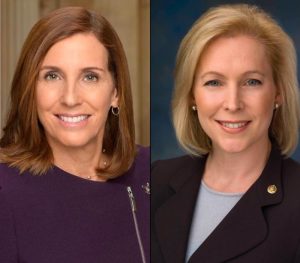
The Coalition for Horse Racing Integrity (CHRI) today announced its strong support for the Horseracing Integrity Act of 2019, introduced in the U.S. Senate by Senators Kirsten Gillibrand (D-NY) and Martha McSally (R-AZ).

The bill would create a private, independent horse racing anti-doping authority, the Horseracing Anti-Doping and Medication Control Authority (HADA), responsible for developing and administering a nationwide anti-doping and medication control program for horseracing. HADA will create a set of uniform anti-doping rules, including lists of permitted and prohibited substances and methods, after consulting racing industry representatives and the public, along with taking into consideration international anti-doping standards and veterinarian ethical standards. The new nationwide rules would replace the current patchwork of regulatory systems that govern horseracing’s 38 separate racing jurisdictions. 

“We applaud Senators Gillibrand and McSally for their leadership. The introduction of a companion bill in the Senate shows tremendous momentum on this issue,” said Shawn Smeallie, executive director of CHRI. “A significant part of the racing industry, as well as all of the major animal welfare organizations, support the Horseracing Integrity Act. We call on the rest of the industry to come together and support this common sense legislation and be on the right side of history.”  

The Senate bill is nearly identical to the Horseracing Integrity Act of 2019 (H.R. 1754), introduced by Reps. Paul Tonko (D-NY) and Andy Barr (R-KY), but the Senate version includes the requirement that horse sellers notify buyers if a horse being sold has ever been treated with bisphosphonates, a medication that may be harmful to bone development in young horses.

H.R. 1754 has already garnered the bipartisan support of more than 100 representatives this Congress. With the support of key members such as Rep. Jan Schakowsky (D-IL), chair of the House Energy and Commerce Subcommittee on Consumer Protection & Commerce, and Reps. Earl Blumenauer (D-OR) and Vern Buchanan (R-FL), co-chairs of the Congressional Animal Protection Caucus, CHRI is hopeful and optimistic that the legislation will move through the committee process and pass the House this year. This companion Senate bill will help expedite this process.

HADA would be governed by a board composed of six individuals who have demonstrated expertise in a variety of horseracing areas, six individuals from the United States Anti-Doping Agency, and its chief executive officer. USADA is recognized by Congress as the official anti-doping agency for the U.S. Olympic, Pan American, and Paralympic sports.

“We commend Senators McSally and Gillibrand for leading efforts in the Senate to address racehorse welfare,” said Kitty Block, president and chief executive officer of The Humane Society of the United States. “This crucial bill will help establish a uniform set of rules, testing procedures and penalties to rid racing of unethical drugging and doping of horses. This promises to improve both oversight of the industry and also the welfare of racehorses.”

The Coalition for Horse Racing Integrity represents a diverse group of racing organizations, racetracks, owner and breeder associations, and animal welfare groups that support adoption of a national, uniform standard for drug and medication rules in horseracing. For more information and to read a copy of the proposed legislation, visit horseracingintegrity.com.

Adena Springs’ Senior Citizens Rule Belmont Day

Right now, it appears that 2020 will be a battle of the geriatric tyrannosaurs, old Trump versus old Biden. Yawn. Belmont S.-G1 day, however, was a triumph for the senior citizens of Adena Springs, with the Belmont being won by Sir Winston, a son of Awesome Again, and the Acorn S.-G1 being won by Guarana, a daughter of Ghostzapper (in only her second start), a granddaughter of Awesome Again. You can’t count these old boys out.

At one point, Awesome Again was the most prized stallion on the planet, at least in part because of the brilliance of his son, Ghostzapper. Ghostzapper was a bona fide freak, a thrillingly fast horse capable of running the last quarter of a race in a faster time than the first quarter, breaking the hearts and spirits of capable opponents. A foal of Awesome Again’s 2000 crop, Ghostzapper raced from two to five, earned over $3.4 million, and a list of his grade one wins alone can’t help but impress: the Vosburgh S., the Breeders’ Cup Classic S., the Woodward S., and the Metropolitan H. A small, well-made horse who now stands for $85,000, he is the product of classic Stronach breeding, adding In Reality and La Troienne to the classic bloodlines of Awesome Again. Ghostzapper’s dam, Baby Zip, featured In Reality and La Troienne in her pedigree, a Stronach motif, and was also the dam of the great City Zip.

Old dad, Awesome Again, a 1994 foal of the wonderful Deputy Minister (a horse whom, when you visited him, would just as soon bite you as be adored by you, and who had some of the funkiest front legs ever seen on a great sire), was no slouch on the track either, with his list of grade one wins much like his freakish son’s: the Travers S., the Breeders’ Cup Classic S., the Whitney S., for a total of over $4.3 million. Putting Deputy Minister together with the Blushing Groom mare Primal Force was simply smart, and, with a Mr. Prospector second dam, speed and endurance were added to Deputy Minister’s sires’ side, and a dynasty was created. It’s worth noting that Awesome Again’s half-brother, Macho Uno, was a son of Holy Bull, more building up of In Reality and La Troienne; Frank Stronach always favored the gritty American speed pedigree of the beloved Holy Bull.

In an era when promising and exciting first crop stallions like American Pharoah, and coming up behind him Justify and Arrogate, are the toast of the sales ring, it’s worth remembering the senior citizens who can still, on a big race day, produce the grade one winning offspring—Awesome Again and Ghostzapper, like Lebron James of the Lakers, are still capable of being game changers. Maybe Trump versus Biden won’t be snooze-inducing—Belmont Day certainly wasn’t.

— Roberta Smoodin

Pedigree Review: Epsom Derby Winner Anthony Van Dyck

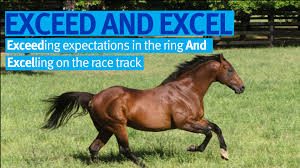
Much has been made of the domination of the Galileo line in both the entries in the Epsom Derby-G1 and the winning order, and it is indeed impressive, and of trainer Aidan O’Brien and owners/breeders that are the usual Coolmore suspects lock on the race. No mention, though, has been made of the influence of North American breeding in the pedigree of Anthony Van Dyck, the brilliant winner. Though his sire is the great Galileo, and his broodmare sire is the Australian stallion Exceed and Excel, the rest of this pedigree brings together both important North American sires and Blue Hen North American mares in a star-studded cast designed to create a derby winner.

The first element to be noted is in-breeding to Northern Dancer, through his most prolific sons. Galileo’s sire was Sadler’s Wells, a son of Northern Dancer, out of the spectacularly well-bred mare Fairy Bridge, by Bold Reason, out of the Forli mare Special, herself one of the foremost representatives of her tail female line, starting with Roughshod II. Then there’s Exceed and Excel’s sire, Danehill, a son of Northern Dancer’s wonderful sire Danzig. Exceed and Excel, however, is out of the Lomond mare Patrona, and Lomond is another son of Northern Dancer. Ready for the next spectacular North American influence? Lomond’s dam is none other than My Charmer, the dam of Triple Crown Winner Seattle Slew.
It doesn’t end there. Anthony Van Dyck’s third dam was one of Storm Cat’s first big stakes-winners, and created Storm Cat’s first stone cold nick, on Alydar mares: she is November Snow, out of Princess Alydar, and of course her grandsire is Northern Dancer’s son, Storm Bird. Close up in this pedigree, then, we have three doses of Natalma, Northern Dancer’s dam and one of the true Blue Hens of American breeding. But wait: Danehill’s dam, Razyana, a product of the magnificent Juddmonte breeding program, was by His Majesty, and out of the Buckpasser mare Spring Adieu, whose own dam was none other than Natalma, yet again. To me, this is one of the keys to this pedigree’s success. A dose of Natalma through a tail-female line certainly had something to do with Danehill’s heart as a racehorse, and may have been enough to twist the genetics back toward Natalma’s own gifts as a broodmare.

So Seattle Slew has already made a cameo appearance in this pedigree, via his dam, and we can’t help but connect My Charmer with the Bold Reason in Sadler’s Wells—after all, a big part of Slew’s pedigree features Hail to Reason, Bold Reason’s sire, and of course this reaches out to the dose of My Charmer in the dams’ side. But there’s another Triple Crown Winner in the mix: two doses of Secretariat live in Anthony Van Dyck’s dams’ side, through two of his most fabled daughters: the sire of Anthony Van Dyck’s second dam, Arctic Drift, was none other than Gone West, out of the Secretariat mare Secrettame, while the sire of his third dam, November Snow, was Storm Cat, out of the Secretariat mare Terlingua.

Inbreeding to Somethingroyal, Secretariat’s dam, is a staple of North American breeding; there can never too much Somethingroyal. So we’ve noted Anthony Van Dyck’s strong relationship with two American Triple Crown Winners, Seattle Slew and Secretariat, who clearly had something to do with his ability to get the classic distance.
There is still more, as the inbreeding, top and bottom, to Mr. Prospector, purveyor of American speed and grit, must be noted, through Miswaki, the broodmare sire of Urban Sea, Galileo’s dam, and the previously mentioned Gone West, two of Mr. P’s most productive sons in terms of siring great broodmares. It is through Miswaki that Buckpasser, the embodiment of American toughness and brilliance, makes his second appearance, on the zig-zag, through Miswaki’s dam, Hopespringseternal.

This reaches out to that dose of Buckpasser in Razyana’s pedigree, and also hooks up with the other doses of the Blue Hen La Troienne in My Charmer and through Bold Reason’s dam, Lalun, whose pedigree features La Troienne’s son, Bimelich. More of the zig-zag, matching close genetic relatives through both male and female lines, is evident. It must also be noted that Urban Sea, Galileo’s dam, features inbreeding to classic American sources of pedigree power, Princequillo and Nasrulah.

Another of the classic crosses in American breeding is combining Hail to Reason/Turn-to with Ambiorix, who appears in the dams’ side through his son, Amber Morn, the broodmare sire of Princess Alydar. Add to that the fact that Lalun’s sire, Djeddah, is also a close genetic relative of Turn-to and Ambiorix, and you have a combination that makes stakes winners at an alarming rate. It would also be remiss not to mention the spectacular build-up of Bull Dog and his full brother, Sir Gallahad III, in the outer reaches of this pedigree, as this has been noted, again and again, as a foundation for success.

So as we hail the latest winner of the Epsom Derby-G1, the glorious Anthony Van Dyck, we are also hailing North American Triple Crown Winners and breeding in general, which have come together with European success stories like Danehill and Galileo to make a fabulous horse.

— Roberta Smoodin