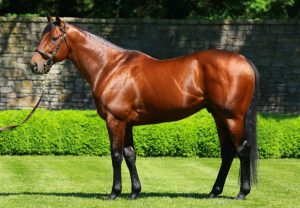
Future Stars Friday – Won by American Pharoah

Was there really ever any doubt as to who would be the leading freshman sire of 2019? American Pharoah was always the stand-out among the first crop sires. The surprise is that he’s turned out to be a great turf sire.

At Future Stars Friday, the first day of Breeders’ Cup festivities, American Pharoah was the champion sire, with Four Wheel Drive winning the Juvenile Turf Sprint-G2, and Another Miracle finishing third, and Sweet Melania finishing third in the Juvenile Fillies Turf-G1. American Pharoah’s first crop has now earned $2,316,893, with 20 winners out of 53 runners, led, of course, by Four Wheel Drive ($692,500). Remember, American Pharoah never ran on grass, and of course won the Triple Crown and the Breeders’ Cup Classic-G1, North America’s signature dirt races. The mysteries of genetics are profound.

Examining the pedigrees of American Pharoah’s three Breeders’ Cup graded stakes juveniles, a startling similarity appears. Four Wheel Drive is inbred 6 x 5 x 7 x 6 to Northern Dancer, through a variety of sons and daughters, and 5 x 6 to Hail to Reason, through Halo and Stop the Music, giving him a powerful coupling of Almahmoud’s two influential daughters, Natalma and Cosmah. But it’s his second dam, Fleuron, who brings the turf mastery to Four Wheel Drive. She is by Juddmonte’s Distant View (by Mr. Prospector, making this colt 6 x 4 x 5 inbred to that important stallion), whose dam Seven Springs, was by Irish River, one of the great turf influences of all time.

His grandsire, Never Bend, remains a powerful influence in European pedigrees today, and Fleuron’s granddam provides another dose of Never Bend, as well as Vaguely Noble. There’s also Zilzal, by Nureyev (one of Northern Dancer’s best grass sires) by the Le Fabuleux mare French Charmer, adding to the grass ability. The two doses of Hail to Reason, by Turn-to, reach out to the Klairon in Irish River, as they are closely related. All of these significant turf genetic markers reach out to the North American grit and speed of Fappiano and Storm Cat in the sire line (as well as inbreeding to Buckpasser, 6 x 6 x 6), to create this monster turf sprinter.

Another Miracle and Sweet Melania feature similar pedigrees; it’s rare that good nicks for a first-year stallion become so apparent so rapidly. Another Miracle is inbred 6 x 5 x 6 to Northern Dancer, and adds powerful inbreeding to Secretariat (6 x 5), with another cross to his dam Somethingroyal through Sir Ivor. The touch of Damascus, through Bailjumper in Another Miracle’s broodmare sire Medaglia d’Oro, echoes a similar dose in Sweet Melania, through Private Account.

Sweet Melania has, arguably, the best pedigree of the three. She is inbred 6 x 6 x 6 x 6 x 6 (!) to Buckpasser, 6 x 6 x 6 x 4 to Northern Dancer, 6 x 4 to Mr. Prospector, and 6 x 6 x 5 to Secretariat, not to mention that her tail female family is that of A.P. Indy, through the Alydar mare Lassie’s Lady. Lassie’s Lady also brings My Babu to the mix, complementing the Damascus in Private Account. This pedigree is a testament to the theory that there is no such animal as too much of a good thing. Expect great things from this filly in her three-year-old year.

Honorable mention must also be awarded to another freshman sire: Palace Malice, whose son, Structor, won the Juvenile Turf-G1 in impressive fashion, placing his sire securely in third on the freshman sires’ list. Structor’s pedigree is marked by inbreeding to Deputy Minister on the zigzag, a trend we see more and more of, especially when one of the doses if through Dehere, who is out of a Secretariat mare. Dehere, much like Fappiano, seems to have begun his own, important line separate from his sire’s. There is also significant inbreeding to Turn-to, and those all-important doses of Natalma and Cosmah, through Northern Dancer and Halo. Trainer Chad Brown declared, in a post-race interview, that he intends to try this impressive colt on the dirt for his three-year-old campaign, placing him squarely on the Kentucky Derby trail, especially after the bewildering longshot, Storm the Court (Court Vision), won the Juvenile-G1, when Dennis’s Moment and Eight Rings failed to come through, and Maxfield scratched.

It would seem Coolmore American knew what it was doing when it announced all of its stud fees except American Pharoah’s, which was designated TBD—to be determined. Though it’s been private this year, the rumor was that it stood at $100,000. We can guarantee that it will rise for 2020, and rightly so. North American racing would seem to have a new, magnificent turf sire, one who might bring turf racing in this country to new prominence.

— Roberta Smoodin
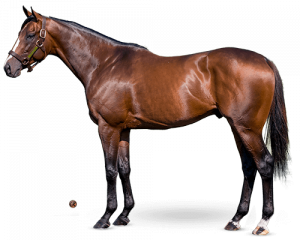
Constitution Surprises in the Race for Leading Freshman Sire

This past weekend’s jam-packed racing schedule, the last gasp of the win-and-you’re-in Breeders’ Cup stakes races, created many surprises, but at the top of that list may be the drama in the leading freshman sires list. Most expected Triple Crown Winner American Pharoah to be the prohibitive favorite to take that coveted position of leading freshman sire, and, though his progeny have acquitted themselves well, he stands at number two, behind Winstar’s Constitution.
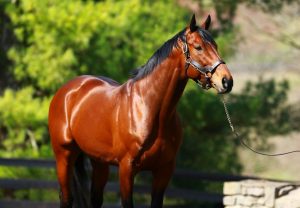
Constitution, who came to stud with a $25,000 fee and stood this year for $15,000, is, compared to American Pharoah, a huge bargain. American Pharoah’s fee at Coolmore America has been private, though it was rumored to be $150,000 his first year, dropping to $100,000 since. An even bigger surprise: in third place is Coolmore’s other freshman sire, Competitive Edge, whose original fee was only $10,000, dropped to $5,000 for 2019.

In fourth place, the only freshman sire with two Grade One winners, is Liam’s Map, another relative bargain, who went to stud at $25,000 and stood this year for $20,000. Both American Pharoah and Liam’s Map represent the Unbridled sire line, though the former does so through Empire Maker and Pioneerof the Nile, while the latter is a son of Unbridled’s Song. Constitution is a son of Tapit, so he has in his pedigree a strong dose of Fappiano that is also featured in the previously mentioned young sires. But Competitive Edge is a pedigree outlier, being a son of Super Saver, not known as a sire of sires (nor was his own sire, Wavering Monarch), though yearling sales averages indicate that many think his son Runhappy has a very bright future.

Constitution had his first Grade One winner this weekend, when Tiz the Law took the Champagne S.-G1 at Belmont, and his son Gouverneur Morris finished a good second in the Breeders’ Futurity-G1 at Keeneland. His first crop has earnings of just over $1,391,000. Behind him with just over $1,203,000 is American Pharoah, but all of his graded stakes horses have succeeded on turf, a huge surprise for a horse who so excelled on dirt, and perhaps responsible for his lower yearling average at auction in 2019.

Competitive Edge has no graded stakes winners, but his first crop keeps producing winners. As mentioned, Liam’s Map is the only freshman sire with two Grade One winners, Basin, the winner of the Hopeful S. at Saratoga, and Wicked Whisper, who took this past weekend’s Frizette S. at Belmont.

This competition between relatively low-priced young stallions, with the wild card of American Pharoah and his lack of production on dirt, is reminiscent of the great Storm Cat’s beginnings at stud, when William T. Young of Overbrook Farm reportedly couldn’t fill the freshman sire’s book at $10,000, and had to give away seasons and beg friends to breed to the stallion. Then, his first crop hit the track running like crazy. He was leading freshman sire by a mile. And his legendary career, with a maximum stud fee of $500,000, was underway. Is Constitution the next Storm Cat? Or Competitive Edge? Or Liam’s Map? Probably not. But thus far, the battle for leading freshman sire is, to say the least, interesting.

Brothers and Sisters to Watch: Lady Eli and Princesa Caroline

Who didn’t love Lady Eli? So many reasons to adore her: her ten wins and three seconds from 14 starts, her many Grade One wins, at least one for every year she raced, her devastating turn of foot down the stretch, her $2,959,800 in earnings. But even more than that was her battle with laminitis in both front feet in 2015, caused after she stepped on a nail on her way to the test barn after winning the Belmont Oaks Invitational S.-G1 on July 4 of that year.
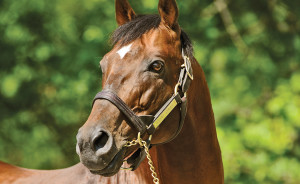
Chad Brown, her trainer, reported her condition as “guarded,” and we all feared that the sport might lose one of its all-time greats. But she returned, undiminished, just over a year later, a true heroine of racing lore. At Keeneland November 2018 she sold for  $4.2million to John Sikura, master of Hill ‘n’ Dale Farm in Lexington, and on March 21, 2019, she foaled a War Front colt. Finally, a racing story with a happy ending.

But the story just gets better. On Saturday, September 28, her two-year-old half sister by American Pharoah, Princesa Caroline, broke her maiden at Belmont in her first out by 3 ½ lengths, on the turf like her Champion sister, at a mile and 1/16. Trained by Chad Brown, just like her big sis, her and Lady Eli’s breeder, age-old and prestigious Runnymede Farm, kept this one to race themselves, after selling Lady Eli as a yearling for $160,000. Keeping Princesa Carolina appears to have been a very wise move. She became American Pharoah’s fourteenth winner from his freshman crop.

Lady Eli was a Runnymede-bred through and through, as the farm bred her sire, Divine Park, as well as the dam of both fillies, Sacre Coeur, by Saint Ballado, out of their foundation mare Kazadancoa, by the great Green Dancer. Lady Eli has four doses of Northern Dancer in her pedigree, through Broodmare of the Year Toussaud (by El Gran Senor), Danzig, and two doses of Nijinsky II, 5 x 4. This makes for four doses, of course, of Natalma, out of Almahmoud, with the addition of Natalma’s half-sister, Cosmah, through Halo, the sire of Saint Ballado, Sacre Coeur’s father. Similarly, Princesa Caroline is inbred to Northern Dancer 6 x 6 x 4, complementing the Halo in Sacre Couer again.

Breeding Sacre Coeur to American Pharoah was a stroke of genius. His grandsire is Empire Maker, a son of Toussaud, just as Lady Eli’s grandsire, Chester House, was. And Chester House’s sire was Mr. Prospector, just as American Pharoah’s sireline is Mr. Prospector, though through Fappiano. Runnymede has cannily done its best to re-create Lady Eli in Princesa Caroline.

As has been noted, Lady Eli’s pedigree featured Nijinsky II, top and bottom, and, once again, an attempt has been made to re-create that, as American Pharoah’s dam is from the Storm Cat line. Storm Cat and Nijinsky II are very closely related, and the combination has long paid dividends to breeders. But there’s also another canny addition: more La Troienne. Sacre Coeur has a dose through Cohoes, and both Lady Eli and Princesa Caroline have the balancing dose in their sires’ side through Toussaud, through Buckpasser. Runnymede has added, however, another powerful dose of Buckpasser through Unbridled’s dam, Gana Facil, as well as adding to the In Reality Toussaud offers through Unbridled. Princesa Caroline should be able to get a distance of ground, and shouldn’t be lacking in toughness and grit, certainly characteristics that Lady Eli demonstrated throughout her career and life.

Might we see Princesa Caroline in the Breeders’ Cup Juvenile Fillies Turf S.-G1, her sister’s first Grade One win? It might be too soon to thrust her into such company, though Lady Eli came out of a maiden race at Saratoga to take that important race. We should have faith that Chad Brown, so familiar with the family, will do the right thing.

— Roberta Smoodin


Stud Notes: The Ongoing Legacy of Smart Strike

On Saturday, September 28, Smart Strike sired the winner of the John Henry Turf Championship S.-G2 at Santa Anita. His spectacular son, Curlin, sired the winner, before disqualification, of the Jockey Club Gold Cup S.-G1 at Belmont, Vino Rosso. And his freshman sire grandson, Palace Malice, sired the winner of the Pilgrim S.-G3, at Belmont, Structor.

Smart Strike, a son of Mr. Prospector from the crop of 1992, died in 2015 after years of battling laminitis and other infirmities of old age, so it’s remarkable that he still appears on the leading sires list at number 94, with $2.8million in earnings; Cleopatra’s Strike, the John Henry winner, is a foal of 2013. With only older horses running (no two-year-olds or three-year-olds), he remains a winner producer, a sire of sires, and a grandsire of sires. His genetic power continues, four years after his death.

Cleopatra’s Strike is bred on a similar cross to Smart Strike’s best son, Curlin, with Vice Regent as his second dams’ sire. But by far the most outstanding aspect of this gelding’s pedigree is 3 x 3 inbreeding, top and bottom, to the great mare No Class, through her daughter, Classy ‘n Smart, Smart Strike’s dam, and through her son, Sky Classic, by Nijinsky II, who is the broodmare sire of Cleopatra’s Strike. No Class’s pedigree is a fabulous collection of very old school blood, with nine crosses to Canterbury Pilgrim through her son, Chaucer.

Chaucer, bred to Serenissima, created the Blue Hen Selene, dam of Hyperion, Sickle, and others, and she appears three times in No Class’s pedigree, along with a single dose of her half-brother, Great Sport. This might seem like ancient history—the animals mentioned all hail from the very early 1900s—but this concentration of DNA is clearly still affecting the breed today, through such horses as Cleopatra’s Needle. Add in, in No Class, Double Jay, Nasrullah and a second dam by Princequillo, and the genetic wealth of No Class becomes even clearer.

Whether Vino Rosso was robbed when he was disqualified as the winner of the Jockey Club Gold Cup S.-G1 is a question for the ages, but his pedigree documents why he is Curlin’s leading earner in 2019. Smart Strike crossed brilliantly with mares from the Vice Regent/Deputy Minister line, and also loved any addition of more Turn-to, which he had through Smarten, and Curlin has through Sir Ivor. On the theory that too much is not enough, why not add more? That’s exactly what Vino Rosso’s pedigree does, with his Street Cry broodmare sire, adding another dose of Mr. Prospector plus Halo/Turn-to through Street Cry’s sire, Machiavellian, his Touch Gold (by Deputy Minister) second dam, and his Lear Fan (Roberto, by Hail to Reason, by Turn-to) third dam. The symmetry of this pedigree, top and bottom, is perfection.

Then there’s Pilgrim S. winner Structor, by Smart Strike’s promising freshman sire grandson, Palace Malice—that young stud’s first graded stakes winner. Structor’s pedigree is very nearly a twin to Vino Rosso’s, mixing up the very same elements. Grandpa would approve. Palace Malice himself has inbreeding to Northern Dancer through Deputy Minister and Theatrical, along with inbreeding to Turn-to through Smarten, Theatrical’s dam Tree of Knowledge, plus a second dam by Red Ransom, a son of Roberto, as was noted in Vino Rosso’s bloodlines.

Structor is by a More Than Ready mare, adding the requisite Halo, and More Than Ready is out of a Woodman mare, by, of course, Mr. Prospector. But here’s the coup de grace: Structor’s second dam, Miss Seffens, is by Dehere, who is quickly turning into one of Deputy Minister’s most productive sons as a broodmare sire, and who seems, more and more, to have created his own line, as inbreeding to Deputy Minister through him works like magic.

Smart Strike stood at Lane’s End, where I saw him the year before he died. I’d similarly seen Mr. Prospector, at Claiborne, shortly before his death, and the two looked like twins, crotchety, bony old men, plain brown, perturbed at being trotted out for show. It would seem that Smart Strike must be considered one of Mr. P’s most important sons, if not the most important, for his continued contribution to today’s thoroughbred horse

— Roberta Smoodin

Breeders’ Cup Announces Post Times For 2019 World Championships

Press Release: The Breeders’ Cup on Tuesday announced post times for its two-day championships consisting of 14 races with purses and awards totaling more than $30 million from Nov. 1 at Santa Anita Park.
  
The 36th Breeders’ Cup begins on Friday, Nov. 1, with Future Stars Friday, featuring all five  Breeders’ Cup World Championships races for 2-year-olds comprising half of the 10-race program. There will be four undercard races preceding the first Breeders’ Cup race, with first race post time at 10:45 a.m. PT. 
 
Friday’s first Breeders’ Cup race will be Race 5, which will have a post time of 1:12 p.m. PT. The $2 million TVG Breeders’ Cup Juvenile will be the ninth race on the card, with a post time of 4:03 p.m. PT. Post time for the 10th and final race will be 4:43 p.m. PT.
 
There will be 12 races on the Saturday, Nov. 2, program, featuring nine Breeders’ Cup World Championships races. The day begins with three undercard races with a first race post time of 10:07 a.m. PT. The first Breeders’ Cup race will be Race 4, which will have a post time of 11:55 a.m. PT.
 
Post time for the $6 million Breeders’ Cup Classic, Race 12, will be 5:44 p.m. PT.

The full race order and wagering menu for both days of the Championships will be announced on Wednesday, Oct. 23.

A list of post times, with Breeders’ Cup races bolded, follows:

Friday, November 1

Race 1 – 10:45 AM   
Race 2 – 11:20 AM   
Race 3 – 11:55 PM             
Race 4 – 12:32 PM   
Race 5 – 1:12 PM               
Race 6 – 1:52 PM   
Race 7 – 2:32 PM              
Race 8 – 3:12 PM              
Race 9 – 4:03 PM
 (TVG Breeders’ Cup Juvenile)
Race 10 – 4:43 PM                          
            
Saturday, November 2

Race 1 – 10:07 AM      
Race 2 – 10:42 AM               
Race 3 – 11:17 AM                         
Race 4 – 11:55 AM      
Race 5 – 12:33 PM                         
Race 6 – 1:10 PM               
Race 7 – 1:54 PM               
Race 8 – 2:36 PM                
Race 9 – 3:20 PM               
Race 10 – 4:00 PM     
Race 11 – 4:40 PM       
Race 12 – 5:44 PM
 (Breeders’ Cup Classic)

Sophie Doyle Unanimously Voted Jockey Of The Week After First Grade 1 Win

Press Release: In a rare unanimous vote, Sophie Doyle was voted Jockeys’ Guild Foundation Detox Jockey of the Week for September 16-22, 2019. The award is voted on by a panel of experts for riding accomplishments by members of the Jockeys’ Guild, the organization which represents more than 950 riders in North America. Jockey of the Week is sponsored by FoundationDetox.com, America’s #1 Equine Toxin Remover.
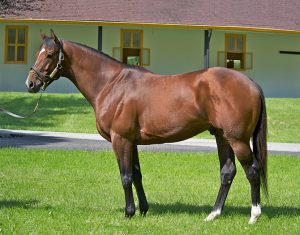
In a weekend with multiple stakes races and upsets, Sophie Doyle stood out to voters as the runaway contender for Jockey of the Week honors after achieving a personal milestone on Saturday: winning her first career Grade 1 stakes race.

Doyle was aboard Street Band in the $1,000,000 Cotillion Stakes at Parx last weekend; the race was one of several Grade 1 events last week but it was the only one to carry a Win and You’re In berth to the 2019 Breeders’ Cup World Championships.

Doyle, Street Band’s usual rider, had to contend with 10 other 3-year-old fillies in the 1-1/16 miles event on the main track. They weaved their way up from last to close in the stretch, defeating post-time favorite Guarana and Jose Ortiz by over two lengths.

Street Band ($17.40) is trained by Larry Jones, who is also co-owner and co-breeder of the Istan filly, out of Street Minstrel, by Street Cry.

Doyle won her first graded stake in 2015 aboard Fioretti in the Thoroughbred Club of America Stakes at Keeneland. Her next graded stakes wins were all aboard Street Band in 2019, first in the Fair Grounds Oaks (G2), then in the Indiana Oaks (G3).

The Cotillion was Doyle’s only win in 13 starts, and though it was her only stakes start of the week, the victory landed her in second place by stakes earnings for the week among all North American jockeys. The race was the only start of the day at Parx for Doyle, who had been riding at Arlington throughout the week. She ended the 2019 Arlington meet as the seventh leading jockey; in 2018, she was the third leading jockey of the meet.

Doyle was the fourth leading rider by total earnings for the week, with $608,734 earned. She has won $2.2 million in purse money in 2019 and has earned $7.7 million in her riding career to date. Doyle has 43 wins in 446 starts in 2019 and is 274 for 2,704 lifetime.

Upset Saturday At Parx As Low Key Stallions Sire Grade One Winners

The big racing news of Saturday, September 21, occurred when both Grade One races at Parx, the Cotillion S. for three-year-old fillies and the Pennsylvania Derby for three-year-old colts were won by longshots, both by near-forgotten stallions.
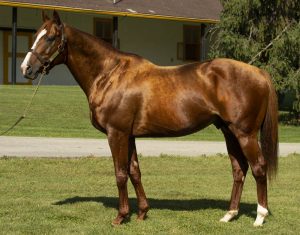
Street Band was the upset winner of the Cotillion S., besting previously unbeaten Guarana, Champion Two-Year-Old Jaywalk, and Grade One winner Bellafina, for trainer/co-breeder/co-owner (as well as exercise rider) Larry Jones, giving jockey Sophie Doyle her first Grade One win, as well as the filly herself. Street Band’s sire is Istan, who stood the early part of his career at Airdrie Stud in the Bluegrass before being sold to Saudi Arabia after getting off to a slow start at stud, and failing to attract big books of mares. Street Band is Istan’s first Grade One winner as well, though he has had eight other black type winners.

Istan was sired by the great Gone West, whose pedigree strength includes Mr. Prospector on top, and the wonderful Secretariat mare Secrettame on bottom, but what is most interesting, and provided the stallion with immense opportunity in the breeding shed, is the complete absence of Northern Dancer. Istan himself is out of a Bluebird mare, by Storm Bird, out of a Sir Ivor mare, echoing the breeding of Gone West’s super-fast and super sire son Elusive Quality.

But the first established nick with Gone West was created by Juddmonte Farm, which bred full brothers Zafonic (Champion Two and Three-Year-Old Colt in Europe, France and England) and Zamindar out of The Minstrel mare Zaizafon. What the Juddmonte brain trust noted was the addition of Northern Dancer blood, of course, but also a doubling of Menow, the maternal great-great grandfather of Secrettame, and the maternal great grandfather of Flaming Page, The Minstrel’s second dam. Shadwell soon followed suit with its graded stakes winner Muqtarib, also out of a Minstrel mare, and the nick was set in stone. With that knowledge, the first element that jumps out of Street Band’s pedigree is that her second dam is Minstrel’s Lassie, by, of course, The Minstrel.

What’s also worth noting is that other stone cold nicks for Gone West, with mares by Nijinsky II and Storm Bird, demonstrate, with a little digging, how similar the pedigrees of The Minstrel, Nijinsky II and Storm Bird are, with Nijinsky’s pedigree featuring that inbreeding to Menow, Bull Page, and Gallant Fox. In fact, Nijinsky’s dam is Flaming Page herself, The Minstrel’s second dam. Storm Bird also features Bull Page and Gallant Fox on his dams’ side. Gone West may also have been one of the handsomest sons of Mr. Prospector, as he had a beautiful, masculine head with heavy jowls and much more bone and substance than his sire, whose gangly appearance belied his siring power. The combination of good looks and pedigree were magical.

The other upset winner, of the Pennsylvania Derby-G1, was Math Wizard, who came out of the same $16,000 maiden claiming race that Maximum Security also ran in, inspiring TVG to call it the most productive maiden claimer of all time. Math Wizard went off at 30-1, and won going away in a sensational closing turn of foot. Math Wizard is by Algorithms, a fourth crop sire standing at Claiborne Farm for $5000. Algorithms is inbred, 4 x 3 to Fappiano, through his sons Quiet American and Cryptoclearance. Both doses are through daughters of these stallions, with Algorithm’s dam, graded stakes winner and black type producer Avaknowsthecode, also the dam of Justin Phillip and Greenpointcrusader, both Grade One winners, among others.

Math Wizard’s pedigree is similar to Street Band’s given the near-dearth of Northern Dancer (in the sixth position through his daughter Northern Fable), and the presence of a potent Northern Dancer influence of Deputy Minister, his broodmare sire, and the addition of Halo, bringing in the powerful daughters of Almahmoud, Natalma and Cosmah. This same combination exists in Street Band’s pedigree, as her broodmare sire is Street Cry, whose sire, Machiavellian, is out of the Halo mare Coup de Folie.

Sounds almost like a recipe: add a sprinkling of Cosmah and Natalma to an excess of Mr. Prospector, sufficient hay and water, and get yourself a Grade One winner. These two spectacular upsets at Parx actually represent an age-old combination of Mr. Prospector, Northern Dancer and Halo, which clearly works. Just for fun, it should also be noted that Deputy Minister sire, Vice Regent, was out of Victoria Regina, a daughter of Victoriana. And, presto, in The Minstrel’s pedigree, his dam, Fleur, is by Victoria Park, himself a son of Victoriana. The genetic jigsaw puzzle becomes complete.

— Roberta Smoodin

Lea’s First Stakes Winner

Vast, a daughter of Claiborne Farm’s first crop sire Lea, won the Hollywood Wildcat S. on September 22 at Monmouth by 2 ¾ lengths, to become the popular young stallion’s first stakes winner. Lea stands for $7500 at Claiborne, and his yearlings have been well-supported, with an average of over $75,000 at auction.
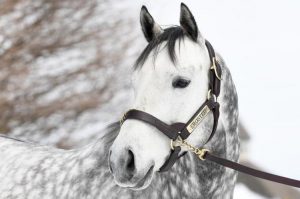
By the precocious son of Giant’s Causeway, First Samurai, also the sire of young stallion Justin Phillip, Lea boasts a pedigree rich in Northern Dancer, through Storm Bird, Dixieland Band, and Sadler’s Wells, and Vast’s dam, Enth, adds Nijinsky II to the mix, a powerful concoction of some of the strongest Northern Dancer influences. Vast’s pedigree also includes a cocktail of the combination of Nasrullah and Turn-to, closely related sires whose combination creates stakes winners. Through Rahy, Riverman, Nashua, Best Turn, and Nantallah, this combination is echoed top and bottom.

As well, the similarly bred Miswaki and Seeking the Gold appear top and bottom, offering inbreeding to La Troienne through Buckpasser, with the addition of a dose of Fappiano in the sire’s pedigree to complement all that Mr. Prospector.

It is, however, through remarkable inbreeding to Blue Hen mare Special, as well the third dam of phenomenal sire Blame (also standing at Claiborne), that this pedigree derives its true strength. Vast is inbred to the Forli mare Special 6 x 4, through sire and dam, via the half-sisters Fairy Bridge, by Bold Reason and the dam of Sadler’s Wells, and Bound, by Nijinsky II. Special’s dam was Thong, a daughter of one of the greatest Blue Hens of the twentieth century, Rough Shod II (also tail female of Nureyev). Bound was sold at Keeneland November in the late nineties for $2.2million by Claiborne to John Magnier of Coolmore, a transaction between giants that demonstrated, in a depressed market, the mare’s true worth.

Lea’s racing career was distinguished by a new track record setting win in the Donn H.-G1 over future Champion Will Take Charge, and he was second to another current first crop phenom, Liam’s Map, in the Breeders’ Cup Dirt Mile S.-G1, earning him over $2million. Though so many elements of his pedigree suggest turf success, he was brilliant on both dirt and turf, and would seem to be a young stallion to watch, as his greatest successes came with maturity: he himself did not start at two, and he won the Donn at five. Vast would seem to have a long and stellar career in front of her.

— Roberta Smoodin

No More Lip: TRPB Set For 2020 Digital Tattoo Mandate

Press Release: With the introduction of a digital tattoo system now less than four months away, the Thoroughbred Racing Protective Bureau (TRPB) announced that it has conducted technician training in 25 states and five Canadian provinces, and that more than 900 Thoroughbreds have already received their digital tattoos.
The new system is scheduled for full implementation by January 1, 2020.

“Effective January 1, 2020, all Thoroughbred horses that have not previously been TRPB lip tattooed must have a digital tattoo for race day identification,” said J. Curtis Linnell, executive vice president of the TRPB. “This digital tattoo indicates that the Thoroughbred Racing Protective Bureau has confirmed the identity of the horse and uploaded updated digital photographs to the breed registry database at The Jockey Club.”

The TRPB provides authentication of identity for every Thoroughbred racing jurisdiction in the United States and Canada. The transition to the TRPB digital; tatoo was preceded by a requirement by The Jockey Club that calls for any Thoroughbred foaled in 2017 or after to be microchipped prior to being registered.


In essence, the digital tattoo is an electronic validation of the identity of a horse performed by a TRPB technician. The technician uses a scanner to read the horse’s microchip and that microchip number hyperlinks to electronic registration information consisting of high-resolution digital photos of the horse and its markings.

The Association of Racing Commissioners International (ARCI) passed a model rule regarding digital tattoos. The model rule states, effective January 1, 2020, the racing secretary shall ensure that the registration certificates for all Thoroughbred horses that were foaled in 2017 or thereafter have a digital tattoo prior to entry in a race.

Linnell stressed the importance of regulatory commissions and racing associations being familiar with the impending change.

“With racing commissions, we want to make sure that they have rules in place that specifically reference the digital tattoo for identification to avoid scratching horses from a race come January 1,” he said.  “As for racing associations, we are encouraging all of them to make sure racing office personnel understand the digital tattoo certification and are planning and preparing to incorporate digital tattoos for horse identification.”

Linnell said the current practice of branding horses on the inside lip will be discontinued at the end of 2019.

He also said that the new system has received encouraging responses when TRPB personnel and TRPB technicians have met with racing officials, regulators, horse identification employees and other industry officials over the course of the past two years.

“For the most part, they seem excited about digital tattoos,” he said. “They realize it will provide a more efficient and effective system of identification.”

The technician training has been held in: Arizona, Arkansas, California, Delaware, Florida, Illinois, Indiana, Iowa, Kentucky, Louisiana, Maryland, Minnesota, Nebraska, New Jersey, New Mexico, New York, Ohio, Oklahoma, Pennsylvania, Texas, Utah, Virginia, Washington, West Virginia and Wyoming.

The training has also been conducted in Alberta, British Columbia, Manitoba, Ontario and Saskatchewan.

The TRPB, based in Fair Hill, Md., is a wholly owned subsidiary of the Thoroughbred Racing Associations of North America and serves as a national investigative agency in the horse racing industry with the goal of maintaining public confidence in the sport of Thoroughbred racing.

Additional information about TRPB and the Digital Tattoo is available at trpb.com.

Three Experienced Re-Trainers, Three Off-Track Thoroughbreds

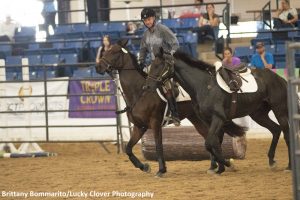
Press Release: Education takes center stage at the Thoroughbred Makeover and National Symposium, presented by Thoroughbred Charities of America, on Friday, October 4 at the Kentucky Horse Park: the Makeover Master Class, sponsored by Thoroughbred Education & Research Foundation (TERF) will feature three experienced horse trainers demonstrating their methods of restarting prospects off the track. The TERF Makeover Master Class is free to attend and runs from 9 AM until noon in the TCA Covered Arena.

A new wave of equestrian enthusiasts is trying Thoroughbreds for the first time or returning to the breed after decades away — but getting started with a new off-track project can be overwhelming. The Makeover Master Class was conceived to give spectators a comprehensive look at what to consider when evaluating prospects and how to approach those early rides off the track.

The Format

Three horses, representing three respected and reputable aftercare organizations, will be introduced, and three trainers will discuss their conformation and personal preferences, plus analyze their movement at liberty and while free-jumping.

Trainers will then be randomly paired with a horse, and break out to work independently in whatever mode they feel is best for the animal for up to one hour. Trainers may utilize a roundpen, pony horse, ground person or any other method they would typically utilize when getting on a green horse for the first time.

Commentators will rotate between trainers to provide added insight, and each trainer will give a summary presentation about their overall impressions and what they would expect in the restarting process. Ample time will be given for questions and answers from the audience.

Meet the Trainers

Emily Brollier Curtis is a Grand Prix dressage rider who has carefully developed over 10 horses to the FEI levels. Emily is known for her ability to work with both young and difficult horses and especially has a talent for restarting Thoroughbreds off track and placing them into new careers. Emily has completed the Thoroughbred Makeover multiple times with exceptional results, taking third place in the Dressage division in 2016. She also served as a commentator for last year’s Master Class.

Douglas Nunn is a third-generation horseman who became a jockey at age 19 and still enjoys riding in amateur races still to this day. He has been a Thoroughbred trainer for nearly 30 years with multiple stake winners. Douglas’ passion is the challenge of training difficult and problematic horses on and off the track. He still rides, exercises and does the ground work himself; he also transitions Thoroughbred horses into second careers. He is a resource for New Jersey horsemen who want to restart OTTBs. Douglas also has three retired OTTBs he keeps on a farm, and uses two of them as pony horses at the track. Douglas serves as a board member for New Beginnings Thoroughbreds.

Elisa Wallace is a 5* event rider, YouTuber, and advocate for off-track Thoroughbreds. Elisa was listed as an alternate for the 2016 US Olympic Eventing team on her off-track Thoroughbred Simply Priceless, and is also known for her work with mustangs with success in the Mustang Makeover. Elisa is a veteran of the Thoroughbred Makeover, with many top placings — including winning Thoroughbred Makeover Champion in 2018 with Reloaded.

Meet the Horses

The participating aftercare organizations for the 2019 TERF Makeover Master Class will be Florida Thoroughbred Rehoming and Adoptive Care (FLTRAC), Maker’s Mark Secretariat Center (MMSC), and Second Stride.

Porta Ponti (FLTRAC)
Gio Ponti – Sybil’s Way, by Will’s Way
2015 chestnut gelding
Bred in Florida by Christine M. Hosier

Unraced, last worked 8/5/18

Normandy Crossing (MMSC)
English Channel – Donamour, by Langfuhr
2011 chestnut gelding
Bred in Kentucky by Gwynedd Stable & Woodard Stable

42 career starts with 11 wins
$217,949 in earnings

Far Right (Second Stride)
Notional – Zindi, by Vindication
2012 chestnut gelding
Bred in Kentucky by Nossab LLC & Patrick J Crowley

25 career starts with four wins
$767,623 in earnings
Winner of the 2015 Southwest Stakes (G3)
Second in the 2015 Arkansas Derby (G1)
Third in the 2015 Delta Downs Jackpot Stakes (G3)
Ran in the 2015 Kentucky Derby (G1)

Meet the Commentators

Third generation horseman Marc Ricker grew up on his family’s Sunny Oak Farm, a Thoroughbred breeding operation in Paris, Kentucky and today owns Ashwood Training Center in Lexington. Located on iconic Russell Cave Road, Ashwood is a full-service Thoroughbred training center that includes a six-furlong training track with starting gate, indoor and outdoor arenas, rehabilitation and therapy facilities, sales preparation for yearlings and horses of racing age and more. Ricker and his team start 30 or more young Thoroughbreds each year, focusing on building a foundation through groundwork and longlining, followed by under saddle work in an arena, on the farm’s training track and hacking out through the farm’s wooded areas. In his spare time, Ricker also enjoys playing polo.

Walmac Farm sport horse trainer Laura Hansen oversees the transition of the farm’s racing stock to the show ring. Originally from Ontario, Canada, Laura grew up riding and competing on the local and regional hunter/jumper circuits. She began galloping at Woodbine Racetrack at age 17 and has worked for such notable trainers as Bob Baffert, Al Stall, and the late Bobby Frankel, and was an assistant trainer for Steve Asmussen. In 2007 she, along with her husband, Scott Hansen, accepted a position managing owner Gary Broad’s Oakmont Ranch, a southern California farm and training center. Within two years she had developed the fam’s in-house retraining program for their retired racehorses. The farm currently has 30 horses being retrained and/or competing successfully in show rings throughout the U.S. This year Broad purchased historic Walmac Farm and the Hansens have helped transition his operation to Kentucky.

Hailing from Provence, France, The Frame Sport Horse’s Martin Douzant has built his career on developing young horses for life as sport horses. Now based in the heart of Virginia horse country, Martin keeps an active competition and teaching schedule centered around bringing up young prospects in jumpers, dressage and eventing. He often leads free jumping clinics, and can be found handling young horses at some of the biggest breed shows in the country. He is a big advocate for free jumping young horses as he believes it helps young horses hone their natural jumping abilities, instincts, scope, power, adjustability, and reaction, all without the interference of a rider.