The Curious Case of Two-Year-Old Phenoms

Yesterday, April 6, was as thrilling a day of racing as anyone could ask for, with the Kentucky Derby picture finally becoming a little less muddy, and photo finishes in graded stakes races providing edge of your seat excitement. Bob Baffert, who might’ve been shut out of the Derby for the first time since the Late Jurassic Period, now has both Roadster and Game Winner going to the Derby thanks to their one-two finish in the Santa Anita Derby-G1, and Improbable poised to run in the Arkansas Derby-G1 next week.

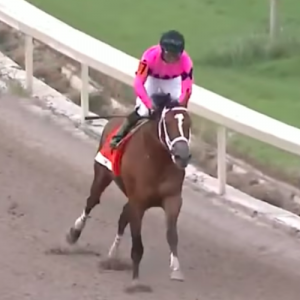
The most fascinating and baffling elements of yesterday’s Grade 1 extravaganza were two third place finishes. The magnificent Instagrand, a son of Into Mischief, who appeared to be a man among boys in his two-year-old campaign, after which he was mysteriously laid up to graze and nap instead of confronting the other colts in the Breeders’ Cup Juvenile-G1, has been a disappointment at three, and finished third, behind Baffert’s Derby duo, after taking the lead and then fading, ending his Derby hopes.

Another third place finish was Jaywalk, last year’s Champion Juvenile Filly and winner of the Breeders’ Cup Juvenile Fillies-G1, making her freshman sire, Cross Traffic, a number one sensation. Her trainer, Jason Servis, has been sure of her three-year-old return, daring, before the Ashland S.-G1 at Keeneland yesterday, her rivals to catch her, so sure was he of her return to form after a disappointing debut earlier this year. Yet Jaywalk showed little of her two-year-old speed, and was lucky to finish third behind long shot Out for a Spin and chalky Restless Rider.

How do we account for stunning precocity that turns to three-year-old disappointment? Commentators and Servis alike have noted Jaywalk’s failure to grow into a larger, more mature version of her Champion-winning juvenile self, and perhaps that accounts for some of her lack of success. Instagrand’s being put out to pasture by owner Larry Best, while other colts continued to compete, was a surprising and interesting move. Best must have thought that he would conserve his fast colt for a three-year-old campaign, culminating in the Kentucky Derby, but this move seems to have achieved the opposite.

Perhaps trying to assign blame is the wrong approach. Some two-year-old phenoms just don’t pan out, the most famous of them being Arazi, who came out of nowhere, literally, to win the Breeders’ Cup Juvenile-G1 with Jerry Bailey aboard, who had never even met the colt until the race, and couldn’t even communicate with Arazi’s French connections to plan a strategy. Arazi disappeared after this memorable closing move. Another two-year-old champ who didn’t go on was Uncle Mo, who is now a pre-eminent sire. So the future may still be bright for Instagrand and Jaywalk. Just not in the way anyone would have predicted.

— Roberta Smoodin

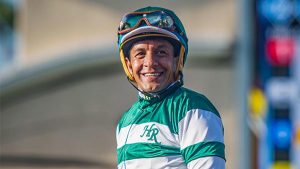
Victor Espinoza Makes His Stakes Return In The Bayshore At Aqueduct

One of the most beloved figures in all of horse racing, jockey Victor Espinoza, made his stakes return after facing lengthy rehabilitation and questions as to whether he might ever ride again, on Bob Baffert’s favored Much Better in the Bay Shore S.-G3 at Aqueduct yesterday, April 6.

No doubt legions of fans both at the track and watching at home were cheering for Espinoza, as Much Better completed fast fractions to lead all the way over Mind Control, ridden by John Velazquez. Until the final sixteenth, when Mind Control brought a serious battle to Much Better, and the two stellar horses and jockeys vied until a thrilling finish which featured Mind Control drawing away by a length.

Much Better was game until the end, though, as was Espinoza, flashing the courage, patience, and desire to win for which he is famous. Bravo to Baffert for giving Espinoza the mount, and, as always, kudos to Espinoza. It’s so good to have him back!

— Roberta Smoodin

From Rags To Riches – Former $16,000 Claimer Maximum Security Improves To Win Grade 1 Florida Derby.

The Kentucky Derby picture remains muddy after yesterday’s Florida Derby-G1. Maximum Security, a previous $16,000 claimer trained by Jason Servis, ran away with the race, leaving such royally bred colts as Hidden Scroll, Code of Honor and Bourbon War eating his dust. Jason Servis says he now must cancel his May fishing trip, since Maximum Security has earned 100 points and sits, with other leaders, atop the Kentucky Derby starters list.

Maximum Security is by New Year’s Day. Who is he, and where is he? He has jumped to fourth on the third crop sires list, behind only Point of Entry (whose Plus Que Parfait won the UAE Derby-G1 yesterday on Dubai World Cup day), Take Charge Indy, Graydar (whose Gray Magician finished second in the UAE Derby), and ahead of young sire sensation Violence. After beginning his career at Lexington’s Hill ‘n’ Dale, with his owners, Gary and Mary West, offering all kinds of incentives to breed to him, and starting out at a stud fee of $12,500 which dropped to $3500, New Year’s Day was sold very early this year to Brazil. And last November, at the Keeneland Mixed Sale, the Wests sold Maximum Security’s dam, Lil Indy, carrying a full sibling to Maximum Security, for $11,000, to Korean interests.

The Wests raced the precocious, talented New Year’s Day, who was trained by Bob Baffert, and now race this serious contender, Maximum Security, who remains unbeaten, four for four. They have another potential Derby colt, Game Winner, by Candy Ride and also trained by Baffert, whose entry into the prestigious race is in question due to a lack of points, though that may still change. Maybe Baffert should be the one to plan a May fishing trip. Clearly, the Wests will be in Louisville on the first Saturday in May, dreaming of roses.

— Roberta Smoodin

Jockey Club Calls For Major Drug Reform, Says Fatality Spikes Will Continue Without It

Press Release: The Jockey Club today released a major white paper calling for comprehensive reform of the U.S. horse racing industry including a major overhaul of drug use and uniform out-of-competition drug testing, citing the need for “transparency into the medical treatment, injuries, and health of all racehorses.”

The paper’s release follows the death of 22 racehorses at California’s Santa Anita Park in less than three months. The Jockey Club wrote that “it would be a mistake to view the Santa Anita fatalities as an isolated situation — spikes in the deaths of horses have occurred at other tracks and they will continue to occur without significant reforms.”

The Jockey Club was particularly critical of drug use in the horse racing industry saying that “improper drug use can directly lead to horse injuries and deaths. Horses aren’t human and the only way they can tell us if something is wrong is by reacting to a symptom. If that symptom is masked, the results can be devastating.” And that “we lag behind cheaters and abusers and by the time we have caught up they have moved on to the next designer substance.”

The Jockey Club expressed its strong support for federal legislation citing the Horse Racing Integrity Act of 2019, H.R. 1754, which would create a private, independent, horse racing anti-doping authority responsible for developing and administering a nationwide anti-doping and medication control program. The program would be administered by the United States Anti-Doping Agency, the body responsible for administering anti-doping programs for human athletes including the U.S. Olympic teams.

“For far too long, cheaters have been abusing the system and the horses are most often the ones to suffer,” said James L. Gagliano, president and chief operating officer of The Jockey Club. “It is particularly disturbing that there is little out-of-competition drug testing in the United States. U.S. horse racing lags far behind international standards. It’s time we joined the rest of the world in putting in place the best measures to protect the health and safety of our equine athletes.”

In addition to reforming how drugs are used and monitored, The Jockey Club is calling for other reforms targeted at health of equine athletes, including: 

·         Enhanced Race Surface Analysis

·         Reporting of all Injuries During Racing and Training

·         More Comprehensive Pre-race Veterinarian Examination

·         Use of Approved Medications Only

·         Confirmed Fitness to Train

·         Industrywide Contributions to Aftercare

“Will we ever know the exact cause of spikes in horse fatalities? Unless there is change in the industry that answer is, sadly, probably not,” wrote The Jockey Club. “A key to this change is the requirement of full transparency into the medical treatment, injuries, and health of all racehorses. Today, we can’t fully see what is going on with a horse because of differing state and track practices, antiquated practices, and purposeful deceit about what drugs are given to horses at what times.”

The Jockey Club is the breed registry for Thoroughbreds in North America. Since its founding 125 years ago, it has been dedicated to the improvement of Thoroughbred breeding and racing, focusing on improvements to the integrity, health, and safety of the sport. The Jockey Club has long held that horses must only race when they are free from the effects of medication.

Click here to read the Jockey Club’s white paper

For additional information, please visit The Jockey Club or the Coalition for Horse Racing Integrity.

A Pinhooking Tale: Florida Derby Contender Bourbon War & His Little Sister

The lag time between submitting your horse for a public auction’s catalogue and the printing and distribution of the sales catalogue can create some interesting issues for buyers and sellers alike. When the Keeneland November, 2017, sale took place, its opening day was November 7, and a Tapit weanling out of the Grade 1 winning mare, My Conquestadory, brought $775,000, a huge investment on a weanling.

This filly was My Conquestadory’s second foal. Her first, a colt by Tapit, had failed to meet his $525,000 reserve at the 2017 Keeneland September Sale of yearlings. The fact that the weanling filly brought so much more could indicate a number of things: she was a better individual, and/or somebody knew something.

This is because on November 14, 2018, that Tapit colt, now named Bourbon War, broke his maiden at first asking at Aqueduct, and went on to finish fourth in the Remsen S.-G2. The Tapit filly is entered in the upcoming Keeneland April Sale of two-year-olds in training, but at the time of the catalogue printing, Bourbon War appears on the filly’s page, hip number 130, as a winner at two and three of only $79,900, without any black type.

But the gamble of the buyers of the weanling filly, Baccari Bloodstock, has paid off, as, since cataloguing, Bourbon War finished second in the Fountain of Youth S.-G2, behind Code of Honor, and is entered in this Saturday’s Florida Derby, in which he’s drawn the excellent four spot in the gate, and will face off against the FOY winner and the FOY post time favorite, Juddmonte’s Hidden Scroll, who had the misfortune to draw the one hole.

If Bourbon War wins the Florida Derby, or even hits the board, his points accrued may be enough to get him into the Kentucky Derby. More than this, though, this family’s tale is all about the great risk of pinhooking at the highest level, and the great reward that is possible. When hip 130 goes through the Keeneland sales ring on April 9, there is a good chance she may be the sales topper, with a full brother poised to start in this country’s most prestigious race.

Pinhooking is all about the gamble that a family will improve, and an individual will improve, and in this case we know that at least the former has occurred. Tapit alone insures some pinhooking success, with his offspring appearing in virtually all major races. But success at sales is all about the female family and its production. With this update for My Conquestadory’s first foal, her second foal should bring stellar results for her risk-taking purchasers.

— Roberta Smoodin

By My Standards Becomes Goldencents First Graded Stakes Winner In Louisiana Derby

The Louisiana Derby-G2 seemed like a lock for War of Will, but one bad step a few feet from the gate seemed to sideline this magnificent horse and leave his future uncertain, while 22-1 longshot By My Standards, by Spendthrift’s second crop sire Goldencents, picked up the pieces.

By My Standards became Goldencents’ first graded stakes winner, bringing his earnings up to over $650,000, and giving him 100 points toward that Kentucky Derby date. Trained by Brett Calhoun, the colt had only broken his maiden previously, but now must be considered a contender.

Nine-year-old Goldencents stands for $20,000, which now seems like a bargain, since his progeny earnings have skyrocketed to $1,119,140 thanks to By My Standards, putting him well ahead of second place second crop sire Cairo Prince by nearly half a million dollars. By perennial leading sire Into Mischief, who also stands at Spendthrift, Goldencents has bestowed his own precocity and resilience upon his offspring. If milers do indeed make the best sires, as the saying goes, then Goldencents, who twice won the Breeders’ Cup Dirt Mile-G1, at three and at four, seems poised to continue his elite sire’s success at stud.

By My Standards is out of the Muqtarib mare A Jealous Woman, and the most interesting aspect of his pedigree is that his third dam, Stormfeather, is by Storm Bird, out of the Secretariat mare Mazama, making Stormfeather a three-quarters sister to the great Storm Cat himself, Goldencents’ great-great-great grandfather, himself by Storm Bird and out of the Secretariat mare Terlinqua. Thus, the topline of sires and the tail female line of mares in By My Standards is duplicated on the zig zag. Inbreeding to Mr. Prospector and more Secretariat (through Gone West’s dam) and Northern Dancer (through the Minstrel as well as through the aforementioned Storm Bird), complete the strengths of this pedigree.

Goldencents is now officially on the map of young sires to watch, and Brett Calhoun has a serious contender in his barn. By My Standard’s pedigree says that the mile and a quarter of the Kentucky Derby should be no problem for this very promising colt.

— Roberta Smoodin

We Love You Victor Espinoza & Don’t Worry! The Strongest & Smartest Riders Like You Will Benefit Most From California’s Whip Ban

In an article from the Thoroughbred Daily News, the hugely popular rider of American Pharoah and California Chrome, Victor Espinoza, commented on the imminent rule changes regarding the whip in California. Riders are going to be told that they can only use their whips for corrective and safety purposes – for instance to keep a wayward horse from lugging sideways, impeding other runners, or attempting to run out or jump the rail etc..

Victor was then quoted as saying:

“I think I’ll be the one put at a disadvantage because I am the strongest jockey out there,” he said. “If that is going to be the rule and that is the case, I always follow the rules. That’s it. I think some horses will be affected, definitely. There are laid-back horses that don’t want to do anything on their own. But most of the horses are trained to run and bred to run, so I don’t think it will affect most of them that much.”

Victor – if you are the strongest jockey out there, you will be the strongest at galvanizing and pushing a horse out to the wire with hands and heels. This new whip rule will show the racing world exactly who the strongest jockeys are. They will be those with the most fitness, strength and stamina, those who can most successfully ride a horse out to the wire without resorting to the whip. These riders will differentiate themselves from the weaker “stick jockeys” – i.e. those who rely the most on their whips.

This rule will also show us who the smartest riders are. Tactical awareness and reserving a horse’s resources for the stretch will become paramount. Slower starts and faster finishes? Yes please. A visually, vastly more entertaining, and healthy spectacle than fast starts and slow finishes, wouldn’t we say?

And this radical new whip rule will hopefully be good for the breed. The honest horses who have the most heart and naturally try the hardest will win the most races and the most prestigious races. The lazy horses that don’t try their best or give their natural ability and need the encouragement of the whip to win – will not. And in the long run, as this is factored into who becomes a top stallion or a top mare and who does not – this can only be good for the breed.

As for what the new whip rule can do for thoroughbred racing’s public relations in these troubled times? Surely it can only improve the public perception of horse racing and help bring new fans to the sport.

Bring it on.


— Carl Wilson

Pedigree Review – Roses Will Look Beautiful On His Battleship Gray Coat

Given my love for the great mares, the Blue Hens of thoroughbred breeding, it should come as no surprise that my Kentucky Derby horse is the blue-blooded, Juddmonte-bred Tacitus, winner of the Tampa Bay Derby this year. The Juddmonte breeding program has a tradition of boldness, and its inbreeding and ground breaking are second to none.

Tacitus is by Tapit, the leading stallion of our time, and himself a treasure trove of wondrous DNA designed to nick well with the mares representing the best of both American and European breeding, given his wealth of A.P. Indy, Mr. Prospector, Unbridled, In Reality, and Nijinsky II blood. His pedigree also features his own female greats, Somethingroyal, dam of Secretariat, and La Troienne, through two doses of Buckpasser, Seattle Slew, and his third dam, full sister to Relaunch, Moon Glitter, whose strain of La Troienne represents a different source of that mare who has so influenced the breed.

Tacitus, however, represents one of those very rare race horses whose female family is even greater than his male family, having in it three Broodmares of the Year, three doses of Somethingroyal (Broodmare of the Year in 1973) through Secretariat mares Terlingua and Secrettame, and through Sir Ivor, who in 1976 was bred to the amazing Best in Show, to produce Tacitus’s fourth dam, Monroe (making Tacitus, as well, tail female Best in Show, Broodmare of the Year in 1982). Tacitus’s female family features two doses of Best in Show, completely unheard of, because Toussaud, Broodmare of the Year in 2002, was by El Gran Senor, whose dam, Sex Appeal, by Buckpasser, was a daughter of Best in Show herself, making Tacitus 7 x 5 Best in Show.

I can think of no other horse with three Broodmares of the Year in his immediate pedigree, nor can I find one through research. If, indeed, the huge heart gene is handed down in female DNA through great broodmares, then Tacitus’s heart must be as big as Texas.

Tacitus was bred and is owned by Juddmonte Farms, and not many would dispute the fact that the Juddmonte breeding program is second to none, in large part because of its development of the female families in Tacitus’s pedigree. Juddmonte’s Khalid Abdullah fully understands the importance of great mares, and this pedigree, with its amazing build up of mare power, is representative of what Juddmonte is capable of.

Not that Juddmonte only makes great mares. The sire Empire Maker is a Juddmonte-bred, himself out of Toussaud, as was Chester House, who died too young and didn’t get the chance to establish himself as a sire, and multiple grade one stakes winner Honest Lady, herself the dam of the useful stallion First Defence, Tacitus’s broodmare sire.

Close Hatches, the dam of Tacitus, is First Defence’s most successful offspring, having earned over $2.7 million on the track, and having been named Champion Older Mare for her impressive string of graded wins, including the Grade One Cotillion S., Ogden Phipps S., Apple Blossom H., Personal Ensign S., and Mother Goose S. From First Defence’s first crop to race, and raced by Juddmonte, she marked her sire as a young stallion to watch, though unfortunately he didn’t seem able to duplicate her great success in any of his other offspring. Tacitus is Close Hatches’ first foal, and her blue-blooded female family is matched by a veritable who’s who in stallion power: Unbridled’s Song, Seattle Slew, Storm Cat and Gone West.

Tapit’s pedigree presents remarkable inbreeding to many of the important sires on Tacitus’s dams’ side, including bold inbreeding to Unbridled, 3 x 4, through the mare Tap Your Heels, a daughter of Unbridled, and Tapit’s dam, and through First Defence’s sire, Unbridled’s Song. Frequently, an influential sire is considered to have begun his own, unique lineage, and my guess would be that Juddmonte’s great pedigree minds consider Unbridled’s Song to have done just that, especially given the immense success his daughters have had as broodmares.

The addition of Caro, on the dam’s side, is the wild card that creates this uniqueness, and was evident in Unbridled’s Song’s nearly white coloration, while his sire, Unbridled, was relentlessly dark brown.

Similarly, we have Seattle Slew in Tacitus’s sires’ side, through his greatest son, A.P. Indy, and represented in the dams’ side by the wonderful race mare, Honest Lady, herself a grade one winner. It must be noted here that, in addition to three Broodmares of the Year, Tacitus’s pedigree contains two Horses of the Year and Triple Crown winners, Seattle Slew and Secretariat. One could write a book about this pedigree.

Nijinsky II was the sire of Tapit’s second dam, Ruby Slippers (whose provenance includes In Reality and La Troienne). In Close Hatches’ pedigree, we have Nijinsky II’s closely related “cousin” Storm Cat, known to have his best qualities brought out by a dose of Nijinsky, and we also have, in very close proximity to Storm Cat, two doses of In Reality, through Unbridled and Image of Reality, Toussaud’s dam, not to mention the wealth of La Troienne in Unbridled, Seattle Slew, and El Gran Senor, as well as in Best in Show.

To add just a dash more pedigree piquancy, however, we have the presence of Zafonic, who bred with Monroe to create Close Hatches second dam, Silver Star. Zafonic is by Gone West (adding another dose of Somethingroyal), and out of Zaizafon, by The Minstrel. Though we see little of The Minstrel remaining in contemporary pedigrees, he too is closely related to both Storm Cat and Nijinsky, adding to the strength of Northern Dancer in this pedigree, and that’s without even mentioning Toussaud’s sire, the magnificent El Gran Senor, a son of Northern Dancer and the Buckpasser mare, Sex Appeal, herself a daughter of Best in Show.

I’m beginning to feel like a celebrity name dropper, but it must also be noted that multiple strains of another Horse of the Year, Man o’War, live in the farther reaches of this pedigree, through his sons War Admiral and War Relic, and through their sons, Mr. Busher and Intent, and their daughters, Iltis (dam of My Dear Girl) and Busanda (dam of Buckpasser). A lot of this building up of Man o’War comes through the classic American speed breeding that has defined so many twentieth century pedigrees, In Reality. Clearly Tacitus should have both speed and endurance from this carefully designed pedigree,

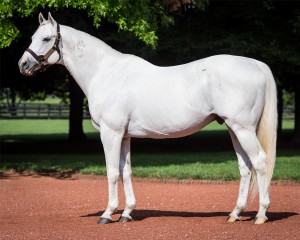
Tacitus’s trainer, Hall of Fame member Bill Mott, calls him “a big, tough horse,” who, when challenged in training, stepped up and came into himself. Though one of the great trainers of our time, Mott has never won the Kentucky Derby, and he has made no secret of the fact that this is the one race he longs to win. Given all of Tacitus’s honored connections, both equine and human, it seems ridiculous to bet against him. I will be cheering for Tacitus and Mott on that first Saturday in May. Roses will look beautiful on his battleship gray coat.

— Roberta Smoodin
Lasix Banned In CA – An Open Letter about the Future of Thoroughbred Racing in California

It’s about time! Read Belinda Stronach’s statement regarding the banning of Lasix on all race day drugs in California!
An Open Letter about the Future of Thoroughbred Racing in California

What has happened at Santa Anita over the last few weeks is beyond heartbreaking. It is unacceptable to the public and, as people who deeply love horses, to everyone at The Stronach Group and Santa Anita.

The sport of horse racing is the last great sporting legacy platform to be modernized. If we expect our sport to grow for future generations, we must raise our standards.

Today, I’m announcing The Stronach Group will take the unprecedented step of declaring a zero tolerance for race day medication at Santa Anita Park and Golden Gate Fields. These Thoroughbred racetracks will be the first in North America to follow the strict International Federation of Horseracing Authorities (IFHA) standards.

We have arrived at a watershed moment. The Stronach Group has long been a strong advocate for the abolishment of race-day medication, but we will wait no longer for the industry to come together as one to institute these changes. Nor will we wait for the legislation required to undertake this paradigm shift. We are taking a stand and fully recognize just how disruptive this might be.

This mandate encompasses a complete revision of the current medication policy to improve the safety of our equine and human athletes and to raise the integrity of our sport.

These revisions comprise best practices currently employed at racetracks around the world:

  • Banning the use of Lasix.
  • Increasing the ban on legal therapeutic NSAIDS, joint injections, shockwave therapy, and anabolic steroids.
  • Complete transparency of all veterinary records.
  • Significantly increasing out-of-competition testing.
  • Increasing the time required for horses to be on-site prior to a race.
  • A substantial investment by The Stronach Group in diagnostic equipment to aid in the early detection of pre-existing conditions.
  • Horses in training are only allowed therapeutic medication with a qualified veterinary diagnosis.

Additionally, it is time to address the growing concern about use of the riding crop. A cushion crop should only be used as a corrective safety measure. While we firmly believe our jockeys have not purposely been mistreating their mounts, it is time to make this change.

These modernizations are in addition to the previously announced commitment to the continued engagement of outside experts to regularly review our dirt, turf and synthetic courses for consistency, composition and compaction to create the safest racing surfaces in the world.

We will be continuing our daily conversations with industry stakeholders to further define these transformative guidelines. But make no mistake: these changes will be implemented. The time to discuss “why” these advancements must take place is over. The only thing left to discuss is “how.”

There are some who will take a stand and tell us that it cannot be done. To them we say “the health and welfare of the horses will always come first.” We also say ‘”not only can it be done, it is what we are doing.” Racing at Santa Anita and Golden Gate is a privilege, it is not a right.

Ultimately, we recognize the owners and trainers of these horses have the final responsibility to assess their fitness for racing and training. Our goal is to make every resource available to aid them in that determination. We are all in this together to make the horse the first priority.

Our COO, Tim Ritvo, has been a horseman for almost four decades. As he said, “The time has come for this industry to evolve. It must do so for the sake of the horses and the people who depend on this sport for their livelihoods. Moving to international standards will help to set the right foundation for racing and fairness. We love the sport of horse racing and want it to succeed today, tomorrow and long into the future.”

We’ve spoken with the California Horse Racing Board and they will be holding a meeting on March 21 at which the situation at Santa Anita Park will be addressed. In the interim, Chairman Chuck Winner told us he personally appreciates the initiatives that The Stronach Group announced today. The Chairman said, “The safety of horses and riders has been, is, and will be the primary concern of the CHRB. The CHRB has been working with The Stronach Group and the various stakeholders to achieve a common objective, which is the best possible conditions for the health and safety of our equine competitors.”

Organizations who advocate for animal welfare have also affirmed their support for these measures. Kathy Guillermo, Senior Vice President for PETA said, “PETA thanks Santa Anita for standing up to all those who have used any means to force injured or unfit horses to run. This is a historic moment for racing and PETA urges every track to recognize that the future is now and to follow suit.  This groundbreaking plan will not bring back the 22 horses who have died recently, but it will prevent the deaths of many more and will set a new standard for racing that means less suffering for Thoroughbreds.”

These initiatives are a seismic shift in how the sport has been conducted for centuries. We are pleased that Stuart S. Janney III, Chairman of The Jockey Club, which has long supported the Horseracing Integrity Act, said, “We applaud The Stronach Group for its announcement today to effect sweeping changes at Santa Anita, which would bring them on par with the strict standards seen in major international racing jurisdictions.”

Joe Harper, CEO of the Del Mar Thoroughbred Club said, “Del Mar has and will continue to support discussions and implementation of measures that enhance the safety and welfare of our athletes. We are committed to working with Santa Anita, The Stronach Group and other industry stakeholders to continue to improve.”

We recognize this will impact our field size as horses and horsemen adjust to this new standard. There will be horses that will not be able to race because they have required medication to do so. For those horses, we are prepared to dedicate the capital required to rehabilitate, retrain, rehome and provide aftercare for them. They deserve nothing less.

We are taking a step forward and saying, quite emphatically, that the current system is broken. While the cause of the injuries on the racetrack might be varied, they have one thing in common: the industry has yet to do everything that can be done to prevent them. That changes today.

First and foremost, we must do right by the horse. When we do right by the horse, everything – everything – will follow.

Belinda Stronach
Chairman and President
The Stronach Group


Horseracing Integrity Act Reintroduced, ‘Back In The Starting Gate’ For Congress

U.S. Reps. Paul Tonko (D-NY), and Andy Barr (R-KY), who represent two of the meccas of American Thoroughbred racing – Saratoga Springs and Lexington – have introduced the Horseracing Integrity Act to create a uniform national standard for drug testing that would be overseen by the U.S. Anti-Doping Agency (USADA).

“My team and I have been chomping at the bit to get the Horseracing Integrity Act back in the starting gate for the 116th Congress,” said Rep. Paul Tonko. “We set a fast pace last session, garnering more cosponsors down the stretch than ever before in our efforts to get this bill across the finish line. In all seriousness, I look forward to continuing our important bipartisan work to pass this worthy legislation so that we can do right by our equine athletes and ensure that horse racing can thrive as an industry that will capture the public’s imagination for generations to come.”

“As the Representative of the Horse Capital of the World, I am proud to once again introduce the Horseracing Integrity Act with my colleague Congressman Paul Tonko,” said Rep. Andy Barr.  “I continue to believe the future prosperity of Kentucky’s signature horseracing industry depends on national uniform standards and testing procedures that are critical to the integrity and safety of the sport. Last Congress, we secured more than 100 cosponsors, and I look forward to building upon this bipartisan work to restore international competitiveness and public confidence in this great American sport.”“We are sincerely grateful to the Co-Chairmen of the Congressional Horse Caucus, Congressmen Paul Tonko (D-NY) and Andy Barr (R-KY), for sponsoring this legislation, critical to America’s horse racing future,” said the Water Hay Oats Alliance. “Since 2012, WHOA has worked with legislators in Washington D.C. to create a bill that would create an independent horse racing anti-doping authority under the leadership of the United States Anti-Doping Agency (USADA). With uniform rules, testing procedures, lab accreditations and penalties, the proposed nationwide anti-doping program for horse racing would replace the patchwork of state systems that currently govern horse racing’s 38 jurisdictions. 

Members of the Water Hay Oats Alliance continue to support a ban on race day medication and the development of rules in step with international standards.”

“This is a horse-first bill. This bill will help ensure a safer environment for horses and riders at all tracks,” said Shawn Smeallie, executive director of Coalition for Horse Racing Integrity (CHRI). “Representatives Tonko and Barr, along with their respective staff members, have worked tirelessly on this legislation. Thanks to their efforts, this initiative has gained the support of key stakeholders across the industry and continues to gain momentum. We look forward to working with other racing industry organizations to ensure productive legislative activity this year.”

H.R. 1754 is nearly identical to the Horseracing Integrity Act of 2017 (H.R. 2651), also introduced by Reps. Barr and Tonko, which garnered the bipartisan support of more than 130 representatives last Congress. Joining the effort in 2019 are Rep. Jan Schakowsky (D-IL), chair of the House Energy and Commerce Subcommittee on Consumer Protection & Commerce, and Reps. Earl Blumenauer (D-OR) and Vern Buchanan (R-FL), co-chairs of the Congressional Animal Protection Caucus. CHRI is hopeful and optimistic that the legislation will move through the committee process this year, building on this strong showing of support from key lawmakers.

“Horse should run on hay, oats, and water, not on a cocktail of performance enhancers and medications,” said Marty Irby, executive director of Animal Wellness Action. “Our organization has already completed more than 150 meetings with key legislators on this issue in 2019, and we are pleased to join leaders in the horse racing industry and animal protection groups that have come together to end a shameful period where unscrupulous trainers have put horses and jockeys at risk.”

The Horseracing Integrity Act is backed by the Coalition for Horse Racing Integrity, which includes Animal Wellness Action, The Jockey Club, The Breeders’ Cup, The Preakness Stakes (Stronach Group), The Belmont Stakes (New York Racing Association), Keeneland, and the Water Hay Oats Alliance.