JD Moore
JD Moore recalls his career thus far, his Punchestown Festival wins, the move from amateur jockey to bloodstock agent, and how he bought Romeo Coolio as a foal.
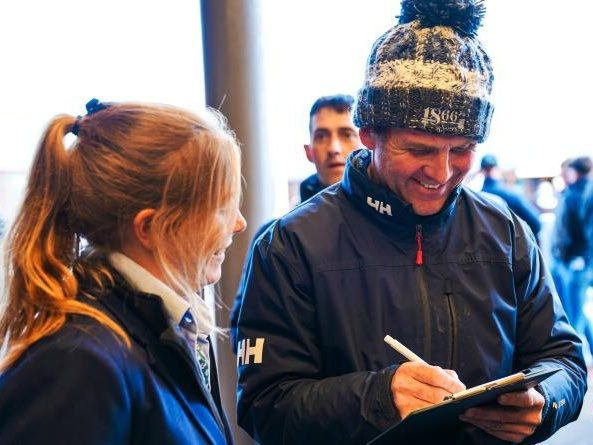
Tell me about growing up on your father's yard in Ireland and your earliest racing memories
I was very lucky growing up on my father’s yard; he employed some great people. I was involved with the Pony Club and competed in eventing as a child. I attended Glenstal Abbey School; I played a lot of rugby, and there were lots of horsey people there at the time. One of my earliest racing memories was the big match-up between Dawn Run and Mill House at Punchestown; there was great excitement for that race.
Enda Bolger was the king of training and riding in the point-to-point field in my early memories of pointing.
How did you start your career as an amateur jockey and what success did you have in your early years?
Initially, as an amateur, I went to Oliver Sherwood. I was very green, and I was lucky to have top jockeys to learn from: Mark Richards, Jamie Osborne and Jimmy McCarthy. They were all very helpful, giving tips and advice. I also lived with Tom Lacey at the time. I had a few rides for Oliver Sherwood whilst I was there, but most of all I needed the experience.
I then moved to Robert Alner the next season. The whole family were very good to me. On my first day riding for the yard, I had two rides at Milbourne St Andrew, had a double, and was very lucky to go on to be National Champion Novice that season. The next season, to be honest, I was trying too hard, made a few mistakes, and decided to move back to Ireland to work for Michael Hourigan. I rode 7 or 8 bumper winners in a 6-month period. I wanted to ride point-to-points more than on the track at that time, so I went freelance and did some breaking on the side.
How do you think the Irish point-to-point scene has developed since you were involved as a jockey?
There are now more sole traders, such as the Doyle family, Colin Bowe and Denis Murphy. In my day, 20 horses was a big string; now a handler with 80 to 100 horses is a big string. There used to be more farmers owning and training horses, whereas now, in the point-to-point field, there are more pinhookers. The 4yo pointers are much more forward and driven, and they have to be ready to perform on the first ask.
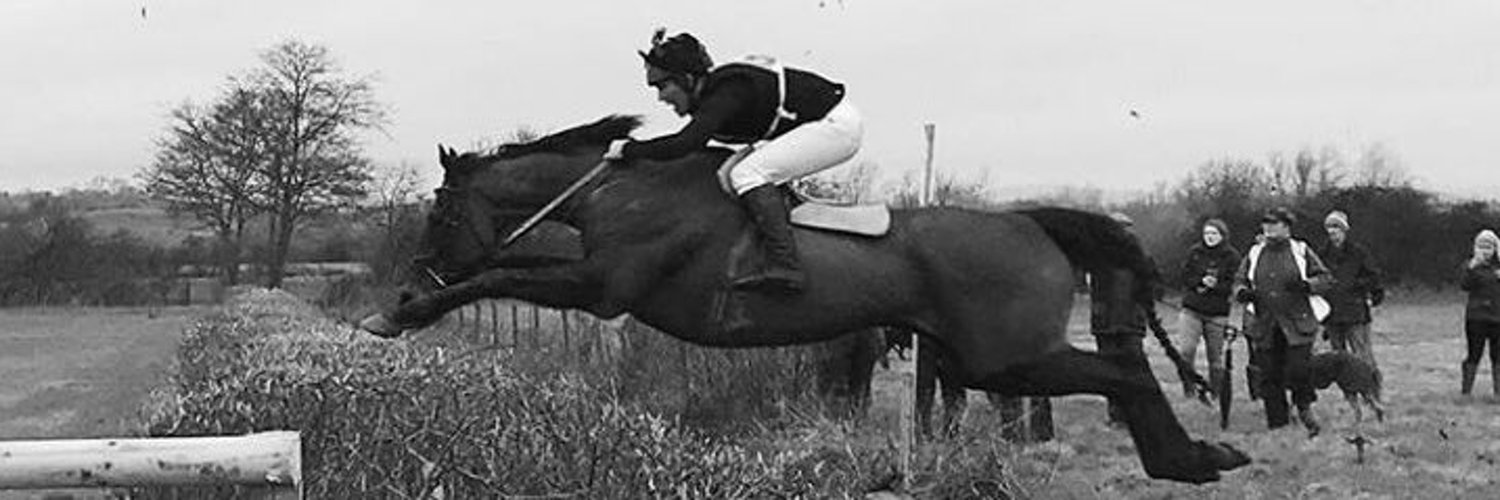 The sport as a whole has become more professional; the horses are better schooled, the lads do a great job producing young horses through pointing, and it's become a profitable business for many. You have to tip your hat to all those handlers that do a great job at producing these horses and make a good living.
Tell me about your experience winning at the Punchestown Festival
I was very lucky to ride Well Tutored in the 2005 Ladies Cup at Punchestown, trained by my father and owned by Mick Bailey, a great owner in my father's yard. To be honest, I didn’t think the horse would get round; we had schooled him prior to the run and couldn’t get him to get across the ditch, but thankfully, on the day when his blood was up, he tanked me round to win by 15 lengths- such a thrill.
All year long in the 2008/9 season we thought Shin A Vee was the perfect horse for the ‘Farmers race’. (The Bishopcourt Cup was widely referred to as the ‘Farmers race’ due to the conditions of entries relating to farming owners or trainers). Shin A Vee was owned by the Kennelly family, who also owned Bregawn, who won the 1983 Cheltenham Gold Cup. Shin A Vee won at the Punchestown Festival as planned, and at 40/1, there were some very memorable celebrations that evening.
I was lucky to have a few other rides at Punchestown, and it's so special riding over those banks; it's also a great chase course down the back, with a lovely line of fences and the ground always very well kept. My Grandmother, Joan Moore, was Punchestown Racecourse Manager for a long time. She was later succeeded by Richie Galway, who does a fantastic job as well.
Tell me about your experience training your own horses, and then the transition from training to bloodstock
I had nine 4 and 5 year-old winners in one season from 11 horses, but I didn’t manage to sell any of them for more than €20,000. After that, I decided to give France a go. I went to France to sit my exams, but I failed because my French wasn’t good enough. While I was still in France, a few lads asked me to keep an eye out for nice foals, and I was lucky enough to buy a lot for the Bleahens, who were (and still are) one of Ireland's top pin-hookers. Some of those foals topped the Goffs Landrover and Tattersalls Ireland Derby sales.
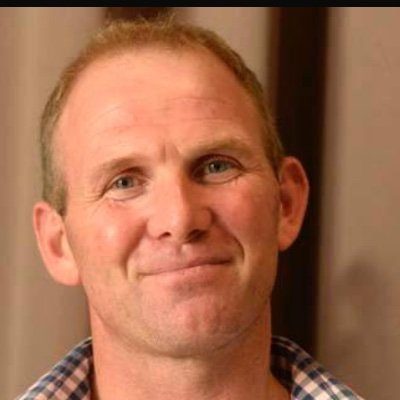 The Bleahens are the hardest-working pin-hookers in the game. They have produced so many Grade 1 horses and have always been the best in the industry to buy from.
You soon earned a reputation as a value finder as a bloodstock agent; what skills did you transfer from riding and training to aid you as a successful agent?
From the start, my father was very helpful and shared so much knowledge and advice with me. In my opinion, it's just plain horsemanship, and being a good horseman is a good foundation for any role in the industry. Like most things, you have to be willing to look to others, learn from them along the way, and soak up their knowledge. Being in different yards, you pick up different ways of doing things and new skills along the way.
Tell me about your branch into the flat scene and how did you find the transfer of buying and selling horses between the two codes?
I attended an AQPS (a regional French breeding showcase and conformation competition for young Autre Que Pur-Sang horses) show in Moulins, bought Rymska for humble money, and 6 months later resold her at Arqana for €35,000. She went on to place 4th in the Breeders Cup Juvenile and was later sold again as a broodmare prospect for $1,050,000 at the 2019 Keeneland November Breeding Stock Sale.
I've done a lot of work with Ed Dunlop and Tony Carroll. I think Tony is one of the best trainers in England who has won heaps of races with very cheap horses
Birthe was another flat horse that I bought that went on to Group success. I bought the filly for €10,000 at the 2022 Goffs Autumn Yearling Sale from the Tara Stud, and she's already won over £140,000 in prize money. I bought Small Fry the same day for €2,000, and he has won over £240,000 in prize money.
How do you think the bloodstock world has changed in the past 10 years and what do you think it will look like in the next 10 years?
Personally, I see the bloodstock industry becoming increasingly polarised around fashionable bloodlines and breeding trends, with the gene pool narrowing as a result. In my opinion, the continued interest from Britain and Ireland in buying French bloodstock reflects this. British and Irish breeders have arguably been slower to introduce genuine outcrosses – matings between horses with no common ancestors in their recent pedigrees – and I believe this has created opportunities for French bloodstock.
My father was travelling to France to buy horses 60 years ago, and that trend has only grown in popularity and, importantly, success. French breeders also tend to produce relatively small first crops, often in the region of 30 to 40 foals, allowing them to assess what they have before committing too heavily to a particular bloodline. As a result, their breeding programmes can offer greater variety, with less reliance on unproven fashionable stallions. Silverwave is an interesting example of an outcross that has become popular, although I think it is still too early to draw firm conclusions about the overall quality of his progeny.
As a bloodstock agent, I would like to see more studs prepared to introduce greater variation into their breeding programmes. I genuinely believe that a broader gene pool would benefit the industry as a whole.
I also think a significant proportion of the lower end of the yearling market has been lost to fashion, with perfectly good individuals being overlooked simply because they don’t fit the commercial mould. However, this creates opportunities for those prepared to take a slightly braver approach. There is potentially a much greater margin to be made by buying a good individual, from a good family, by a good stallion, without worrying too much about whether the pedigree is fashionable.
Ultimately, a horse still has to gallop. And if it can, it doesn’t really matter who its daddy is.
What concerns you about the sport today and what can we do to improve the racing product and experience?
What worries me right now is that the middle and bottom of the market are starting to clear out, but I suppose natural selection will sort that out. Perhaps we should pull back the fixture list across the board, but I don’t know enough about the politics of fixtures and racecourses to comment too much. However, I do know that for people who are brave with their buying, the margins are going to be potentially better at the bottom end because there are fewer people buying there, so they will have greater choice for less money.
There are opportunities for the astute buyer, like Gary Murphy, doing really well by buying at the lower end of the barrel; for example, he bought a filly called True To My Word for £28,000 and sold her for £160,000 to Ben Pauling at the Tattersalls Cheltenham Festival Sale 2026 after she won her Maiden point-to-point in Ireland.
You were involved with buying 4 time Grade 1 winning Romeo Coolio when he was just a foal. Can you tell they have Grade 1 potential from buying them as a foal and what did you see in him that got you interested?
I went to France with Will Kingsey from Peel Bloodstock and drove to Strasbourg to look at a mare. She was a fine mare, in foal to Martaline at the time, but we didn’t get a deal done and drove around France for the next two or three days. On the same trip, we bought Aucunrisque, trained by Chris Gordon, who won the Betfair Hurdle at Newbury in 2023.
Romeo Coolio at Tattersalls Cheltenham Festival Sale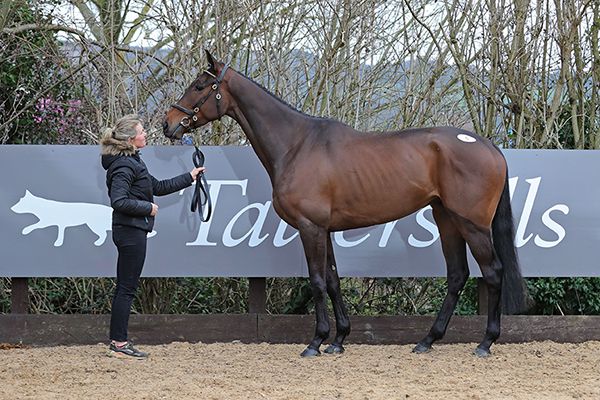
Romeo Coolio was then sold as a 3yo for €92,000 to Monbeg Stables (Donnchadh Doyle) at the Tattersalls Ireland Derby Sale in 2022. Donnchadh Doyle prepared Romeo Coolio to win his maiden point-to-point at Belclare, and 4 days later he was sold at the Tattersalls Cheltenham Festival Sale in 2023 for £420,000 to Gordon Elliot on behalf of KTDA racing.
Tell me about your connection to recent Tattersalls Cheltenham sales record breaker Hero Of Demacia who sold to Gordon Elliot for £560,000
Once again I went shopping with Will Kingsey, looking for nice mares to cover and breed from. We saw Mrs Lovett and thought she made a lot of sense for long-term breeding, so bought her for €25,000, and she went to join Richard Burton at Longner Bloodstock. Mrs Lovett’s first foal went on to win his Maiden point-to-point at Quakerstown in November 2026 and subsequently sold at the Tattersalls Cheltenham November sale for a record price of £560,000 to Gordon Elliot’s scout Aidan 'Mouse' O'Ryan and Dave Rabson's KTDA Racing.
Favourite racing commentator and why
We’re very fortunate to have some very good commentators both under rules and in the point-to-point field, so I feel it's unfair to pick just one. Declan Phelan and Richard Pugh do a great job, to name just two, but there are many more great commentators out there.
Favourite racing presenter and why
I think Fran Berry and Jane Mangan are top class, and Ruby Walsh is also very good with his analysis on ITV.
Favourite jockey that has hung up their boots and why
I feel fortunate to have grown up watching Ruby Walsh, Paul Carberry and AP McCoy. But I think Derek O’Connor in the point-to-point field was so beautiful down to an obstacle and round some of the sharp turns; he was able to get the horse right back underneath him, guide them round and out the other side whilst managing to make lengths while others lost, even though he was travelling slower. His horsemanship was brilliant to watch, and he also helped many young riders through the ranks over time.
Favourite up-and-coming jockey to watch and why
Josh Berry and Barry Stone in the Irish point-to-points are two very good young riders. Josh Williamson and Harry Swan over jumps. On the flat, Siobhan Rutledge looks like a great rider and also carries a light weight.
By TP Editorial
Follow Thoroughbred People
Comments
Have your say. Please keep it civil and on the subject.
Loading comments…