
Rob Bellamy
Rob Bellamy on riding for Martin Pipe, David Nicholson and Jenny Pitman, a Norwegian Grand National win, and his move into clerking and racecourse presenting.
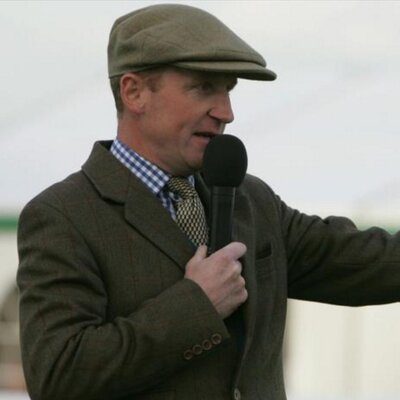
How did you first get involved in racing?
We are a farming family from Herefordshire. My father was clerk of the course at a point-to-point for the South Herefordshire and Ross Harriers Hunt. As you know, there was no pony racing back then, so I was obviously a keen pony club member and started riding out at age 14, if not younger, for two local trainers, Michael Scudamore Senior and John Edwards, who, funnily enough, is now my stepfather-in-law.
I got the bug through riding out at the weekends, and I was lucky enough that my parents provided me with a pointer, along with my older brother, who won first time out at Garnons, where my father was clerk of the course. I ended up with four winners from nine rides that season.
So that's when I should have given up being a jockey, because I'd never ever get better than a 45% Strike rate. I rode pointing for three years. I left school at 16, then had the best year of my life at Cirencester, doing a one-year general farm management course while riding out for trainers and riding at home.
After Cirencester, I went to Martin Pipe. My connection to getting the job at Pipes was Peter Scudamore, because I used to ride out for Peter's father, Michael, as a kid. I spent two and a half years at Pipes as an amateur. I'm pretty sure I was there the first year that Martin had 100 horses in training and trained 100 winners, and Peter was obviously at the height of his career, riding hundreds of winners.
Tell me about where you rode your first winner
At first, I couldn't ride a winner to save my life under rules. I carried on riding a few point-to-point winners. My first winner under rules came on Grand National Day for Jenny Pitman at Aintree.
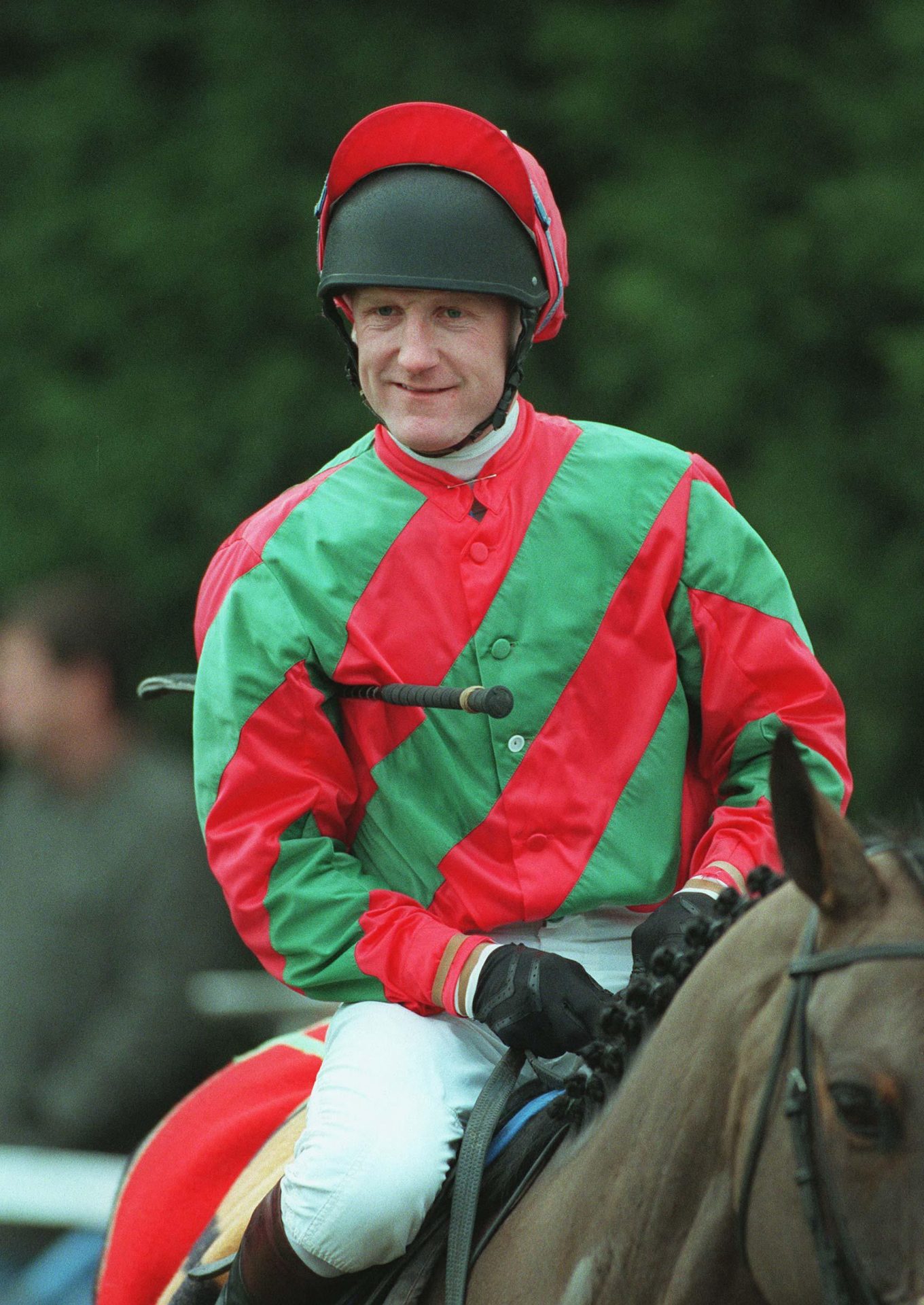 I got the ride for Mrs Pitman because very few amateurs could make the minimum weight and claim, which was obviously nine stone seven. I could make it, and Mark Pitman was riding out twice a week at Pipes, so he put me in for the ride with his mother. That opened doors by winning for Mrs Pitman. Grand National Day, it doesn't get much better.
How did your career develop from there?
I had two years at Martin Pipes, then I was desperate to turn conditional. I got friendly with Richard Dunwoody, and he got me the job of turning professional and becoming a conditional jockey to David Nicholson. I pride myself on the fact that I couldn't have worked for two bigger or more famous names in racing; they were both Champion trainers in their own right, and then it was like going back in time, going to work for David Nicholson, who did everything the traditional way, lots of road work and long lots. I was very lucky to gain a lot of knowledge from both.
I rode sort of second jockey to Richard Dunwoody for a season and a half, and then smashed my leg very badly. I was out for about 15 months, a crucial time when you're climbing the ladder. I did come back and ride for many years, but there were other younger jockeys, the likes of Warren Marston, Tom Jenks, Richard Johnson, snapping at my heels as kids, taking my rides, and then you don't get them back.
I was in the hospital for two months; nowadays you get a femur operated on the same evening, but back then it was an operation they didn't like doing. I was lucky I had private medical care; they got me fixed, and I was able to ride again with all the metalwork in. Although I did have that removed, and once it came out, it was a lot better. I think everybody else will vouch for that; you're always better without metalwork.
Which are the most talented horses you have been involved with?
One of David Nicholson's main horses, Barton Bank, won the King George with Adrian Maguire on. I rode him at Uttoxeter when he first won over hurdles. He was always a very smart horse; I rode him at the Cheltenham Festival in the Supreme; he only finished sixth and got into all sorts of problems. I didn’t get to ride him again, but he went on and won at Aintree with Carl Llewellyn. He was just a very good young horse; at an early stage he was going to be good. Obviously, it wasn't my ride, but I was lucky enough to ride him for the first time. Actually, that day he won at Uttoxeter, I did a Frankie Dettori and went through the card… because racing was abandoned after race one due to waterlogging! (My trick. I get everybody on that one!)
A horse that was good to me, trained by Paul Webber, was a horse called Flying Instructor. He won decent races. A decent hurdle race at Ascot, which was on TV, and also won a decent Novice Chase final at Haydock.
Where did you ride your favourite winner and why?
I didn't ride any really big winners, but I was lucky enough to ride three Cheltenham winners, not at the festival, but I had a bumper winner, a hurdle winner, and a chase winner. As an amateur, I won the four-mile chase that's run on New Year's Day at Cheltenham. That was a great advert for me.
I did win the Norwegian Grand National, so that got a lot of publicity
I couldn't ride a winner at Hereford or Chepstow, which were my two local courses. Bangor and Exeter were always very good to me. Bangor and probably Exeter were run at the same time as the big meetings, so somebody like me would get sent as second jockey to the second meeting, and often you had success that way.
I had ridden at every jumps course apart from Perth. Never been to Perth. I've even tried to get to Perth in retirement with my son Tom. I drove him up there the night before, but racing was abandoned in the morning, so I still haven't had a day out there.
How did racing compare in Norway and how did the opportunity to ride abroad come about?
Richard Dunwoody was one of the first jumps jockeys to have a jockey's agent, and he got me the same agent. A gentleman named Robert Kington, an ex-jockey. When he retired, I had another agent who looked after flat jockeys, and the Norwegian Jockey Club rang him up to ask if he knew of any jumps jockeys who would come out and ride, because jumping is so small in Norway. So I went, and I got beat the first few times, but I built up contacts with the Norwegian Jockey Club. They found me rides, and I probably went out six times each summer for two years, and in Sweden as well.
The race riding was exactly the same. Because I rode in Norway, I was then invited to ride for the same trainer in Sweden and rode a winner there. I was lucky enough to win the Norwegian Grand National, which made headlines in the UK at the time. It's more of a cross-country race, with some steeplechase fences, some hedges, and open water.
Elsewhere, I rode in the Irish National one year, and in the Galway Plate.
Tell me about your decision to retire from race riding and how you worked with Jockeys' Employment and Training Scheme (JETS) to transition into your new career
I was probably described as a journeyman jockey, which is fair. You're only as good as your last ride, and I was injured for important parts of my career, which didn't help my progression. You get to a stage where it's no good being a jockey if you're not getting any rides, and reality kicks in, as does age. I don't think I had a winner at all in my last season, and I'd started applying for jobs on my own, with a little help from David Nicholson.
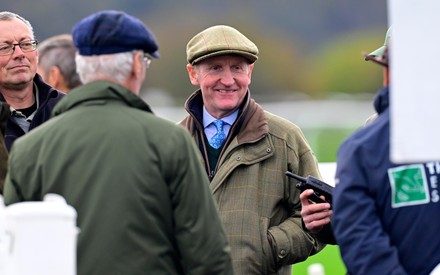 It's not very good when your boss sort of says that you should be applying for a suitable job that comes up in the Racing Post. A harsh thing to hear, but it was also the kick up the arse that I probably needed, as if to say you can't ride forever. I loved every minute of my time in the saddle, and I'm glad to be still working in racing now.
At that time you were blinkered, and you just rode and rode and rode. You did nothing else but eat, sleep, and breathe racing. When I retired, JETS was probably in quite an early stage. It certainly wasn't as big as it is now. They're invaluable to the industry, and I think there was a stigma around it back then. If people thought you were doing evening classes for something, it was unheard of. I approached them, and they helped me to write a CV and prepare for interviews. We never really had to have an interview back in my day when you went for a job with a trainer. They watched you ride out; they watched you school; they could see you could ride; your weight was good; you got the job.
I was riding in my last season when the chairman at Warwick Racecourse approached me and asked if I would be interested in becoming a part-time clerk of the course. They let me carry on riding until the end of May, then I was straight into the job with Jockey Club Racecourses at Warwick. Warwick also had flat racing at the time. I think the one thing I took from one job to the other was, jumping-wise, I knew everybody. I trained for about six months, shadowing the other racing officials. I was a farmer's son, so I was a country boy, which helped too.
During my training at Warwick, they also offered me Nottingham to make it a full-time role. One thing they allowed me to do was remain based in Stow-on-the-Wold, which is now home. I was a clerk at both Warwick and Nottingham, I think, for two years.
Now I'm at Taunton and Stratford. My remit is to run their race days. I've never really gotten involved in race planning. It's something that's a little bit alien to me, and I seem to have avoided it most of my clerking career, which I'm quite glad about.
Tell me about your work as a racecourse presenter
I present at Exeter, Wincanton, Ludlow, Bangor, and Warwick.
But I got involved by doing a little bit of presenting at our local point-to-point here at Andoversford, just contributing to the hunt to help them along. Luke Harvey is a great mate of mine, and he started his presenting career at Exeter and Wincanton, so when he got onto ITV, which has made him even more famous and even busier, I took over some of his work.
Rob Bellamy raceday presenting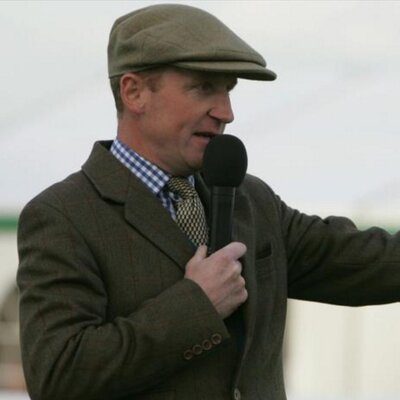
What gives you the biggest job satisfaction?
When I took over from Luke, he said what he started doing is doing a few ad hoc interviews in between the races, which a lot of the old-fashioned presenters don't do. I do all the standard professional stuff: the official announcements, race framing, results, and prize-giving. But then I like to do three or four interviews throughout the afternoon and make it entertaining for the crowd. You're competing with Racing TV or Sky all the time, but you have small slots you can fit in, which I thoroughly enjoy. I'm not going into depth and asking trainers where their next win is coming from. I'm more saying “Well done here, Exeter's a lovely place to introduce one of your best novice chasers”
It always amuses several of the valets and other jockeys when I call Tom Bellamy in if he's had a winner. But I have to do it the same way as I call anybody else in.
How do you prep for raceday presenting?
I would normally get to the racecourse two and a half hours before the first race, and would sit in the car for, a good hour and a half, going through the runners. I don't necessarily go into the form unless I'm asked to do a punters panel before racing. Some courses on a bigger day will want you to do a punters panel. When I say prep, I would read the Racing Post cover to cover daily, so I'm up to speed on what's going on in the racing world all the time, which helps with your ad hoc interview.
Both of your sons, Tom and Archie, have ridden winners on the track; did you always think they would become jockeys?
Tom Bellamy, yes, from the age of six, has never looked left or right, and still doesn't now. He's in a great position now, two very good jobs. But he's had plenty thrown at him with injury and disappointment that would turn a lot of people away, and he genuinely has never looked left or right.
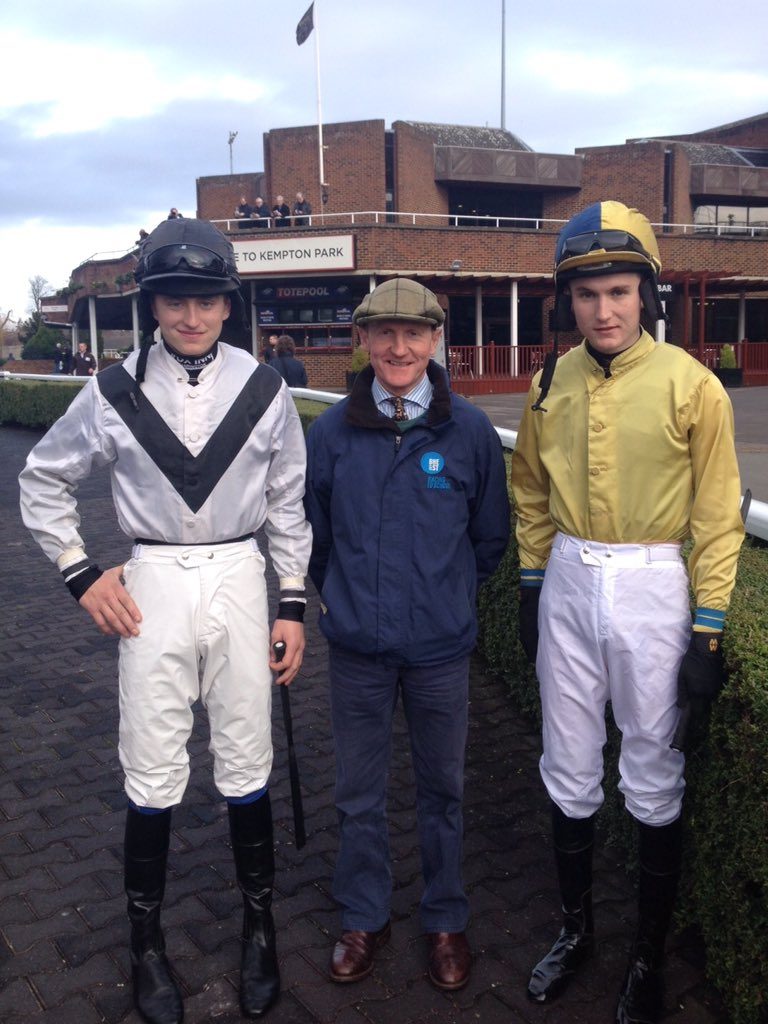 Arch was always going to be a huntsman until he had his first ride in a point-to-point. He lived for hunting, but then got riding out and thought, "I might like to ride in a point-to-point." So we got the loan of a horse and did it between us, thinking he'd have one go, and that'll put him off. Well, he pulled up after a circuit and a half at Barbury Castle with the widest smile you've ever seen in your life. We just both looked at one another and thought, "Oh my God, he's going to want another go now!”
Arch had a Cheltenham winner for David Jefferies, which was fantastic. I'll never forget that day. He went to Australia for 18 months and rode out there professionally. Then came back and had another go, but it fizzled out. He is still working in racing now for Charlie Longsdon and some retraining for other people in the afternoons.
Favourite racing commentator and why
That's very easy, John Hunt. The best commentator out there before all his family tragedy, and to come back and be exactly the same is incredible. I'm in awe of the man.
Favourite racing presenter and why
I thought Alistair Down was legendary. I knew him personally. Used to see him in the pub a lot, and I miss him like mad.
Currently, I think Alice Plunkett's brilliant. She's naturally brilliant. She's just herself, which I think is great. I think the whole of ITV Racing does a fantastic job. Ed Chamberlain holds the whole thing together brilliantly. He's very passionate about horse racing.
Favourite jockey that has hung up their boots and why
A.P. McCoy. His consistency, 20 years Champion is phenomenal. I think without Richard Johnson, AP wouldn't have pushed as hard as he did.
Favourite up-and-coming jockey to watch and why
Harry Vigors has come the pony racing route. Pipes conditional, Rian Cocoran he looks really promising too.
Finally, what concerns you about the sport today and what can we do to improve the racing product and experience?
I don’t like getting involved with racing politics, but I think we need a big shake up; everyone needs to be rowing in the same direction to protect the sport.
Prize money is still an issue, especially in the lower grade races. I think if you can win a race, you should get back at least a month's training fees, if not more than a month.
I've also been talking to Tom about summer racing; we need to do more work on the calendar to allow for a proper break in the jumping.
By Sophie DaviesThoroughbred People Contributor
Follow Thoroughbred People
Comments
Have your say. Please keep it civil and on the subject.
Loading comments…