The Middle Park and Cheveley Park: Two Historic Juvenile Roll Calls
From Brigadier Gerard and Oasis Dream to Sayyedati and Alcohol Free, the Middle Park and Cheveley Park have produced some of racing’s most distinguished juveniles.
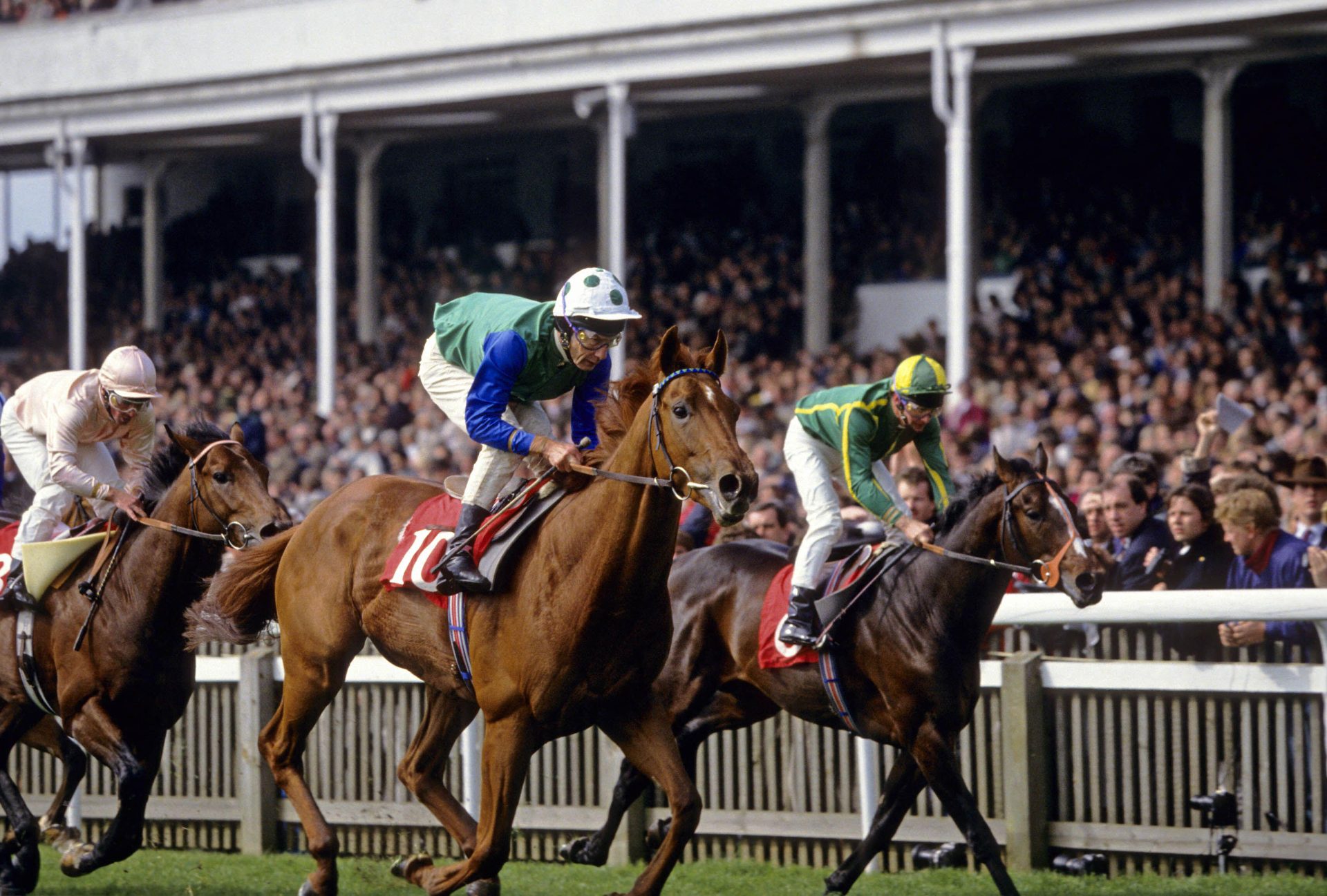
1991 Middle Park winner Rodrigo de Triano wins the 2000 Guineas — Julian Ravilious, Action Sport Images - Alamy
Orthodox and Sun Goddess added their names on Saturday to two of the most distinguished juvenile roll calls in British racing.
Historically, both the Middle Park and Cheveley Park produced subsequent Classic winners in considerable numbers. In more recent decades, however, their records have diverged. The Middle Park has increasingly become associated with future top-class sprinters, with no winner completing the 2,000 Guineas double since Rodrigo de Triano in 1992. The Cheveley Park has retained a more immediate connection with the 1,000 Guineas, through fillies such as Sayyedati, Natagora, Special Duty and, most recently, True Love.
That contrast is particularly interesting because both races have long occupied broadly comparable positions in the juvenile programme. Their respective histories, however, contain very different strands.
The Middle Park Stakes
First run in 1866 as the Middle Park Plate, the race was founded by William Blenkiron, whose Middle Park Stud was one of the leading breeding establishments of the Victorian era. It remained open to fillies for much of its history before becoming restricted to colts in 1987.
Its roll of honour includes some exceptional horses.
Brigadier Gerard won the Middle Park in 1970 before returning to Newmarket the following spring to defeat Mill Reef and My Swallow in a celebrated 2,000 Guineas. He lost only once in 18 starts and remains one of the outstanding British-trained horses of the modern era.
Known Fact, the 1979 winner, also completed the Middle Park–2,000 Guineas double, although his Classic victory came after Nureyev was disqualified.
Then came Rodrigo de Triano, successful in the Middle Park in 1991 before winning both the 2,000 Guineas and Irish 2,000 Guineas the following spring. More than three decades later, he remains the most recent horse to win both the Middle Park and the Newmarket Classic.
Since then, the character of the race’s leading winners has increasingly leaned towards speed.
Johannesburg put together an extraordinary juvenile campaign in 2001, winning major races in Ireland, France and Britain before travelling to Belmont Park and taking the Breeders’ Cup Juvenile on dirt.
Oasis Dream, winner the following year, developed into Europe’s champion sprinter at three, taking the July Cup and Nunthorpe before becoming an enormously influential stallion.
Dark Angel won in 2007 during a busy juvenile season and never raced again after his two-year-old campaign. His subsequent stud career has made him one of the most important sprinting influences of the past two decades.
Dream Ahead was already a Prix Morny winner when he took the Middle Park in 2010. At three he added the July Cup, Haydock Sprint Cup and Prix de la Forêt, confirming himself as an exceptional sprinter.
The same pattern has continued through horses such as U S Navy Flag, Ten Sovereigns, Perfect Power and Vandeek, all of whom were primarily associated with sprinting rather than the mile of the Guineas.
That does not diminish the Middle Park. Rather, its role appears to have changed. Once a significant route towards the 2,000 Guineas, it has become one of the principal measures of the leading juvenile sprinting colts.
Saturday’s winner Orthodox fits readily into that tradition. Clive Cox’s colt had already won the Norfolk Stakes over five furlongs at Royal Ascot before proving his effectiveness over six at Newmarket. His victory gave Cox a third Middle Park after Reckless Abandon in 2012 and Supremacy in 2020.
Whether Orthodox eventually extends beyond sprinting remains to be seen, but his juvenile record already places him firmly within a line of Middle Park winners whose principal asset was speed.
The Cheveley Park Stakes
The Cheveley Park was first run in 1899 and quickly established its own distinguished history.
Pretty Polly won in 1903 before taking the 1,000 Guineas, Oaks and St Leger the following season. Her career ultimately produced 22 victories from 24 starts and established her among the outstanding fillies and mares in British racing history.
Fifinella, successful in 1915, won both the wartime Derby and Oaks at Newmarket the following year, one of the most remarkable achievements by a filly in the race’s history.
Through much of the twentieth century, the Cheveley Park regularly produced fillies capable of stretching their speed to a mile. Ravinella, Sayyedati and others subsequently won Classics after succeeding at two.
Sayyedati, trained by Clive Brittain, won the Cheveley Park in 1992 and the 1,000 Guineas the following spring. She later defeated older horses and colts in the Prix Jacques le Marois and, at five, won the Sussex Stakes.
Natagora won the Cheveley Park in 2007 after an extensive juvenile campaign and returned to Newmarket to make virtually all in the 1,000 Guineas. She later performed with distinction against colts over longer distances, including finishing third in the Prix du Jockey Club.
Special Duty followed in 2009. Her Classic season became unusual in that she was awarded both the 1,000 Guineas and French 1,000 Guineas after the horses that beat her narrowly were demoted following interference.
More recent Cheveley Park winners have continued to demonstrate considerable range.
Alcohol Free, successful in 2020, developed into a top-class miler at three, winning the Coronation Stakes and Sussex Stakes before dropping back successfully to six furlongs the following season to win the July Cup.
Porta Fortuna, the 2023 winner, was narrowly beaten in the following year’s 1,000 Guineas before winning the Coronation Stakes, Falmouth Stakes and Matron Stakes. Her ability to progress from a Group 1-winning juvenile sprinter into one of Europe’s leading three-year-old milers was very much in keeping with the older Cheveley Park tradition.
Lake Victoria won in 2024 as part of an unbeaten juvenile campaign that also included the Moyglare Stud Stakes and Breeders’ Cup Juvenile Fillies Turf. After being beaten at Newmarket on her three-year-old return, she went on to win the Irish 1,000 Guineas.
Then came True Love, winner of the Cheveley Park last year and of the 1,000 Guineas this spring, restoring a direct link between the race and the Newmarket Classic that the Middle Park has not managed since Rodrigo de Triano.
Saturday’s winner Sun Goddess arrives on the roll of honour with an unusually substantial record already behind her. She had won the Phoenix Stakes against the colts and the Moyglare Stud Stakes before dropping back from seven furlongs to take the Cheveley Park in course-record time.
Her next significant question will be the same one posed by many good Cheveley Park winners before her: whether the speed that has made her such an accomplished juvenile can be carried successfully through a mile at three.
The contrasting modern records of the two races are striking, although there is no reason to assume the pattern is permanent. Both have produced Classic horses and champion sprinters during their long histories.
What is clear is that the Middle Park’s recent roll of honour has become increasingly dominated by specialist speed, while the Cheveley Park has continued to produce a notable number of fillies capable of progressing successfully to seven furlongs and a mile.
Orthodox and Sun Goddess now join those respective traditions. Their three-year-old seasons will tell us whether they reinforce the recent pattern or add something different to two races whose histories have never remained entirely static.
By TP Editorial
Follow Thoroughbred People
Comments
Have your say. Please keep it civil and on the subject.
Loading comments…