Great Names from the Cambridgeshire Roll of Honour
From Halling and Lord North to Baronet, Bronze Angel and Rambo’s Hall, a look back at some of the Cambridgeshire’s most memorable modern winners
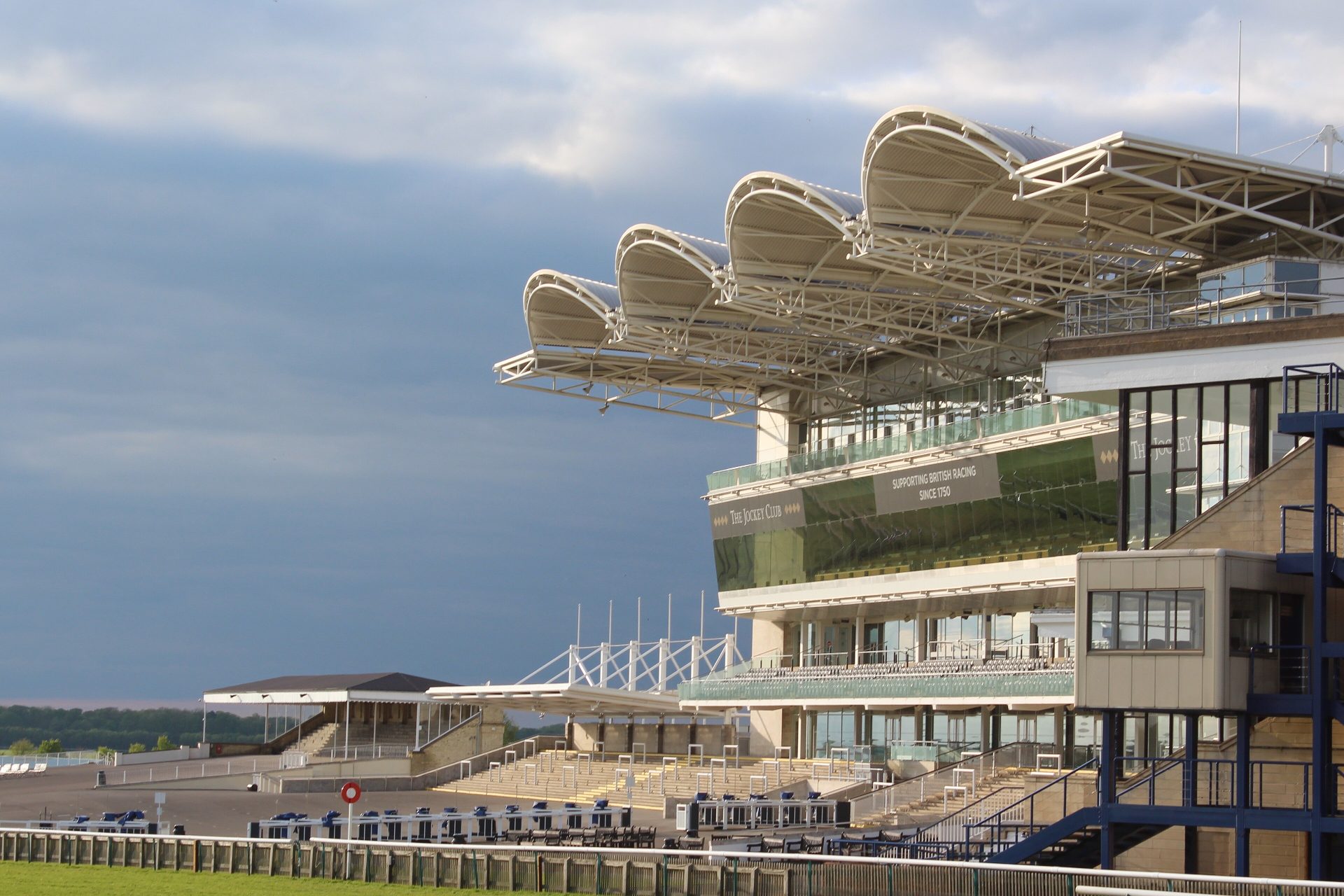
The latest name added to one of Newmarket’s oldest handicaps is Pierre Royal, who gave Adrian McGuinness a memorable success in Saturday’s Cambridgeshire when getting up in the final strides under Mikey Sheehy. It was the first Irish-trained victory in the race since She’s Our Mare won for Tony Martin in 1999.
Pierre Royal may still have plenty of his story left to write. The Cambridgeshire has often been that sort of race: a major prize in its own right, but occasionally also the point at which a progressive handicapper reveals himself as something considerably better.
First run in 1839, the same year as the Cesarewitch, the Cambridgeshire forms the shorter half of Newmarket’s historic Autumn Double. Its straight nine furlongs provide an unusual test, particularly when a large field splits into separate groups across the Rowley Mile.
Among the most durable Cambridgeshire performers of the modern era was Baronet, trained at Epsom by John Benstead. Baronet won the race in 1978 and again in 1980 under Brian Rouse. His overall record was even more remarkable: two victories and two seconds from five attempts between 1977 and 1981. No horse has won the Cambridgeshire three times, and Baronet is one of only seven dual winners in the race’s long history.
Another was Rambo’s Hall, whose victories came three years apart. Jeremy Glover’s gelding won the 1989 Cambridgeshire by six lengths from a mark of 90. He was subsequently sold to race in the United States, where he failed to reproduce his British form, before Glover bought him back. His preparations were complicated when the removal of a growth on his leg caused tendon damage, but he recovered and, at the age of seven, returned to Newmarket to win the Cambridgeshire again in 1992.
Few winners, however, have progressed quite as dramatically as Halling. When John Gosden sent Halling to Newmarket in 1994, he was still very much a handicapper. He had gained his first victory only that August, winning at Ripon from a mark of 75, and arrived for the Cambridgeshire rated 93. Under Frankie Dettori, he won by two and a half lengths.
By the following season Halling had joined Godolphin and moved into an entirely different level of competition. He won the Eclipse Stakes and International Stakes in both 1995 and 1996, as well as the Prix d’Ispahan, giving him five Group 1 victories.
His progression from a mark of 75 to one of Europe’s leading older horses remains one of the clearest examples of the quality the Cambridgeshire has occasionally uncovered.
Three years later came one of the most celebrated betting stories in the race’s history.
Pasternak, trained by Sir Mark Prescott, landed the 1997 Cambridgeshire after being the subject of a major ante-post gamble. The victory was reckoned to have cost the betting industry around £5 million and remains one of the best-known handicap coups associated with Prescott’s Heath House stable.
The Cambridgeshire has also been particularly productive territory for John Gosden.
Following Halling, he won it with Pipedreamer in 2007 and Tazeez in 2008, both of whom subsequently won in Group company. His fourth winner, Wissahickon, produced one of the more authoritative modern Cambridgeshire performances in 2018.
The three-year-old carried 9st 5lb and came from the rear under Dettori to win by three and three-quarter lengths. He subsequently won the Group 3 Winter Derby the following year.
But Gosden’s fifth winner was better still.
Lord North took the 2019 Cambridgeshire as a three-year-old under Dettori. At that stage he was a progressive gelding with only a handful of races behind him.
Within nine months he had become a Group 1 winner, defeating Addeybb in the Prince of Wales’s Stakes at Royal Ascot. Lord North subsequently developed into a highly successful international middle-distance horse, winning the Dubai Turf in three consecutive years from 2021 to 2023 and earning more than £6.4 million in win and place prize-money during his career.
He and Halling give the Cambridgeshire an unusual distinction among major handicaps: two winners who subsequently developed into multiple Group 1 performers.
Not every memorable Cambridgeshire winner has needed to progress beyond handicap company.
Bronze Angel built much of his reputation around the race itself. Marcus Tregoning’s gelding first won as a three-year-old in 2012 under William Buick, coming through strongly to lead in the final 50 yards.
Two years later he returned under apprentice Louis Steward and won again, becoming the first dual Cambridgeshire winner since Rambo’s Hall. Bronze Angel later made further attempts to become the first horse in the race’s history to win three times, but the third victory never came.
There was another pleasing link with the race’s past in 2022 when Majestic won at 25-1.
Majestic began that year as an unraced four-year-old and progressed sufficiently quickly to arrive at Newmarket for the Cambridgeshire under apprentice Aidan Keeley. It was Keeley’s first ride at Newmarket and produced the biggest victory of his career to that point.
There was an additional family connection. Keeley is the grandson of Brian Rouse, the jockey who had ridden Baronet to his two Cambridgeshire victories more than four decades earlier.
The race has inevitably changed during its long history, but its essential character remains recognisable. A large field stretched across Newmarket’s straight nine furlongs creates a test in which ability alone is rarely enough. Horses need to settle, find the right part of the race, obtain a clear run and still have enough left for the final climb towards the line.
Sometimes the winner is a well-handicapped horse reaching the peak of his career. Sometimes, as with Baronet, Rambo’s Hall and Bronze Angel, the Cambridgeshire itself becomes central to the horse’s reputation.
And occasionally it produces a Halling or a Lord North, horses whose victories at Newmarket proved an early indication that handicap company would not contain them for long.
Where Pierre Royal ultimately fits into that history remains to be seen. For now, his narrow victory on Saturday adds another chapter to a race that has been identifying, testing and occasionally revealing high-class horses for almost two centuries.
By TP Editorial
Follow Thoroughbred People
Comments
Have your say. Please keep it civil and on the subject.
Loading comments…