The Ayr Gold Cup’s Most Memorable Modern Winners.
From Lochsong and Coastal Bluff to Continent, Brando, Roman Warrior and Funfair Wane, the Ayr Gold Cup has produced some of Britain’s most memorable sprinters.
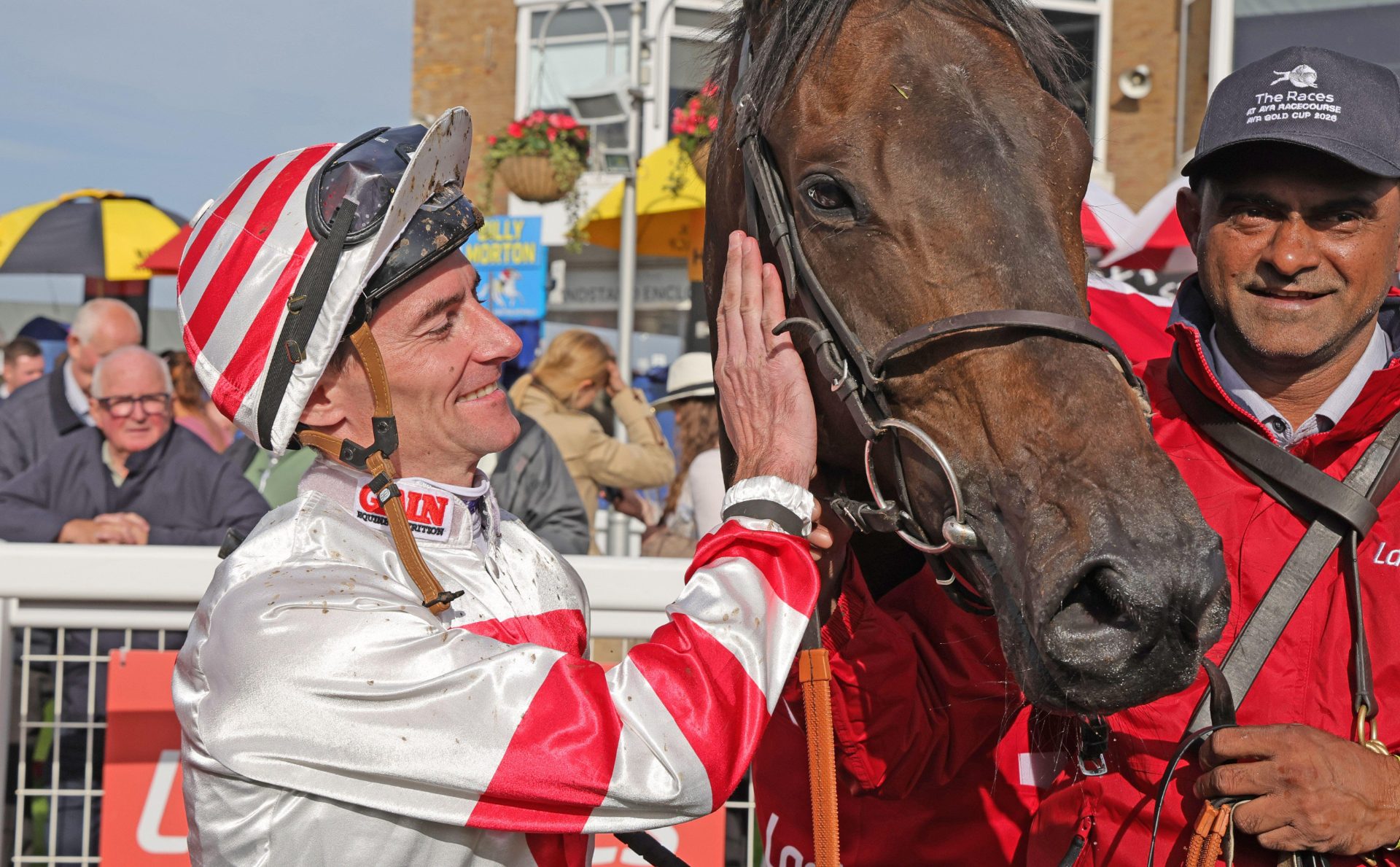
Jockey Danny Tudhope and Pellitory after winning the Ladbrokes Ayr Gold Cup at Ayr Racecourse, Saturday September 19, 2026. — PA Images - Alamy
The latest chapter in the long history of the Ayr Gold Cup was written on Saturday when Pellitory battled through testing conditions to win Scotland’s most valuable Flat handicap for David O’Meara and Danny Tudhope.
For a time, there was considerable doubt whether the meeting would take place at all. Torrential rain left standing water on parts of the course, the ground was officially changed to heavy and racing was delayed while the track underwent two inspections. Eventually given the go-ahead, the Gold Cup was staged in conditions very different from those anticipated earlier in the week.
Pellitory, sent off at 12-1, handled them particularly well. Racing towards the far side under Tudhope, the four-year-old got the better of Tuco Salamanca by half a length, with Flash Harry two and a half lengths farther back in third. The victory gave O’Meara a third success in the race, following Louis The Pious and Summerghand, while Tudhope was winning it for the second time.
Whether Pellitory eventually comes to be regarded alongside some of the more distinguished horses on the Gold Cup roll of honour remains to be seen. But his victory provides an appropriate starting point for looking back at a race that, despite its status as a handicap, has been won by a number of horses who subsequently established themselves among the best sprinters of their generation.
The race's history stretches back to 1804, but the Gold Cup has produced some particularly memorable winners over the past half-century or so. One of the most significant was Roman Warrior, who won in 1975 under 10st, still the weight-carrying record for the modern race. Trained locally by Nigel Angus, Roman Warrior remains the last Scottish-trained winner of the Ayr Gold Cup. His success has endured partly because of the weight he carried, but also because home-trained victories in Scotland’s most important Flat handicap have subsequently proved so elusive.
For many, however, the outstanding modern winner is Lochsong. Ian Balding’s mare won the Gold Cup in 1992 during the season in which she established herself as one of Britain’s leading sprint handicappers. She had already taken the Stewards’ Cup and Portland Handicap before adding Ayr.
Lochsong, Willie Carson up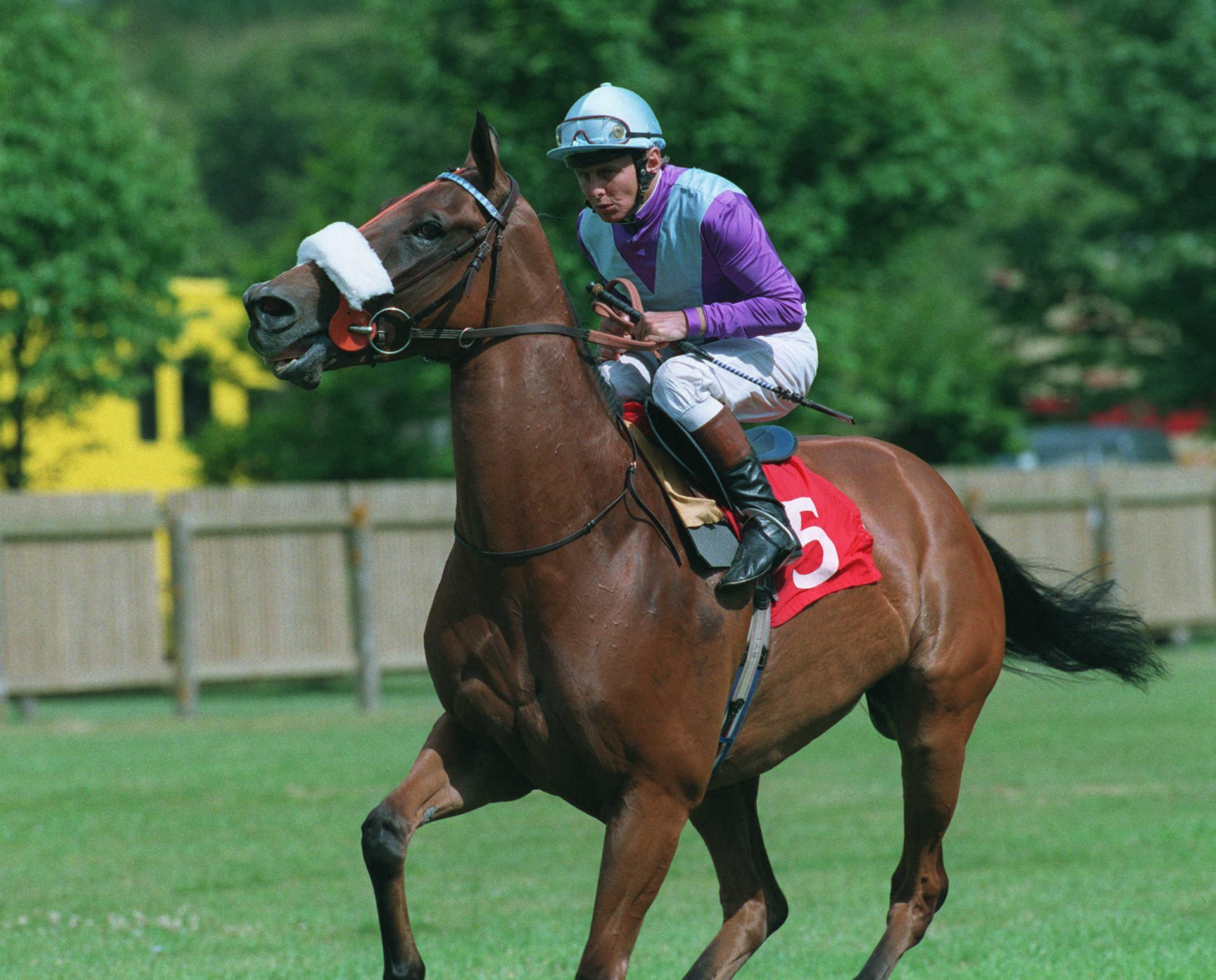
Her Ayr victory is a useful reminder that the Gold Cup has not always been simply the preserve of horses whose ceiling was handicap company. On occasion, it has provided a platform for horses capable of competing successfully at the highest level.
Coastal Bluff, winner in 1996, is another good example. Trained by David Barron, Coastal Bluff arrived at Ayr having already won the Stewards’ Cup at Goodwood. He carried top weight to victory in the Gold Cup and later showed that his handicap form was no accident.
The following season he dead-heated with Ya Malak in the Nunthorpe Stakes at York despite his bit breaking shortly after the start. Kevin Darley was forced to use the horse’s mane to help maintain his balance, making the Group 1 victory particularly remarkable.
The turn of the century brought the beginning of an extraordinary period for David “Dandy” Nicholls, whose ability with sprinters became one of the defining features of the Gold Cup during the following decade. His first winner came with Bahamian Pirate in 2000. Sent off at 33-1, the durable gelding went on to enjoy a remarkably long career, eventually making 104 starts and winning 12. Four years after his Ayr victory, at the age of nine, he won the Group 1 Nunthorpe Stakes.
Nicholls followed up with Continent in 2001, arguably one of the best horses to emerge from the race in modern times. Continent won the Gold Cup from a handicap mark of 92 before developing into a top-class international sprinter the following season. In 2002 he won both the July Cup and Prix de l’Abbaye and was subsequently named Cartier Champion Sprinter. His rise from the Ayr Gold Cup to two Group 1 victories within a year is one of the clearest demonstrations of the quality the race has occasionally contained.
Funfair Wane with jockey Adrian Nicholls looks across as he crosses the finishing line to win the Ayr Gold Cup ahead of The Tatling — PA Images - Alamy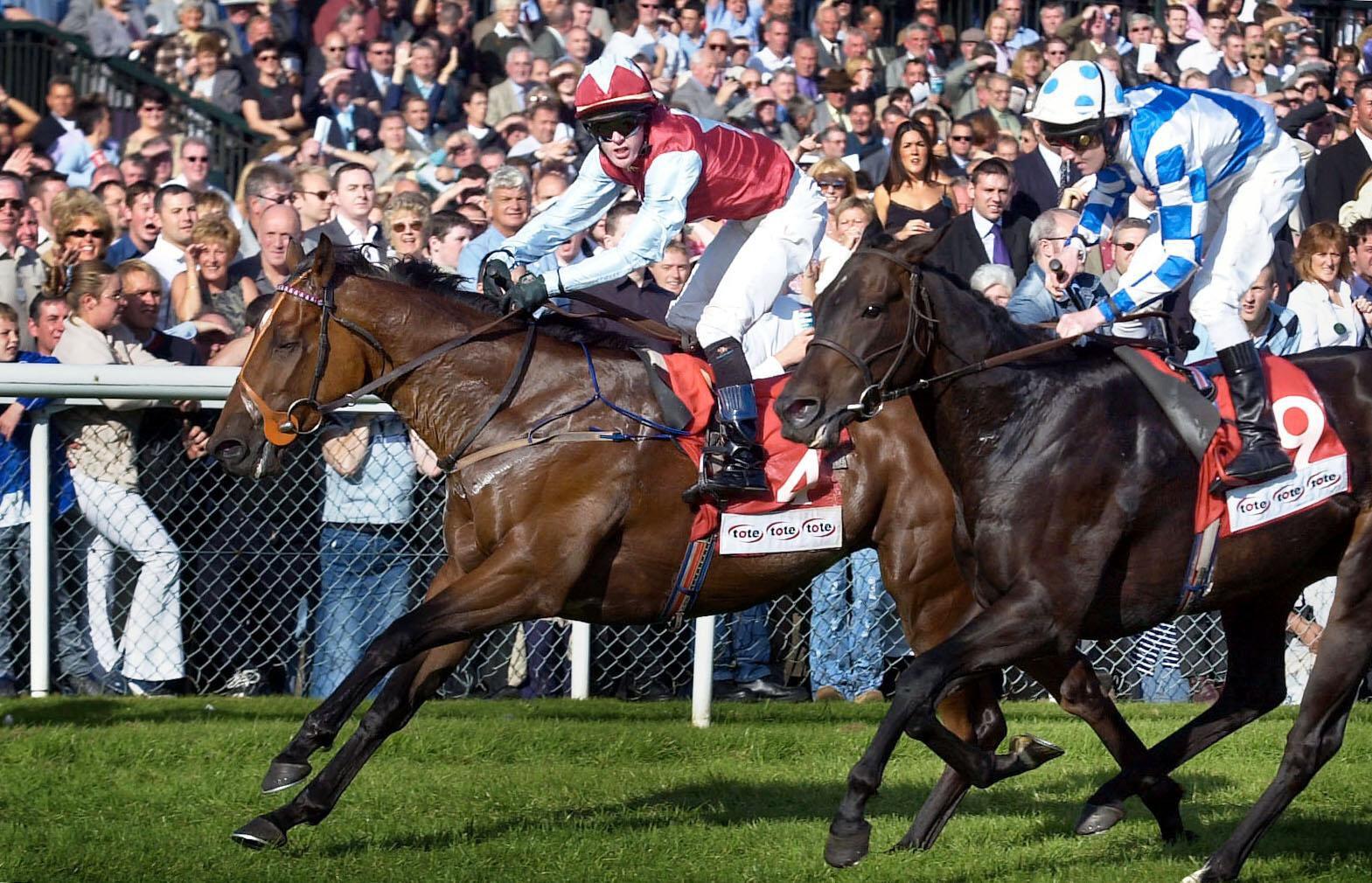
Fonthill Road gave Richard Fahey victory in 2006, a success Fahey has subsequently recalled as one of the finest moments of his career. That says something about the standing of the race among northern yards, for whom Ayr has long been regarded as a major target rather than simply another valuable handicap.
Regal Parade, successful in 2008 for Dandy Nicholls, subsequently became another Group 1 winner. He won the Haydock Sprint Cup in 2009 and Prix Maurice de Gheest the following season, further strengthening the Gold Cup’s record of producing horses capable of competing beyond handicap level.
More recently, Brando won the race in 2016 for Kevin Ryan. Brando developed into one of Britain’s most durable high-class sprinters, winning the Prix Maurice de Gheest in 2017 and remaining competitive in Group 1 company over several seasons. His Ayr victory came before he had fully established himself at that level and again showed the Gold Cup’s capacity to identify a horse still on the way up.
Not every memorable winner has subsequently become a Group 1 horse. Highland Colori, successful in 2013, is remembered in part because his victory came during the extraordinary afternoon on which the then 18-year-old Oisin Murphy rode a 9,260-1 four-timer. Highland Colori was the first leg of the sequence on the day Murphy announced himself to a much wider racing audience.
The 2018 running also became part of the race’s history when Son Of Rest and Baron Bolt could not be separated, producing the first dead-heat in the long history of the Gold Cup.
In 2024, Lethal Levi led home a remarkable one-two-three for Karl Burke, who saddled only three runners in the race. Silky Wilkie and Korker filled the minor places, an exceptional result in a handicap of that size and competitiveness.
The Gold Cup has changed with racing, but its appeal has remained much the same. A large field charging over Ayr’s straight six furlongs still provides one of the season’s most demanding sprint handicaps, requiring speed, toughness and the ability to deal with the particular pressures of a race in which position and timing can be critical.
Its roll of honour also deserves more attention than the label “handicap” sometimes suggests. Lochsong, Coastal Bluff, Continent, Bahamian Pirate, Regal Parade and Brando all showed that success at Ayr could be part of something considerably bigger.
For some, the Gold Cup was the high point of a career. For others, it was a stepping stone towards Group 1 success. That mixture has been one of the qualities that has kept the race relevant for more than two centuries.
By TP Editorial
Follow Thoroughbred People
Comments
Have your say. Please keep it civil and on the subject.
Loading comments…